Help Center

Choose a lead form purpose

Choose a starting form for the kind of conversation you want visitors to start.

Use this guide when

You want to choose a starting form for the kind of conversation you want visitors to start.

Before you start

  • Open a card you can edit in the correct workspace. Changes to its form need Save form and Publish before visitors see them.

Steps

  1. Open your card’s Blocks and edit its Lead Form.
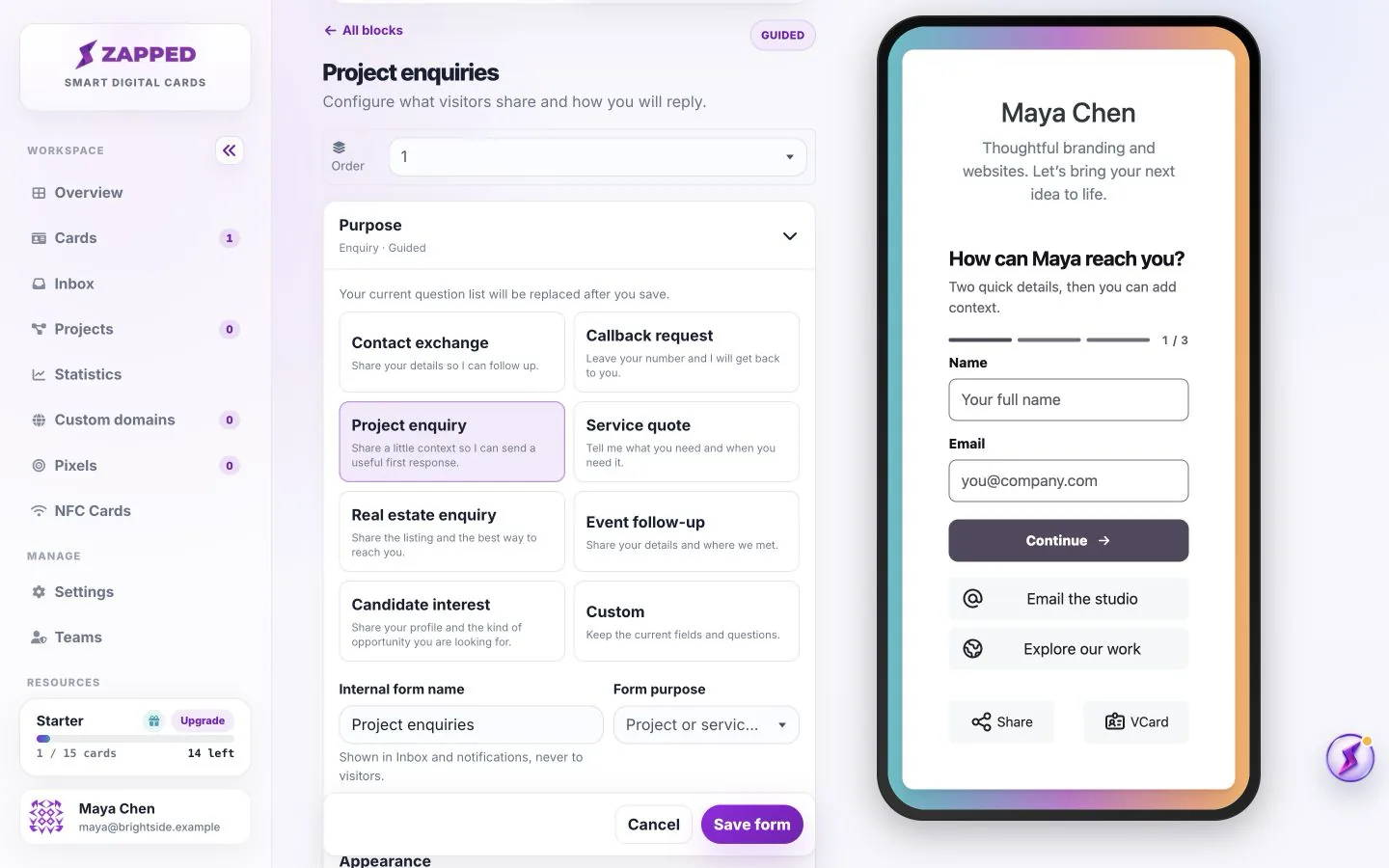
  2. Expand Purpose and choose the template closest to your goal. Read Apply this template before confirming.
  3. Review Contact details, Questions, Internal form name and the public wording. Adjust the starting values to fit your business.
  4. Choose Save form, review the draft and Publish.
Choose a lead form purpose with fictional demo data
Fictional demo data in the Lead Form editor.

Start with the smallest amount of information you need for a useful reply.

Choose by the next conversation

These seven templates are starting points for the information you collect, not visual styles. Choose the next step you want the visitor to take, then adjust the wording and optional questions. Use the layout and appearance guide to change how the form looks.

Contact exchange

Keep the first contact simple.

  • Best for: You want someone to leave their details for a general follow-up, without explaining a project.
  • Starting fields: Required name and email. Optional phone. No extra questions.
  • Example: A consultant shares their card after a short introduction and offers to send more information.
  • Practical tip: Keep this short. Choose Project enquiry instead if you need to know which service they want.

Callback request

Make a phone call the next step.

  • Best for: Your work is easier to discuss by phone, or your visitor is in a hurry.
  • Starting fields: Required phone number only. No extra questions.
  • Example: A repair professional invites visitors to request a call to discuss the problem.
  • Practical tip: State when you usually respond in the description. Add an optional preferred-time question if useful; this does not book a call.

Project enquiry

Understand the kind of work someone needs.

  • Best for: You offer several services and need context before replying.
  • Starting fields: Required name and email. Optional phone, company and message. An optional single-choice question asks what help is needed.
  • Example: A creative studio offers Branding, Website design, Photography and Something else as choices.
  • Practical tip: Replace the sample service choices with your own. Keep a catch-all choice so an unusual request still has a place.

Service quote

Collect context for a price discussion.

  • Best for: The service needed and its timing help you prepare an estimate.
  • Starting fields: Required name and email. Optional phone and message, plus an optional service date question.
  • Example: A photographer asks about an upcoming shoot and its preferred date.
  • Practical tip: Use the description to explain what details help you quote. A requested date is context, not confirmed availability, and the form does not calculate a price.

Real estate enquiry

Start a conversation about a property.

  • Best for: You need to identify a listing and reach the visitor by phone.
  • Starting fields: Required name and phone. Optional email and message, plus an optional property listing URL.
  • Example: An agent uses the listing link to see which property a prospective buyer wants to discuss.
  • Practical tip: Keep the listing question optional for people who are still exploring. Use the message field for questions or viewing preferences.

Event follow-up

Remember where the conversation started.

  • Best for: You meet several people at an event and want context when following up.
  • Starting fields: Required name and email. Optional company and a short-text question about where you met.
  • Example: A founder shares a card at a trade show and asks visitors to mention the session or booth.
  • Practical tip: Make the event name an example in your wording. Keep the follow-up personal; sending an enquiry is not a marketing opt-in.

Candidate interest

Invite an introduction and a profile link.

  • Best for: You want an initial conversation with candidates or potential collaborators.
  • Starting fields: Required name and email. Optional phone and message, plus an optional LinkedIn or portfolio URL.
  • Example: A small studio invites designers to share a portfolio and describe the work they are interested in.
  • Practical tip: Say which opportunities you want to hear about. This collects an introduction and a link, not uploaded CVs or a full job application.

What applying a template replaces

Applying a template replaces the current question list and resets the contact field choices, form purpose, internal name, headline, public description and button wording to that template’s defaults. Check these fields before saving.

Custom keeps your current fields and questions. Choose it when you want to refine what you already built. Changing only the Form purpose dropdown categorizes the enquiry; it is not the same as applying a template.

The confirmation warns about the form configuration, not old submissions. Existing Inbox leads keep their captured answers. Save form stores the new setup in the draft; Publish makes it live.

Good ways to use this

  • Choose a clear goal before changing settings.
  • Test with fictional information you control.
  • Review the result on a phone before sharing.

Common questions

Do I need seven forms?

No. These are starting points for one adaptable form. Choose one and customize it.

Can I recover a question after replacing the template?

Cancel before saving if you do not want the new setup. Keep a copy of important custom questions before replacing a saved form; there is no promise of question history.

If something looks wrong

  • If controls are unavailable, check your workspace role and card access.
  • If the public form looks unchanged, confirm Save form succeeded and publish the latest draft.

Was this guide helpful?

Still have questions? Contact support and we'll help you out.