The best NFC business card depends on the job you need it to do after the tap. A low card price can be a good start, but it does not answer whether the profile stays editable, whether useful team tools cost extra, or what happens if you later cancel a plan. This guide compares source-listed offers checked in July 2026. It does not include hands-on card, phone, QR, or cancellation testing.
Quick answer
Choose an NFC business card by separating the physical card from the profile and software behind it. Blinq, Mobilo, Wave, dot, and V1CE each publish a different mix of card price, free profile, paid tools, and materials. There is no defensible universal winner without equal device and lifecycle tests. Keep a QR fallback, verify the current checkout total, and get clear answers about cancellation, data export, profile URL control, and tag lock status before buying.
Key takeaways
- A card purchase and a hosted profile are separate parts of the cost and ownership decision.
- The listed card price usually excludes shipping, tax, regional pricing, and some paid software or lead tools.
- QR is a useful fallback alongside NFC, even when a vendor says recipients do not need an app.
- Team buyers should check seat minimums, admin controls, offboarding, exports, and usage-based charges.
- No provider in this comparison is ranked for tap reliability, durability, or card rewritability because those outcomes were not tested.
How we compared NFC business cards
This is a document-led comparison of official product, pricing, support, and policy pages. It looks at the stated one-time card price, recurring software price, profile and QR claims, recipient app claim, team workflow, and public cancellation information. It does not convert currencies, estimate shipping or tax, or turn vendor claims into test results.
The shortlist uses fit labels, not an aggregate score. A card can be a sensible option for a particular job while still leaving important ownership questions unanswered. That is especially true for physical tag lock state, card rewritability, recipient experience on named phones, and the outcome after a paid plan ends.
Before choosing a material or printed layout, use the NFC business card design guide to set the tap, QR, contrast, and sample proof requirements that the product comparison cannot settle.
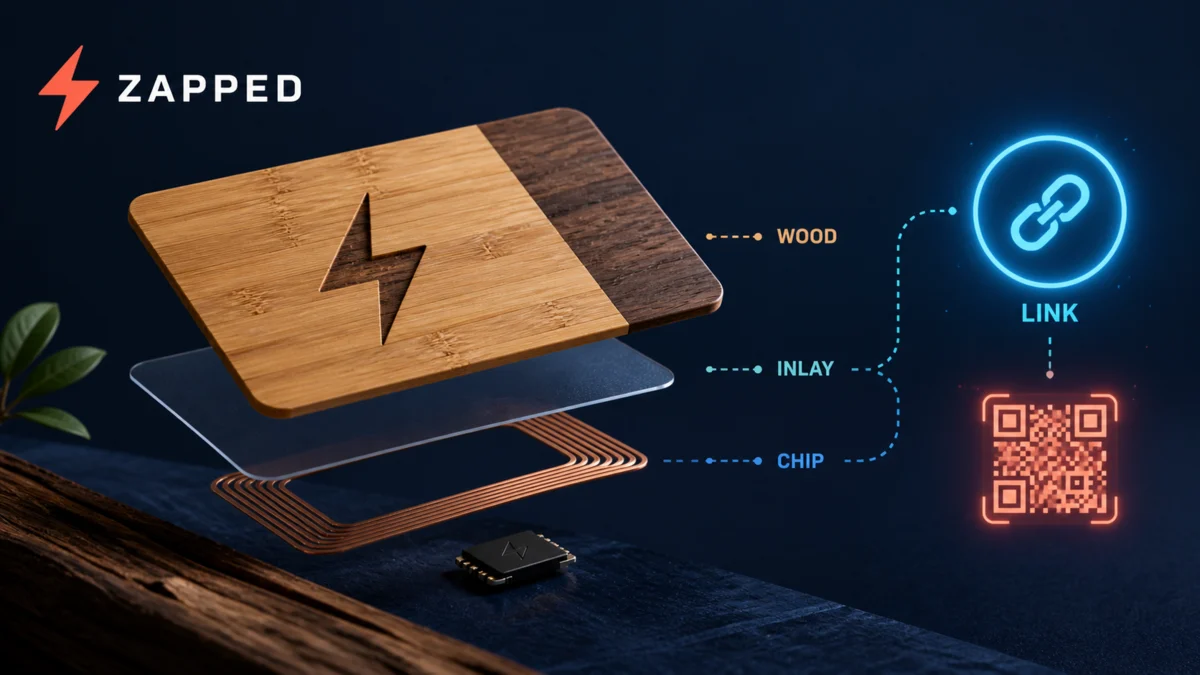
If the material itself is part of the decision, use the wooden NFC business card guide to compare the visible surface, inlay, chip, finish, sample, and profile ownership questions.
Before comparing current offers, use the best NFC business card features checklist to test the destination, fallback, tag state, and lifecycle criteria that a price table cannot answer.
For a team that is already issuing cards, use the team NFC business cards guide to manage asset ownership, profile permissions, replacements, and departures.
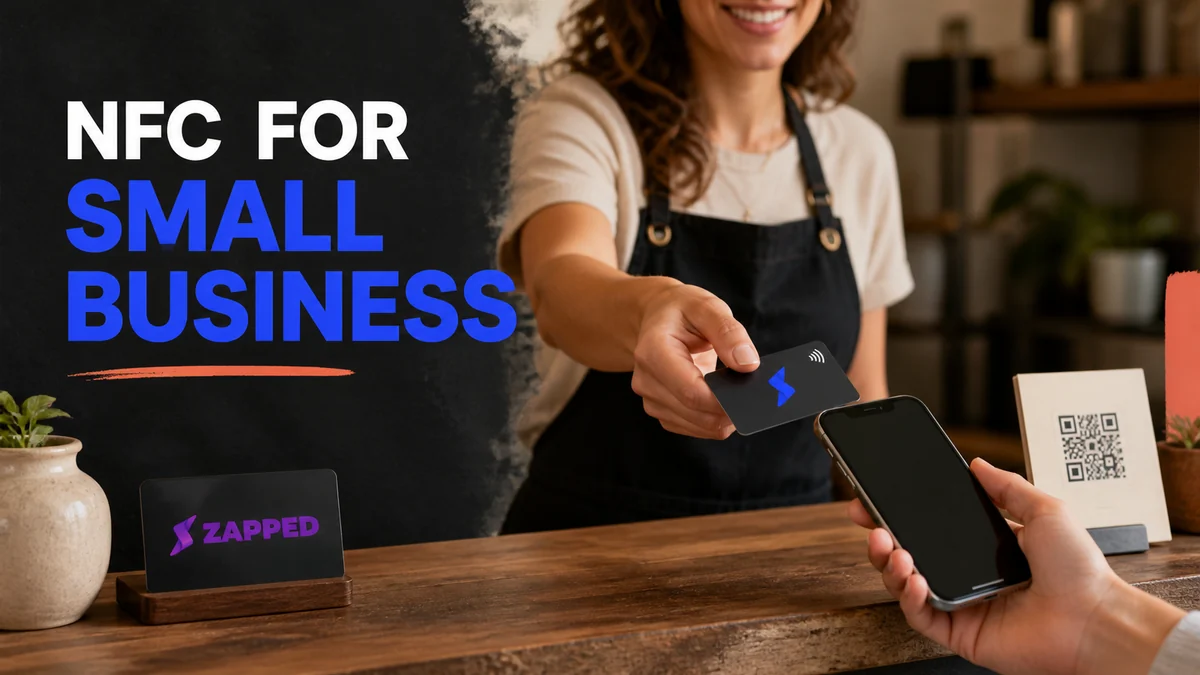
If you are buying for a small business rather than comparing cards in isolation, see our guide to NFC business cards for small businesses for the pilot, fallback, and rollout decisions behind the purchase.
Security is another ownership question, especially when a card opens a hosted profile or collects leads. Use the most secure digital business card checklist for that separate review.
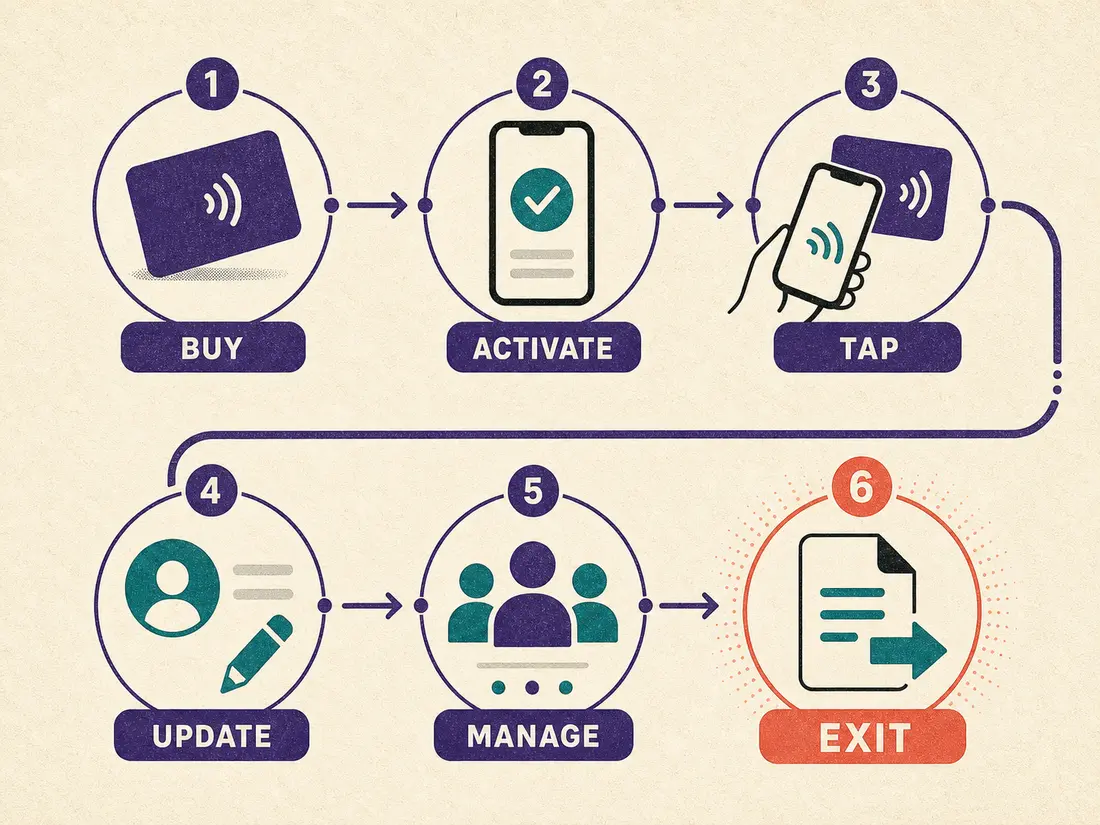
For the underlying NFC concept, see what NFC business cards are. Android documents NDEF as its broadest-supported NFC format, including URI handling, but that does not prove that every vendor card will perform the same way on every phone or with every recipient setup. Android's NFC documentation is useful background for buyers who plan to write their own tags.
NFC business cards at a glance
Listed prices and vendor statements below were checked in July 2026. Confirm the live page and checkout before ordering.
| Option | Stated physical-card entry price | Stated base and paid software terms | Sharing claims | Best fit to consider | Important unknown |
|---|---|---|---|---|---|
| Blinq NFC card | $19.99 Essential | Free $0. Premium $9.99 monthly. Business $6.99 per card monthly. | Blinq says recipients do not need an app. | Lower listed card price with a free profile and a team upgrade path. | Card rewrite and full post-cancellation outcome are not documented here. |
| Mobilo Custom Classic | $29.50 sale price | Product page describes a free editable profile. Team pricing is separate. | Mobilo says tap or QR sharing needs no app. | Custom branded card and a documented lead workflow. | Trial, plan, and cancellation terms need checking for the selected setup. |
| Wave NFC Business Card | $23 | Free $0. Pro $7 monthly. Teams $5 per user monthly, three-seat minimum. | Wave lists iOS and Android compatibility. Custom cards are stated to have QR. | Lower listed entry price with a clear free-to-team plan ladder. | The product page does not document tag status or a full exit outcome. |
| dot card | $30 | dot states that base profile sharing has no subscription. Profile Plus is listed at $144 yearly. | dot says the card offers NFC and QR sharing. | Basic browser-profile sharing with an optional paid upgrade. | Portability and paid-plan downgrade details are not established here. |
| V1CE Smart Card | From £75 one time | V1CE states no card subscription is required. Client Capture OS is listed separately at £49.99 monthly. | Vendor sharing claims apply. | Premium-material shortlist, subject to regional checkout verification. | This is a UK price and vendor claims are not a device or lifecycle test. |
Shortlist by buyer job
Consider Blinq for an inexpensive listed card with a software upgrade path
Blinq lists its Essential NFC card at $19.99, with metal and wood alternatives listed higher on the same store page. Its pricing page lists a $0 Free plan, $9.99 monthly Premium plan, and $6.99 per card monthly Business plan. Blinq Business also lists centrally managed templates, automated provisioning, lead capture, attribution, and individual and team analytics. The Business plan has a minimum payment equal to five Team Cards, and its custom qualifier and lead-form use is described as paid per captured lead. Blinq's current pricing is the source to check before committing a team.
Blinq says its card can be shared without the recipient installing an app and includes a free digital profile. Treat that as a vendor statement, not a test on a particular phone. It is not enough to establish that the card can be repointed or that every paid feature, URL, or data set has the same outcome after cancellation.
Consider Mobilo for a custom branded card and stated lead workflow
Mobilo lists its Custom Classic Tap Business Card at a $29.50 sale price when checked. Its product page says the purchase includes a custom printed NFC card, an editable digital profile, tap or QR sharing, and no app needed to share. The same page describes lead capture and integrations, while stating that native CRM sync and team management belong with Team plans. See the Mobilo product page for the current offer and trial terms.
This is a fit label for buyers who want a custom physical card and documented lead-related features. It is not a claim about real tap quality, profile ownership after a trial, or cancellation behavior.
Consider Wave for a clear stated plan ladder
Wave lists its standard NFC Business Card at $23, with shipping calculated at checkout. Its pricing page lists Free at $0, Pro at $7 monthly, and Teams at $5 per user monthly with a three-seat minimum. The Teams section lists an admin platform, bulk profile editing, templates, field locking, a shared lead dashboard, and analytics.
For buyers comparing a free individual profile with a managed team plan, those publicly listed terms are easy to inspect. They do not substitute for a test of its iPhone or Android experience, QR scanability, tag lock state, or profile behavior after a cancellation. Wave's terms say cancellation stops renewal at the end of the current paid billing cycle and that subscription fees are generally non-refundable. They do not provide a complete card, URL, profile, and export test. Read Wave's terms before subscribing.
Consider dot for stated base-profile sharing without a monthly fee
dot lists its standard card at $30 before quantity discounts. Its product pages say orders include free lifetime dot.Profile access and offer NFC and QR sharing. dot.Profile Plus is listed at $144 yearly and adds paid features such as custom branding, deeper analytics, contact exports, card scanning, and follow-up reminders. Confirm the current standard-card offer and Profile Plus terms before you buy.
This is a reasonable shortlist for someone who wants simple profile sharing and can live without assuming that all paid features or destination-control details are permanent. The reviewed pages do not establish tag rewritability or a complete cancellation and portability outcome.
Consider V1CE when material is the main buying criterion
V1CE lists a Smart Card from £75 as a one-time purchase and says no subscription is required for the card. Its pricing page lists Original, Metal, Bamboo, and 24K Gold options, alongside an optional Client Capture OS listed at £49.99 monthly. This is useful for a premium-material shortlist, but the currency, local availability, shipping, tax, and checkout total should be checked in your region.
V1CE publishes a detailed Client Capture OS cancellation statement, including card retention, CSV export, ending follow-ups, and a free smart-card tier. That is more specific than many public pages, but it remains a vendor statement rather than a recorded cancellation test. See V1CE pricing and its Client Capture OS exit statement for the current language.
Calculate lifecycle cost before you compare cards
The price printed beside a card is only the hardware line item. For the short answer on what a card and its profile actually cost today, see how much an NFC business card costs. Use this checklist before treating any option as cheaper:
- Add the current card price, shipping, tax, regional currency, and any customization charge.
- Identify the included profile and what the next plan adds.
- Multiply any per-card or per-user plan by the actual minimum, not only the advertised unit price.
- Ask whether lead capture, enrichment, exports, integrations, or custom forms have separate usage charges.
- Check whether you can test a team plan without starting a renewal you did not intend.
- Record the actual checkout and billing terms before purchasing multiple cards.
For example, Blinq's five-Team-Card minimum and per-lead form use can matter more than its entry card price. Wave's Teams tier has a three-seat minimum. Popl is relevant to teams that need QR, link, or tap sharing, templates, lead capture, exports, CRM workflows, and reporting, according to its team documentation. Its public material reviewed for this guide does not provide a comparable hardware total, so it is not placed in the card-price matrix. For Popl-specific subscription context, read our Popl subscription guide.
Choose the profile and sharing path, not only the card material
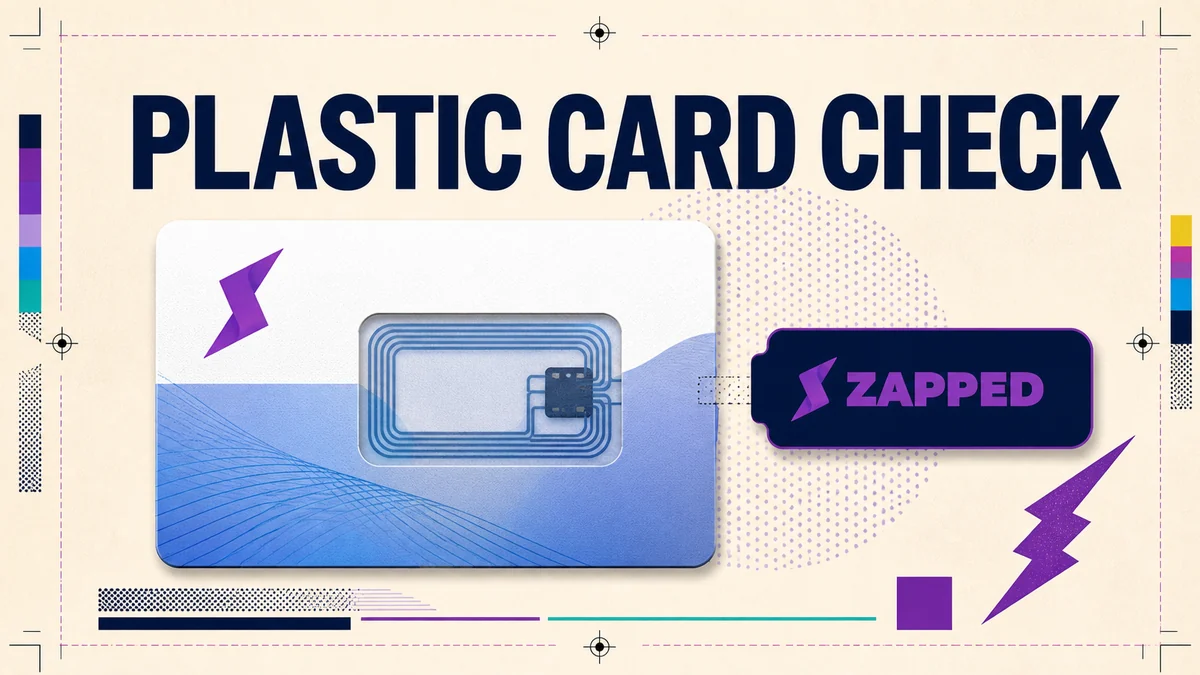
PVC, wood or bamboo, and metal can change the look and feel of a card. They do not by themselves tell you whether the profile is editable, the QR code points to the right destination, or a team can control former employee profiles. Do not turn material marketing into a durability conclusion without a product test. For a material-focused decision, see our metal digital business card guide. For the construction questions behind a metal NFC card, use the metal NFC business card construction guide. If you would rather carry the tag on your keys than in a wallet, our NFC keychain business card guide covers that format specifically.
Similarly, a vendor's "no app needed" statement usually describes the recipient flow it intends to support. It is not a guarantee that every phone, NFC setting, case, network condition, or recipient action will behave the same way. A printed QR code is a sensible backup because it gives the recipient another route to the same profile. If you are weighing how much to lean on each route, our NFC and QR comparison sets both against the same criteria, and how tap to share actually works explains what the chip does and does not carry.
The cancellation and lock-in checklist
Before you buy, ask the vendor to answer these questions for the exact card and plan you are considering:
- What URL does the NFC tag and QR code open after activation?
- Who controls that destination URL if the paid plan ends or the company account closes?
- Can contacts and lead data be exported, in what format, and before or after cancellation?
- Which profile, analytics, branding, CRM, and lead features disappear on downgrade?
- Does the cancellation take effect immediately or at the end of the paid term?
- Is the physical tag writable, locked, password-protected, or managed by the vendor?
- Can the tag be repointed only with vendor approval, and what happens if that service changes?
- Can the card and QR be tested with the phones your recipients actually use?
Blinq says that cancelling a paid subscription leaves the account accessible without paid features, and its terms say cancellation generally takes effect when the paid membership term expires. That documentation does not prove a complete post-cancellation card, profile URL, export, or team-data result. Blinq's cancellation help is the current starting point.
A one-time physical card purchase does not, by itself, prove an independent exit path. The ownership questions above need answers for the card, profile, QR destination, contacts, and tag separately.
When an independent NFC tag and editable profile make more sense
If the real goal is control over an editable destination, start with a profile URL you can maintain, then choose an NFC tag only after confirming it is appropriate and writable for your use. You can use the same destination for QR and direct-link sharing, which reduces the need to update multiple places when your details change.
Learn the general checks in Can NFC Cards Be Rewritten? and the setup steps in Program NFC Business Cards. Those guides explain the generic tag question. They do not establish that a vendor-issued card is writable.
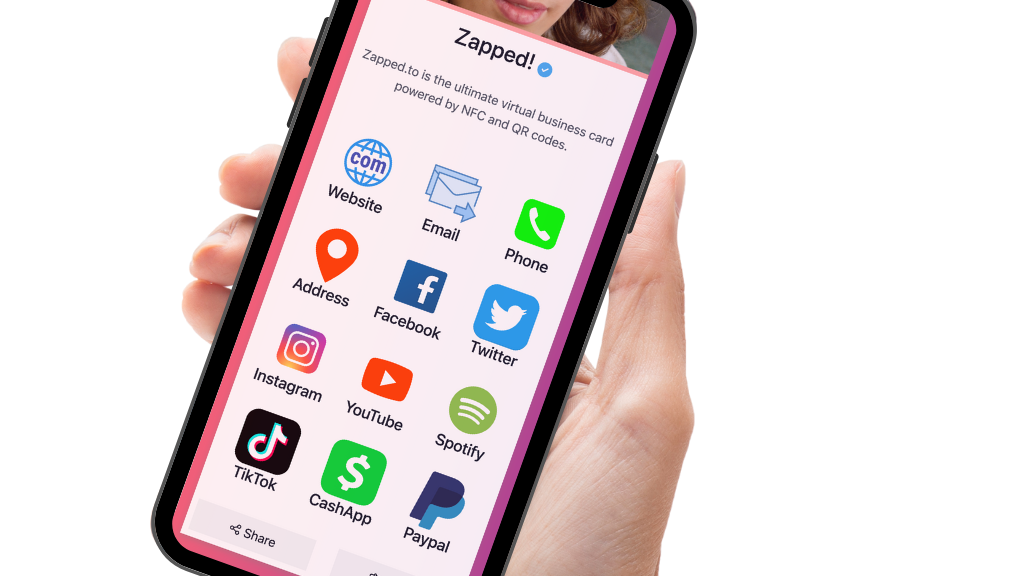
An editable profile can be the destination behind a tag and QR code. The Zapped digital business card guide is useful when you are comparing the profile and sharing workflow as well as the card itself.
FAQs
Do NFC business cards need an app?
Several vendors in this guide say recipients can share or view a profile without installing an app. That is a vendor-described flow, not a universal device test. Ask how the card behaves for recipients who have not installed the vendor's app, and keep QR as another sharing option.
Do NFC business cards work on iPhone and Android?
Vendors may state that their cards support both platforms, but this guide did not test named cards on named devices. Android documents strong support for NDEF and URI records, which is useful context for tag design. Test the exact card, profile, QR code, and recipient flow on the phones that matter to you before a large order.
Can I update an NFC business card later?
You may be able to update the online profile behind a card, depending on the provider and plan. Rewriting the physical card is a separate question that depends on the tag, lock state, and vendor permission. Do not assume a vendor-issued card can be repointed without written confirmation or a permitted test.
Is a no-subscription NFC card always cheaper?
Not necessarily. Compare the card, shipping, tax, optional upgrades, team minimums, and any lead or data charges. Also compare the exit terms. A lower recurring fee does not prove that profile control, data export, or the card's destination will meet your needs later.
What should a team check before ordering NFC cards?
Check templates, field locking, provisioning, offboarding, team minimums, exports, CRM needs, lead charges, and who owns each profile. Then run a small, documented test with representative phones and a real follow-up workflow before scaling the order.
Sources
This article uses official pages checked in July 2026 and does not claim physical testing. Prices, plan terms, and product availability can change.