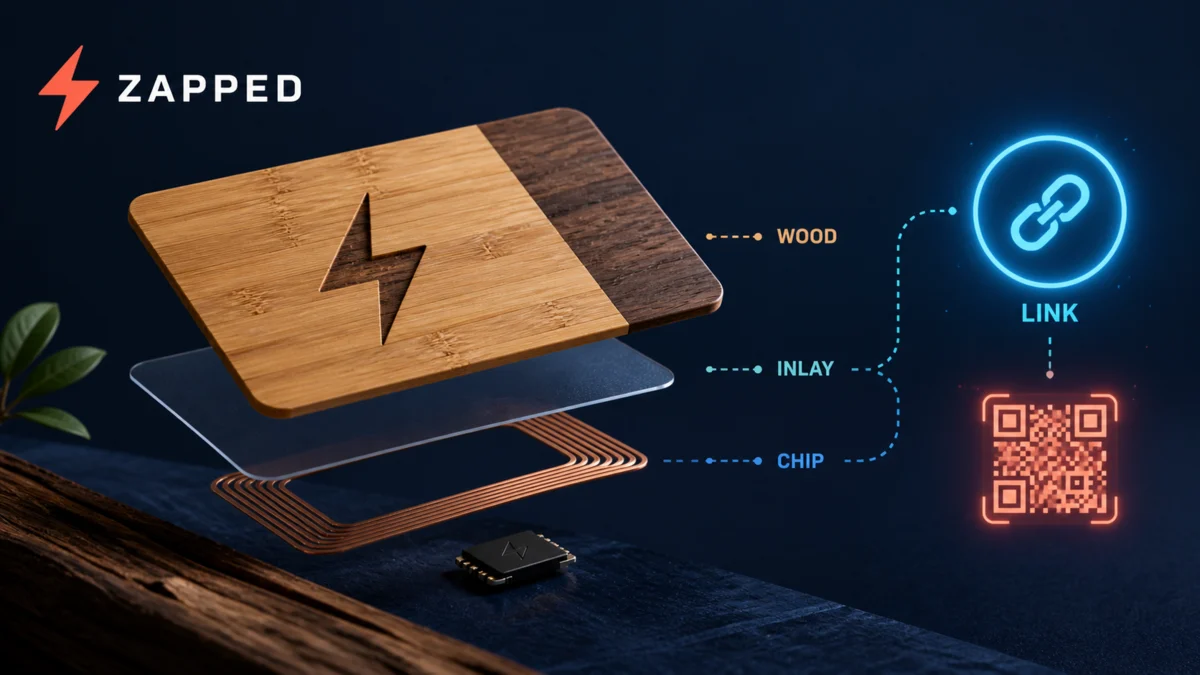
A wooden NFC business card is not one specification. It is a visible material, a construction method, an NFC inlay, an encoded destination, and a finish that must survive the way the card will be carried. The natural surface can be the reason you choose it, but the chip and the supplier's process decide the digital behavior.
The best buying question is not “does wood work with NFC?” It is “what exactly is inside this card, how is it finished, what is written to the tag, and how will the supplier prove the batch?” Use the best NFC business card comparison for the wider category. Use this guide when the material itself is part of the decision.
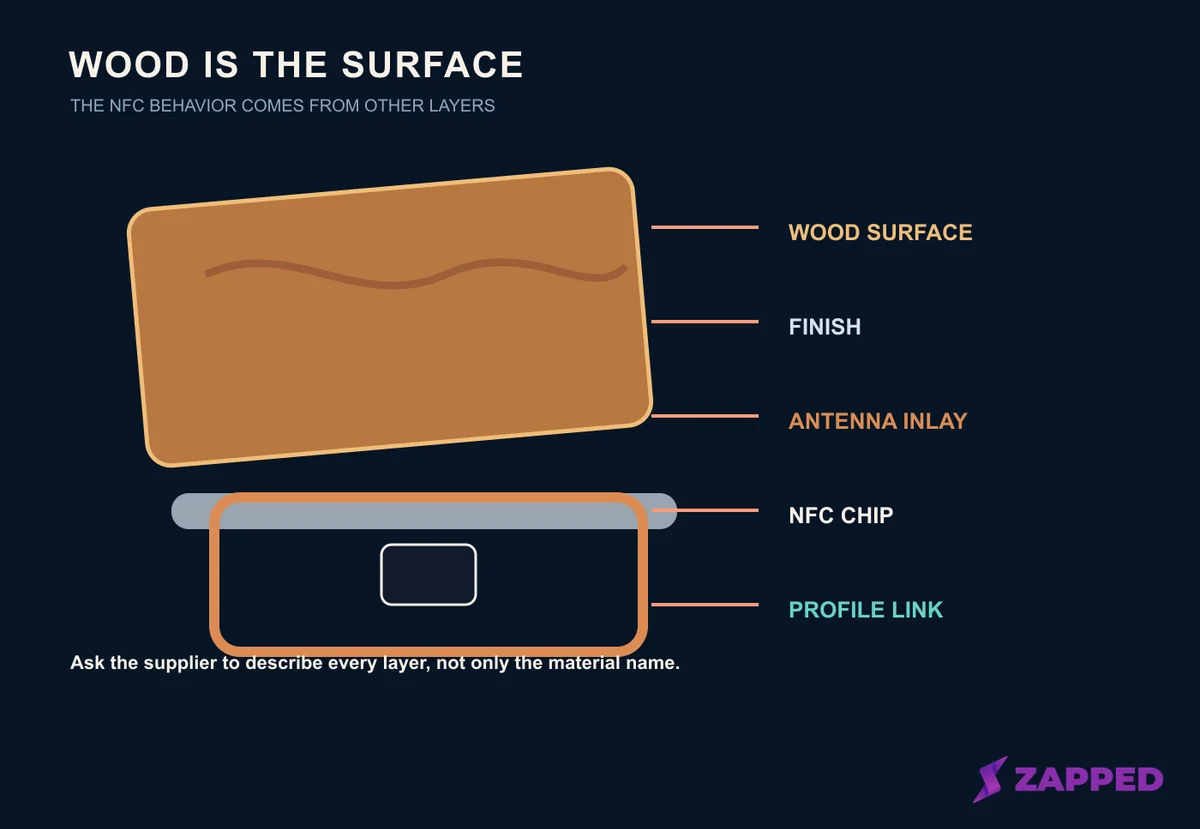
Conceptual construction diagram. It is not a cutaway photograph of a particular vendor's card.
Quick answer
Choose a wooden NFC card when its tactile material and natural appearance fit the brand and you are willing to verify the construction. Ask for the wood or bamboo type, finish, exact chip, inlay, payload, lock state, printing method, replacement policy, and sample test process.
NXP's memory figures describe the chip, not the finished card's read behavior, durability, water resistance, or phone compatibility. Treat supplier claims as listed specifications, request a sample, and keep a QR or short URL fallback.
What a wooden NFC business card can mean
Veneer over an inlay
A thin wood veneer can cover an inlay that contains the antenna and chip. This construction can preserve a card shaped form while allowing engraving or printing on the surface. The supplier should tell you the layer order, total thickness, adhesive or encapsulation, and whether the antenna sits in a consistent location across the batch.
Bamboo or other wood fiber sheet
Bamboo cards are often marketed as wood cards, but bamboo is a grass processed into a sheet. A supplier may list bamboo, cherry, walnut, maple, basswood, or another surface. Ask for the exact material and finish instead of treating all natural surfaces as interchangeable. A supplier's bamboo card specification shows why those fields belong in the quote.
Layered or assembled card
Some cards use more than one piece of wood, a backing, an embedded module, or an attached tag. Ask whether the tag is sealed inside the card, placed beneath a surface layer, or applied as a separate sticker. Replacement and repair options are different for each construction.
The word “wooden” describes the outside more reliably than the NFC assembly. That is why the chip, antenna, and encoding questions belong in the same purchase conversation as the artwork.
Chip and memory: what the numbers do and do not say
NXP's data sheet lists NTAG213, NTAG215, and NTAG216 as NFC Forum Type 2 Tag compliant ICs with 144, 504, and 888 bytes of user memory.
The family operates at 13.56 MHz according to the data sheet. A supplier may choose one of these chips, another Type 2 tag, or a different technology for a specialized use case.
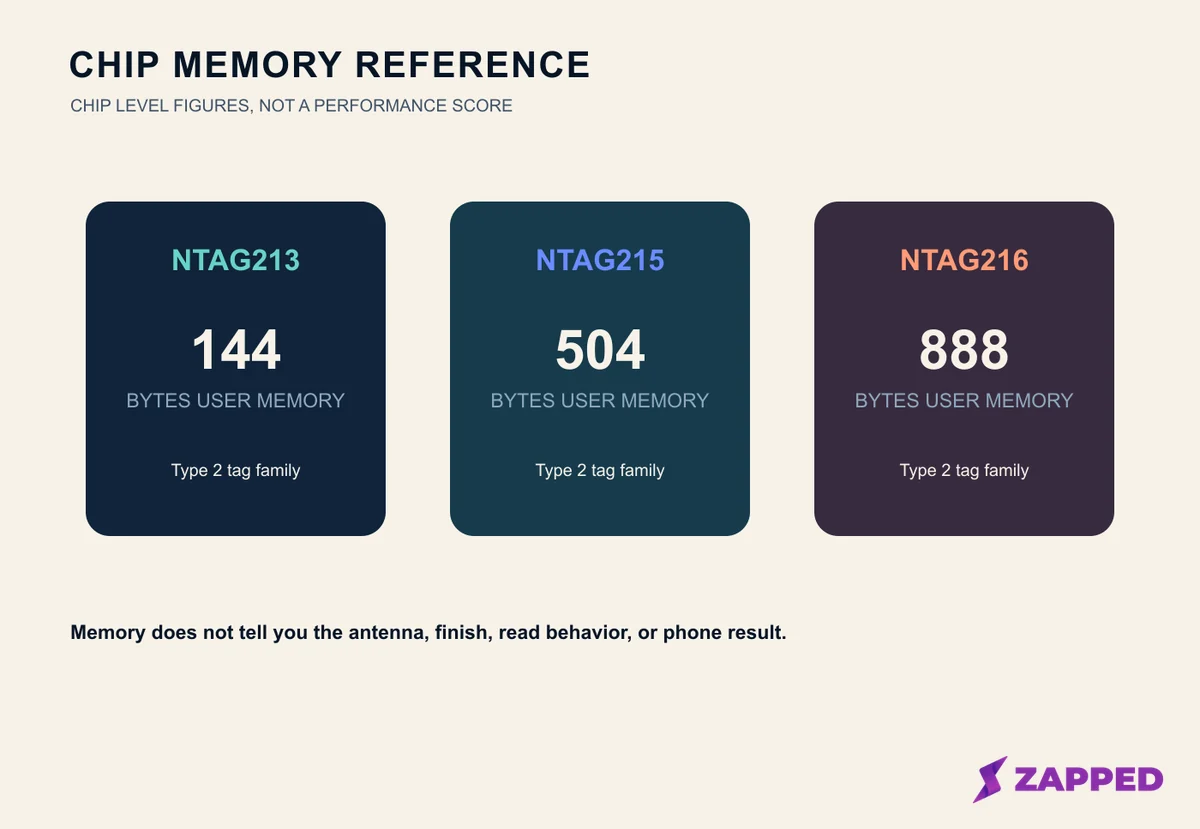
Chip level reference based on NXP's data sheet. Memory capacity is not a read range, durability, or phone compatibility score.
For a simple profile URL, the payload may be small enough for more than one tag choice. A more complex NDEF message, a longer URL, or additional records can change the fit. Ask the supplier which exact payload is written to the sample and whether the destination can be updated after delivery.
A higher memory figure is not automatically a better card. It may matter when the tag stores more data, but it does not tell you how the antenna is shaped, how the tag is positioned, how a finish affects the construction, or how a particular phone will behave.
Phone behavior and the destination
Android documents NDEF as the main format used to read and write many NFC tags and explains how URI records can be dispatched as links. Apple Core NFC documents reading NDEF tags and writing to writable tags on supported devices. These sources establish a platform boundary, not a guarantee for a particular card.
The destination matters as much as the tap. A tag can open a hosted profile, a vCard, a booking page, a review route, or a plain URL. Ask whether the supplier or platform owns the destination, whether the URL can be edited, and what happens if you stop paying for a connected service.
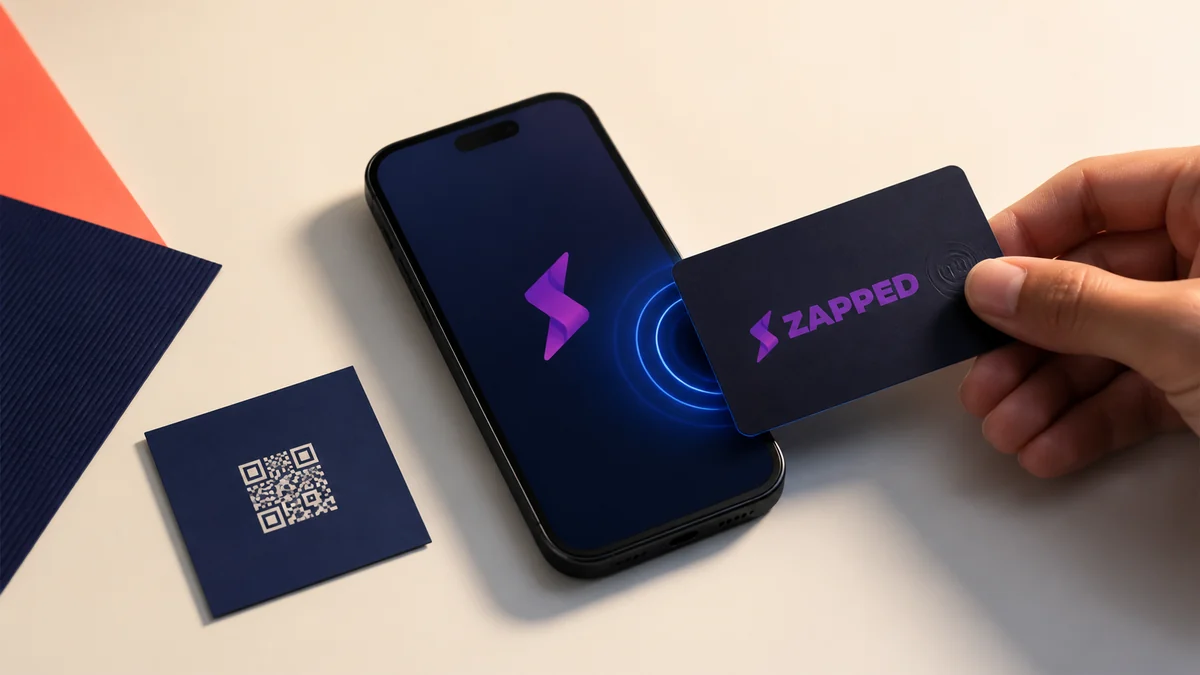
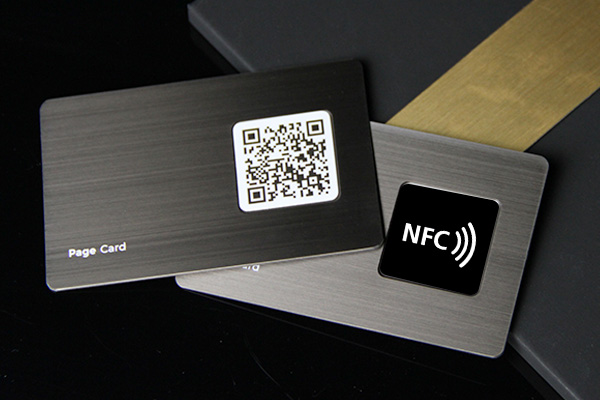
Keep a QR code or short URL visible when the card is used with different devices. A recipient may have NFC disabled, use a phone without the expected support, or prefer scanning. A fallback also gives the person a way to open the same profile without knowing where to tap.
For the basics of tags, payloads, and profile behavior, read what NFC business cards are. For artwork and tap area questions, use the NFC business card design guide. For encoding and device checks, see how to program NFC business cards. For the question of rewriting or locking a tag, see can NFC cards be rewritten.
Material, finish, and print questions
Material identity
Ask whether the card uses a veneer, bamboo sheet, solid wood, composite, or wood appearance print. Request the material name in the quote and ask whether grain variation is expected. Natural variation is part of the visual appeal, but it can affect the appearance of a logo and the consistency of a batch.
Surface finish
Ask how the surface is sealed, whether the finish is matte or glossy, and how it interacts with engraving or color printing. A supplier page may describe UV printing or laser engraving, but those descriptions do not tell you how a particular logo will look on a particular grain.
Thickness and edges
Card dimensions and thickness affect wallet fit, mailing, and perceived quality. They do not identify the chip. Ask for the finished dimensions, edge treatment, total thickness, and tolerance in the supplied specification.
Care and environment
Treat an environmental or water resistance rating as a supplier specification that needs context. Ask which finished assembly the rating applies to, what test standard was used, and what the warranty excludes. Do not turn a rating on a PDF into a personal assurance that every card will survive a pocket, rain, heat, or repeated handling.
Sustainability language
“Eco friendly,” “natural,” and “paperless” are broad marketing terms. Ask what material is used, what finish and adhesive are present, whether the chip can be removed, and how the card should be disposed of. A reusable profile can reduce repeated paper printing, but it does not prove a complete lifecycle impact.
A supplier specification example
One supplier PDF for a bamboo card lists an NTAG216 chip, 888 bytes of user memory, 86 by 54 millimeter dimensions, 1.4 millimeter thickness, color or laser printing, and a stated IP67 rating. That is useful as a specification checklist because it shows the kinds of fields a buyer can request.
It is one supplier's listed specification, so ask for the same fields for the exact product and batch you are ordering. The listed chip, material, and rating do not establish a universal construction for every wooden NFC card.
The buying checklist
Use this list before approving a sample:
- What wood, bamboo, veneer, composite, or backing material is used?
- Is the tag embedded, laminated, or attached as a separate piece?
- Which exact chip and NFC tag type are installed?
- How much memory is available, and what NDEF payload will be written?
- Is the tag writable after delivery, and can the supplier lock it?
- Where is the antenna or inlay located relative to the printed artwork?
- What are the finished dimensions, thickness, edge, and finish?
- Is the logo printed, engraved, or both, and how are color proofs approved?
- Does the supplier provide a sample before the full batch?
- Which iPhone and Android models will be used for the sample test?
- What happens when the profile URL, account, or subscription changes?
- Is a QR code or short URL included as a fallback?
- How are replacements, defective tags, and offboarding handled?
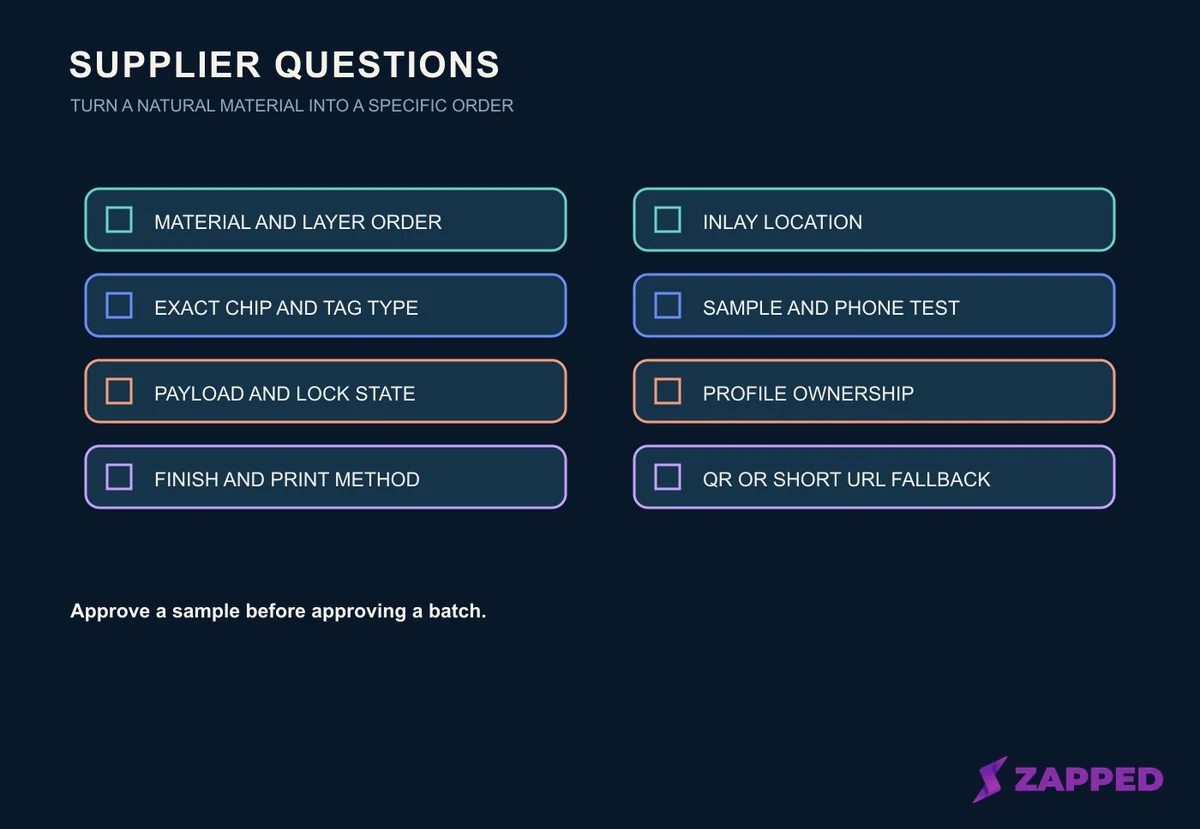
A supplier question checklist. It asks for evidence and process details for the exact card and batch.
Sample testing without overcomplicating it
Test the exact sample, not a stock photo or a different chip. Use at least one current iPhone and one current Android phone from the intended audience. Tap from the natural side of the card, then try the printed prompt and QR fallback. Record the first destination, redirects, load time, contact saving route, and whether the profile is editable.
Repeat after the supplier encodes the production payload. Confirm that the serial or destination is correct, that the QR points to the same controlled profile, and that the card still fits the team's ownership and replacement plan. If the supplier will not provide a sample or test method, treat that as a buying risk.
Use the sequence to compare the exact sample with the intended workflow. Record the destination, redirects, contact saving route, and profile ownership before approving a larger batch.
When wood is the wrong choice
Choose another construction when the card needs a uniform industrial finish, a known replacement supply, a specialized access control chip, or a documented physical performance requirement. A standard plastic card may make the chip and printer specification easier to compare. A metal card may require a different antenna design rather than a direct material swap.
Do not choose wood solely because “NFC” appears in the product title. Choose it when the supplier can explain the material, inlay, payload, finish, sample process, profile ownership, and fallback in writing.
Final answer
A wooden NFC business card is a layered product. Wood or bamboo supplies the visible surface. The inlay and chip supply the NFC behavior. The encoded URL and hosted profile supply the digital destination. The finish, sample process, and replacement policy determine whether the card fits the real workflow.
Use the chip data sheet to understand memory and tag type, use the supplier's specification to compare the finished assembly, and use a physical sample to test the exact batch. Keep a QR fallback and confirm who owns the profile before you order a large run.