There is no universal winner between an NFC and QR code business card. QR is the safer starting point when broad reach, visible sharing, and a low hardware floor matter most. NFC suits controlled, close, one-to-one handoffs. Using both gives recipients a second route when the first one does not work.
This comparison covers ordinary business cards that open a web profile. It does not cover payment cards, access credentials, or encrypted identity cards. It also does not claim stopwatch results or physical tests. The recommendations come from the same nine criteria applied to both options.
How we compared them
We compare NFC and QR by recipient requirements, handoff action, where the card can be used, common failure points, hardware floor, destination control, measurement, card design, and fallback paths. The same criteria apply to both formats. This is a documentation-based decision guide, not a lab test, so it does not claim a universal speed, reliability, durability, privacy, or conversion winner.
Quick answer
Choose QR first if people may view your card on paper, a screen, a sign, or a slide. Choose NFC first if you mainly share in person and can guide the recipient through a close tap. Choose both when recipient devices and settings are unpredictable. Point every route to the same current profile, and keep a readable short link as the final fallback.
Key takeaways
- NFC uses a close-range tag interaction, so compatible hardware, phone state, settings, and tap position can affect the handoff.
- QR uses a camera workflow, so the entire code needs to be visible and the printed symbol needs clear space around it.
- QR has the lower hardware floor because it can be printed or displayed without an electronic tag. NFC requires tag hardware.
- Editability and analytics belong to the destination or link platform, not automatically to NFC or QR.
- A hybrid card reduces dependence on one carrier, but neither route can rescue a broken destination page.
NFC vs QR code business card comparison
The table below applies the same criteria to both carriers. “Better” means better for a stated context, not better for every person or device.
| Criterion | NFC business card | QR code business card | Practical decision |
|---|---|---|---|
| Recipient hardware and settings | Needs a compatible NFC reader and an enabled, usable phone state | Needs a camera or scanner that recognizes QR links | Start with QR when the device mix is unknown |
| Successful handoff | Recipient places the phone close to the tag, then follows the detected link | Recipient frames the whole code and taps the detected link | Choose based on the handoff your audience will understand |
| Physical or remote context | Designed for close physical interaction | Can be printed or shown on cards, badges, signs, screens, and slides | QR fits more visible and distributed contexts |
| Main failure points | NFC disabled, screen state, missed tag location, or incompatible hardware | Code outside the frame, glare, poor presentation, damaged print, or blocked margin | Use the other carrier and a short link as fallbacks |
| Hardware cost floor | Requires a tag or card plus any destination service | Can be added to existing print or displayed digitally | QR starts without added electronic hardware |
| Updateability | Can open a stable URL whose destination is updated | Can open the same stable URL | The destination design decides editability |
| Analytics | Available only when the destination or link platform measures activity | Available only when the destination or link platform measures activity | The carrier alone does not provide meaningful analytics |
| Card design and space | The close-range handoff does not require framing a visible code, but clear tap guidance still helps | The code and its clear margin must remain visible | NFC can preserve a quieter face; QR makes the fallback obvious |
| Fallback path | QR code or readable link | NFC tap or readable link | Both is the most resilient arrangement |
How NFC and QR business cards actually differ
NFC and QR are carriers. Each can carry or resolve to a web address, while the page at that address does the useful work, such as presenting contact details and actions.
NFC uses a close-range tag handoff
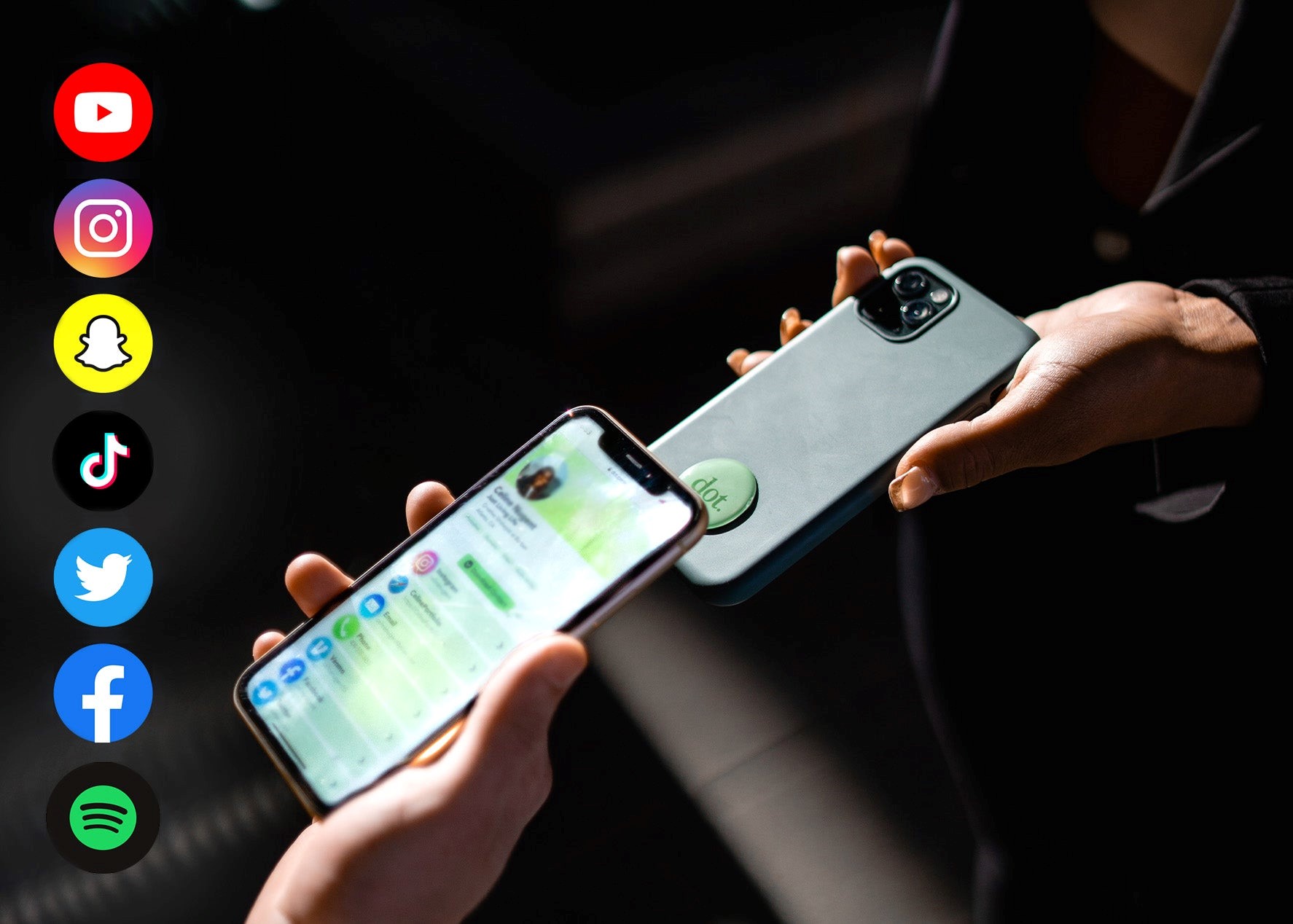
A typical NFC business card stores a web URI in a tag record. Android documents NDEF as its best-supported tag format and explains how a device can identify a URI when it scans a tag. The scan happens at very short range, so the recipient brings the phone close to the card instead of aiming a camera from farther away. NFC operates at 13.56 MHz, and the NFC Forum describes a typical operating range of up to about 2 cm. That physical constraint explains the handoff, but it is not a speed score. Android Developers explains the NFC tag flow, and the NFC Forum explains the operating range.
On Android, the normal tag reading flow can also depend on the screen being unlocked and NFC remaining enabled in Settings. Behavior can vary across devices and software versions, so this is a dependency to plan around rather than proof that an NFC handoff will fail on a particular phone.
If you want the broader technical background before choosing hardware, read how NFC business cards work.
QR uses an optical camera handoff
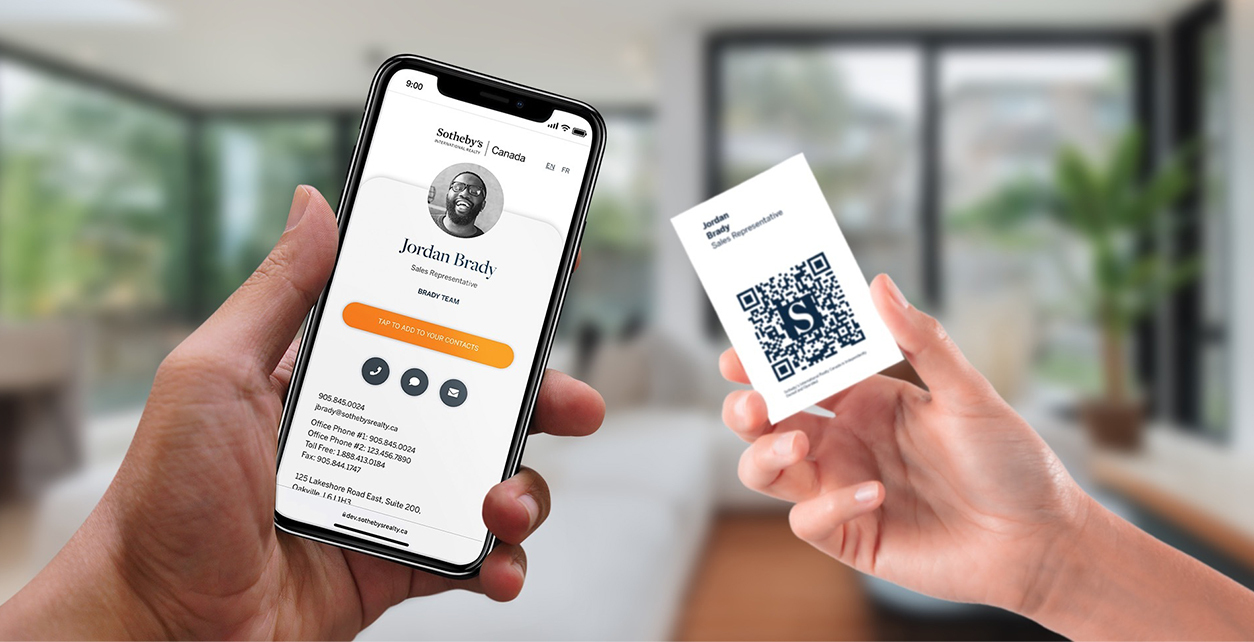
A QR code makes the destination visible as a pattern that a camera or scanner reads. Apple currently documents scanning with Camera or Code Scanner on iPhone and iPad, followed by tapping the detected link. Google documents a similar Camera or Quick Settings workflow for Pixel phones and says the entire code should be visible on screen. See the official instructions from Apple Support and Google Pixel Help.
Those examples support common built-in workflows, but they do not prove that every phone model behaves identically. QR still depends on a recognizable symbol, a usable camera view, and a recipient who knows to open the detected result.
Which reaches more recipients?
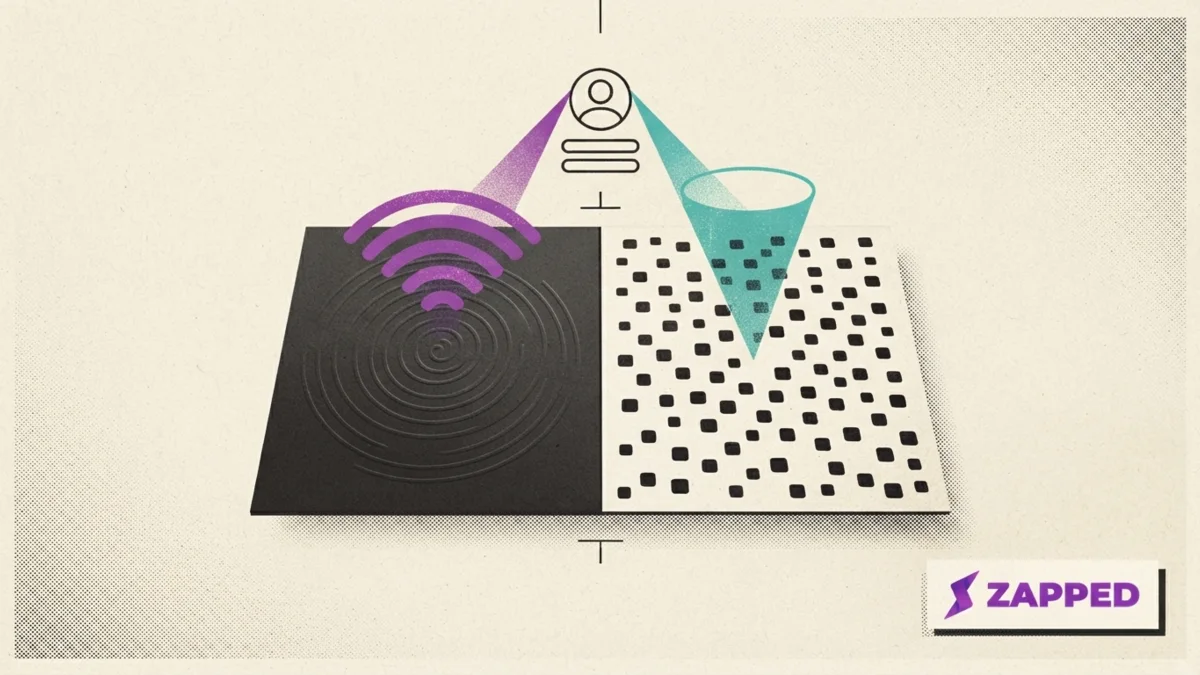
Choose QR first when recipient reach is your main concern. This is a cautious design recommendation, not a universal compatibility percentage. QR has official built-in scanning workflows on current Apple devices and Pixel phones, and it can be presented where a physical tap is impossible.
NFC adds a hardware and settings dependency. It can work well in a deliberate face-to-face exchange, but the recipient may need compatible NFC hardware, an unlocked screen, the right setting, and the correct reading position. QR has different dependencies, including camera access and a complete view of the code.
When access really matters, add a short, readable web address below the tap or scan instructions. That gives the recipient a route that does not depend on either NFC detection or QR recognition.
Which is faster or easier in person?
Neither carrier has a defensible universal speed advantage without a controlled test. NFC asks the recipient to bring a phone close to the tag and follow the result. QR asks the recipient to open or use a scanner, frame the entire code, and follow the result.
NFC can feel simpler when you control the interaction, know where the tag sits, and can guide the recipient. QR can feel simpler when the camera is already open, the code is easy to see, or several people need access to the same visible destination. Phone state, user familiarity, lighting, case design, and card placement can change the experience.
Use the interaction that is easiest to explain in your real setting. If you cannot predict the setting, provide both.
The NFC business card design guide shows how to give both routes a clear hierarchy without making the card feel crowded.
What fails, and what is the fastest recovery?
A useful business card does not merely work in ideal conditions. It tells the recipient what to do next when the first attempt stalls. These are recovery recommendations based on documented dependencies, not observed failure rates.
| Moment | Likely issue | Recovery | Benefit of a hybrid card |
|---|---|---|---|
| NFC tap | NFC is off or the phone state prevents reading | Unlock the phone, check the setting, and retry | Scan the QR code instead |
| NFC tap | The tag or antenna position is missed | Move the phone slowly around the likely reading area | Scan the QR code instead |
| QR scan | The entire symbol is not visible | Reframe the code and adjust the distance | Tap the NFC area instead |
| QR scan | Glare or poor light obscures the pattern | Change the angle or lighting | Tap the NFC area instead |
| Printed QR | Artwork covers the margin or distorts modules | Use compliant artwork and reprint the card | Use NFC or the short URL |
| Printed QR | Part of the symbol is dirty or damaged | Try a clearer copy or alternate route | Use NFC or the short URL |
| Either route | The destination page is unavailable | Use readable direct contact details or another working destination | Neither carrier fixes a broken destination |
QR print design deserves particular attention. DENSO WAVE specifies a clear quiet zone four modules wide on every side of a standard QR symbol. It also warns that surrounding images, overlaid artwork, distorted modules, or missing margin can make a code difficult or impossible to read. Error correction can restore some data when a symbol is dirty or damaged, but higher correction levels also affect code size. Review the official QR placement guidance, troubleshooting examples, and error correction overview before printing.
For a practical placement guide, see how to put a QR code on a business card.
Cost, updates, and analytics depend on the setup
QR usually has the lower deployment floor because the symbol can be printed on a card you already plan to produce or displayed digitally. NFC requires an electronic tag or card in addition to any profile or link service. That does not establish a lifetime cost winner. Materials, quantities, replacement needs, and service choices vary too much for a universal conclusion.
Updateability is often misunderstood. A carrier that stores fixed contact data behaves differently from one that points to a stable web address. If both the NFC tag and QR code point to the same live profile URL, the profile can change while the physical routes remain the same. The platform and URL arrangement make that possible, not the radio signal or square pattern by itself.
There is a separate physical question when the encoded destination itself must change. A printed QR code cannot be altered after printing. NFC tags vary, so check whether a particular tag can be rewritten or has been locked before treating it as repointable. Our guide to rewritable NFC cards covers that hardware decision. In either case, a stable URL you control usually avoids changing the carrier in the first place.
The same distinction applies to analytics. NFC and QR do not inherently provide useful reporting. A destination or link platform must record visits or actions and, if needed, distinguish the routes through separate trackable links. Evaluate that platform separately from the carrier.
When should you choose QR, NFC, or both?
The following recommendations apply the declared criteria to common situations.
Choose QR first when
- Your recipients use an unknown mix of devices.
- The same destination needs to appear on signs, screens, slides, badges, print, or other visible material.
- You do not want to add electronic tag hardware.
- Your design has enough room for a readable code, its clear margin, and a short instruction.
If you need help building the destination and code, this digital business card QR code guide covers the next step.
Choose NFC first when
- Most exchanges are controlled, one to one, and in person.
- You are comfortable showing the recipient where to place the phone.
- Tag hardware and eventual replacement are acceptable.
- You prefer not to make a QR code prominent on the main card face, while still keeping another fallback available.
If that describes your use case, compare NFC business card hardware and fee models before buying.
Before you choose the hardware, use the best NFC business card features checklist to check the destination, fallback, tag state, and replacement path.
Choose both when
- Recipient hardware, settings, or familiarity are uncertain.
- A failed handoff could mean losing the connection.
- One current profile can serve every route.
- The card can explain both actions without becoming cluttered.
Label the routes clearly, for example “Tap” beside the tag area and “Scan” beside the QR code. Add the short URL in readable text. The point is not to showcase more technology. It is to let the recipient recover without abandoning the exchange.
For a small business choosing a setup that can work at events and in everyday customer conversations, continue with NFC business cards for small businesses.
A resilient Zapped implementation
Zapped is one way to keep the destination separate from the carrier. One digital vCard can be shared by NFC tap, QR code, or direct link, so each route can lead to the same current profile. Updating that profile changes the destination content without requiring the carrier itself to supply editability.
Zapped also reports profile engagement signals, but that is a platform capability, not evidence that NFC or QR wins. The practical setup is simple: use one maintained profile, give each carrier a clear instruction, and preserve a direct-link fallback.
FAQs
Are NFC cards better than QR codes?
NFC cards are better for some controlled in-person handoffs, while QR codes are better for visible, distributed, or remote contexts. Neither is universally better. Choose against the same criteria: recipient reach, required action, context, failure recovery, hardware floor, destination control, and fallback.
Is it worth putting a QR code on an NFC business card?
Yes, when recipient devices and settings are unpredictable. The QR code gives someone another route if the NFC tap does not work. Preserve the required clear margin, keep the symbol unobstructed, and add a readable short URL as the last fallback.
Do NFC and QR business cards need an app?
A normal web-link flow can open a browser destination, but the exact behavior depends on the phone, payload, settings, and destination. Current iPhone, iPad, and Pixel guidance documents built-in QR scanning routes. Avoid promising the same workflow on every device.
Can NFC and QR point to the same digital card?
Yes. Both carriers can point to the same live web address. Zapped currently supports sharing one digital vCard by QR code, NFC tap, or link, which demonstrates the shared-destination approach.
Can you change the contact details later?
You can change them later when NFC and QR point to a live profile that you control and can edit. If the carrier contains static contact data instead, changing those details may require rewriting the tag or replacing the printed code.
How this comparison was checked
This comparison was checked in July 2026. It applies nine neutral criteria to both carriers: recipient requirements, successful action, context, failure recovery, hardware floor, updateability, measurement, card design, and fallback. No physical card or cross-device performance test was conducted, so the article makes no measured speed, reliability, conversion, security, durability, or environmental winner claim.
Sources
- Android Developers: NFC basics, for NDEF URI handling, close-range interaction, and qualified screen and setting conditions.
- Apple Support: Scan a QR code with iPhone or iPad, for the Camera and Code Scanner workflow.
- Google Pixel Help: Scan QR codes, for Pixel camera and Quick Settings guidance and full-code visibility.
- DENSO WAVE: QR Code area guidance, reading problems, error correction, and standardization, for QR print and technical constraints.
- Zapped, for the current example of one digital vCard shared through QR, NFC, and a direct link.