Use this checklist to decide what to put on a digital business card, what to leave out, and how to make the profile useful.
Quick answer
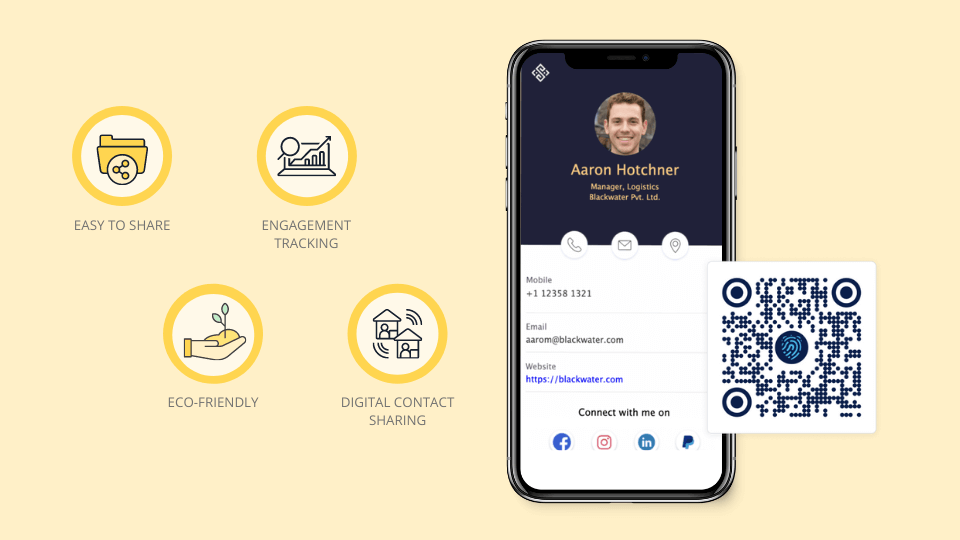
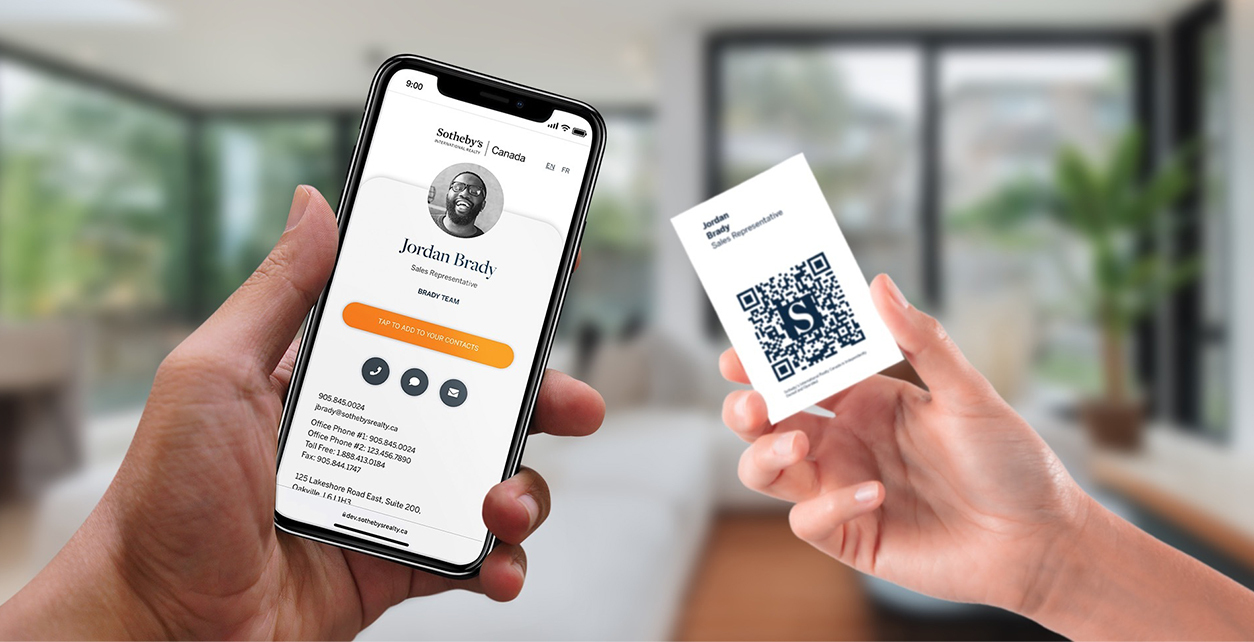
Put the essentials on a digital business card first: name, role, company, phone or email, website, and a clear save contact action. Then add only the links that help the recipient act, such as booking, portfolio, social profiles, payment, reviews, or a company page.
Key takeaways
- Make the recipient journey clear before choosing the card format.
- Use QR or NFC as entry points, not as the whole strategy.
- Point scans and taps to an editable destination whenever details may change.
- Test the complete flow before printing or rolling it out.
What this means in practice
A digital card can hold more than paper, but that does not mean it should hold everything. The best profile is organized around the next step the recipient is most likely to take.
A refreshed business card should answer three questions quickly: who is this person, why should I care, and what should I do next? When the card points to a live profile, those answers can change as the business changes.
What to include on the profile
| Field | Keep it when |
|---|---|
| Name and role | Always, because people need context |
| Phone or email | It is the best way to reach you |
| Save contact button | You want the contact to last after the scan |
| Website or portfolio | It helps the recipient evaluate you |
| Booking link | The next step is a meeting or appointment |
| Review or location link | Local trust matters for the decision |
How to use this well
Start with the outcome. If the goal is a saved contact, make the save action obvious. If the goal is booking, put the booking link near the top. If the goal is local trust, include reviews, service area, and a clear way to call or request a quote.
Do not send every person to a generic homepage. A business card scan or tap should open a page made for that handoff. The page can still link to the full website, but it should not make the recipient hunt for the basic next step.
The core fields to include
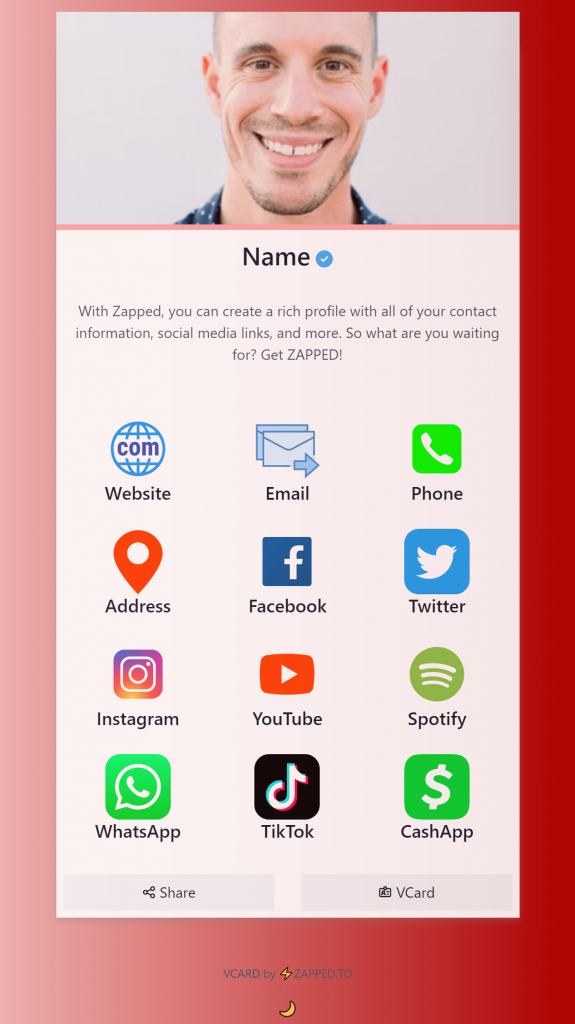
Start with the details a recipient needs to recognize and act: name, role, company, phone, email, website, and a clear profile photo or logo. Then add only the links that support the relationship. A consultant may need booking and LinkedIn. A realtor may need listings and WhatsApp. A salon may need Instagram, booking, location, and reviews.
The mistake is treating the card like a dumping ground. Every extra link should earn its place by helping the recipient decide, remember, book, contact, or save. Public fields such as company name, role, and service area also affect whether a profile should be indexed, so review when a profile should rank before you publish for search.
How to order the profile
Put the most important action near the top. If your goal is calls, show phone first. If your goal is appointments, show booking first. If trust is the barrier, show reviews, case studies, certifications, or portfolio examples before less important social links. The card should guide the recipient, not ask them to decode your whole business.
Make the card useful with Zapped
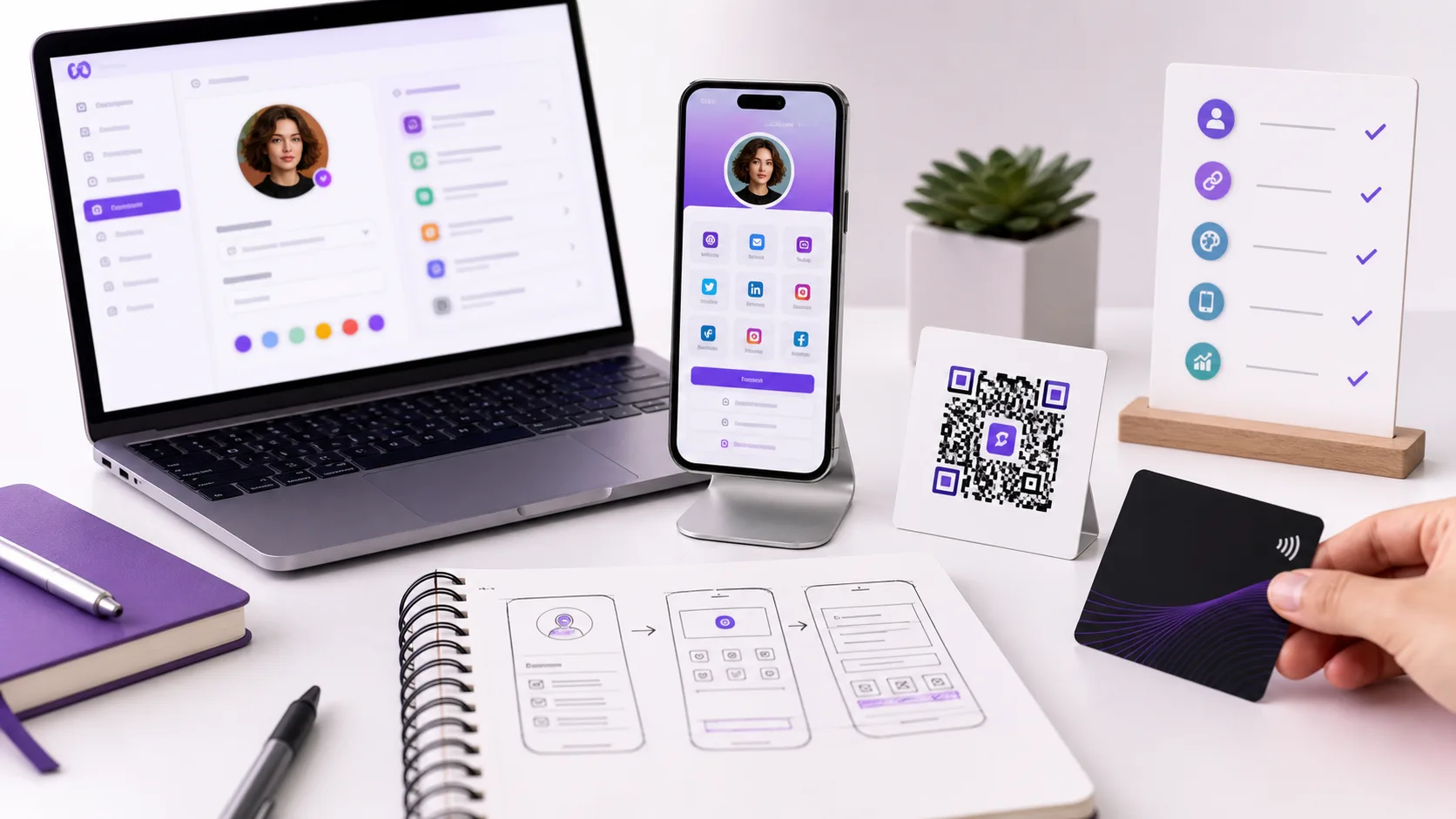
Zapped gives the card a live destination instead of locking every detail into print. The same profile can support QR codes, NFC taps, direct links, email signatures, social links, booking pages, and save contact actions.
That is the practical advantage of a digital card: people still get a simple handoff, but you can keep the profile accurate after the card is shared.
Examples by use case
A student at a career fair can use a QR card that opens a profile with resume, portfolio, LinkedIn, and email. A freelancer can use the same idea for services, project samples, booking, and testimonials. A founder can use it for a short pitch, product link, calendar, and investor or partner contact options.
The best profiles are edited for the audience. A recruiter does not need every social link. A prospect does not need every old project. Put the proof that helps this person decide near the top, then keep secondary links available but quieter.
How to make the profile more credible
Credibility comes from specificity. Add the details that prove the card belongs to a real person or business: a clear name, role, company, location or service context when relevant, and links that support the goal of the exchange. Avoid vague labels such as learn more when a direct label like book a call, view portfolio, or save contact would be clearer.
If the profile is used professionally, review it the same way you would review a resume or proposal. Remove stale links, check spelling, and make sure the strongest proof appears before secondary social links.
FAQs
Do people need an app to open the card?
No. A strong recipient experience opens in a normal browser from a QR code, NFC tap, direct link, or message.
Should I use QR or NFC?
Use QR when visibility matters and NFC when fast close-range sharing matters. Many business cards should use both.
What should the profile include?
Include contact details, a save contact action, website or company link, and the most important next step for that audience.
How should I test the card?
Test the QR code, NFC tap, page speed, save contact action, and important links on both iPhone and Android before printing or sharing widely.
Sources
- NFC Forum technical overview for NFC tap behavior and common NFC use cases.
- IETF RFC 6350 for the vCard contact data format.
- Google Business Profile review guidance for review link and QR code workflows.