Yes, an NFC business card can work without a monthly fee. The important distinction is what is free or one-time: the physical card, the profile it opens, or only the basic sharing features. Before buying, verify the free destination, paid feature gates, and what you can do if you later leave the provider.
Quick answer
The lowest-risk no-fee setup is a standard, writable NFC tag that opens a URL you control, with a QR code that opens the same destination. A vendor-hosted free profile can also fit, but a free tier does not prove that every feature, exit option, or physical card is included.
As checked in July 2026, Tap Tag states that its free profile includes dashboard access and dynamic QR codes. Blinq offers a $0 Free digital-card plan, while its compatible NFC hardware remains a separate purchase decision. Tapt says it does not charge an ongoing annual platform fee for fewer than five cards. Those are qualified options, not promises that a provider's card is rewritable or that a profile survives cancellation.
Key takeaways
- A one-time NFC card purchase and a free hosted profile are different things.
- Free plans can still gate branding, analytics, contact tools, integrations, and team controls.
- Test the exit path before you order cards for a team or event.
- A writable tag can point to an HTTPS URL you control, but test the actual tag before relying on it.
- Put a QR code on every card so recipients have a fallback when NFC is unavailable or inconvenient.
What does “without a subscription” mean?
This phrase can describe several different setups. Treat each one separately.
| Setup | What is documented | What still needs checking |
|---|---|---|
| One-time card with a vendor's free profile | The vendor states that basic profile access has no ongoing fee | Whether paid features matter to you, and what happens after a downgrade or account closure |
| Free profile plus separate NFC hardware | The profile has a free tier, but the physical card is bought separately | Hardware price, tag type, rewritability, and the profile's exit terms |
| No platform fee below a threshold | The vendor documents a threshold before an ongoing fee applies | Which features require a paid organization plan, and what happens beyond the threshold |
| Writable tag plus your own URL | The tag stores a standard web address you choose | Whether the tag is writable and unlocked, and whether you control the page, domain, and data behind that address |
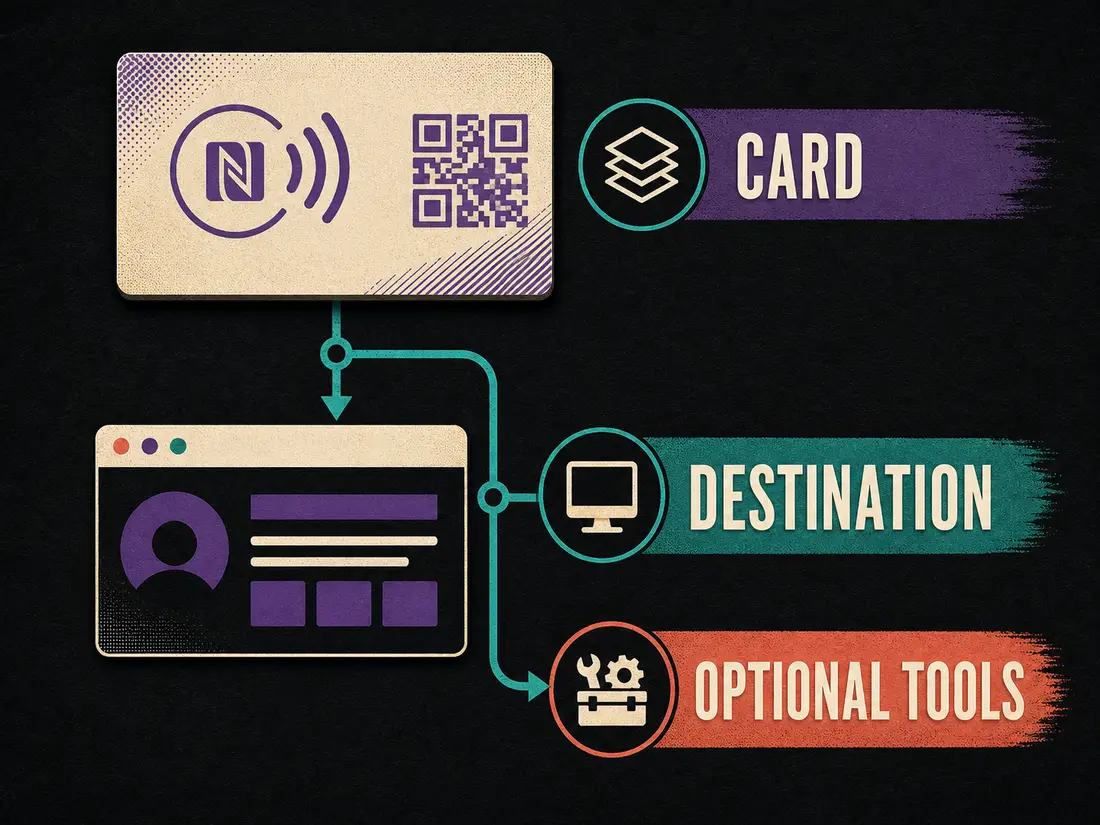
The useful question is not simply, “Is there a subscription?” Ask: “What will a recipient reach after a tap, who controls that destination, and what changes if I stop paying or close the account?”
How we classify no-fee NFC options
This guide uses four checks before calling an option qualified:
- An official page documents a free tier, a one-time product model, or a clear no-fee threshold.
- The option can deliver a shareable destination, not only a blank piece of hardware.
- Any paid feature gates are named instead of hidden behind a broad “free forever” claim.
- Cancellation, deletion, export, redirect control, and tag rewritability are marked not verified unless the provider documents them or a real test has recorded the result.
That last point protects you from the most expensive assumption. A card can be paid for once and still depend on a hosted profile, a domain, a dashboard, or a plan that you may later need to replace.
Qualified NFC business card options without a subscription
The options below meet a documented part of the no-fee test as of July 2026. They are not a universal ranking, and no vendor card in this table has been physically rewritten or tested through cancellation for this article.
| Option | Documented no-fee condition | Paid or unknown boundary | Ownership and exit note |
|---|---|---|---|
| Tap Tag | Tap Tag says its free digital business-card plan is free forever and includes dashboard access, dynamic QR codes, and profile editing or deletion. It describes tap products as a one-time cost when paired with free software. | Optional upgrades exist. Product-specific price, post-paid cancellation behavior, export, and tag rewritability are not verified here. | A free hosted profile can still be vendor-managed. Run the exit test before relying on it. |
| Blinq Free plus separately sourced compatible hardware | Blinq lists a $0 Free plan with two digital business cards, unlimited sharing, QR, Wallet, email, and SMS sharing. | The pricing page supports the software plan, not the price or lifecycle terms of every compatible physical NFC card. Premium adds individual features beyond Free. | Treat the profile and the physical tag as two purchases. Hardware rewritability and cancellation behavior are not verified here. |
| Tapt for fewer than five cards | Tapt says customers with fewer than five cards do not pay its ongoing annual platform fee. | Its pricing page describes the fee in connection with organization dashboard, integrations, and analytics. It does not establish that every team feature is free. | Do not infer profile survival after cancellation from the threshold alone. That result is not verified here. |
| Compatible writable NDEF tag plus a URL you control | Android documents NDEF support for reading and modifying tag content, including NFC Forum tag types 1 through 4. A standard web URL can point to a destination you choose. | The tag, destination host, domain, and any profile software can each have separate costs or limits. | This gives the most direct destination control when the tag is writable, unlocked, and tested. It does not prove any vendor's preconfigured card can be rewritten. |
Why V1CE is not in the table
V1CE is not a no-subscription recommendation in this guide. Its current pricing page promotes a 30-day Client Capture OS trial followed by a listed £49.99 monthly charge. Verify current terms directly if you are comparing its card and software separately.
What subscriptions commonly gate
An option can be free for basic sharing and still charge for the workflow that makes it useful at work.
Blinq is a clear example. Its $0 Free tier covers two digital cards and common sharing methods. Its individual onboarding guide identifies Premium as the tier for additional cards, contact scanning, AI tools, branding, and CSV export. That does not make the free tier misleading. It means you should compare your actual sharing job with the features that are gated.
Tapt similarly describes its annual platform fee in relation to organization dashboard access, integrations, and analytics. A small individual order can therefore be a different decision from a managed company rollout.
Pay for a plan when those capabilities solve a real workflow problem. Do not pay simply because a card vendor labels the paid tier as more professional.
Run a cancellation and exit test before ordering
No documentation-only comparison can prove that a particular NFC card or hosted profile will behave the way you need after an account change. Run this small test with one card and one profile before you buy in bulk.
- Create a test profile and record the exact URL reached by the NFC tap and QR code.
- Save any contact or profile data that the service lets you export.
- Scan the NFC card and QR code with an iPhone and an Android phone. Record the destination and the recipient steps.
- Find the provider's current downgrade, cancellation, and deletion instructions.
- If the tag is known to be writable and you have permission to change it, write a harmless test URL and scan it again. Do not try to bypass a lock or access control.
- Only after the destination, QR fallback, and exit terms are clear should you use the setup for a larger order.
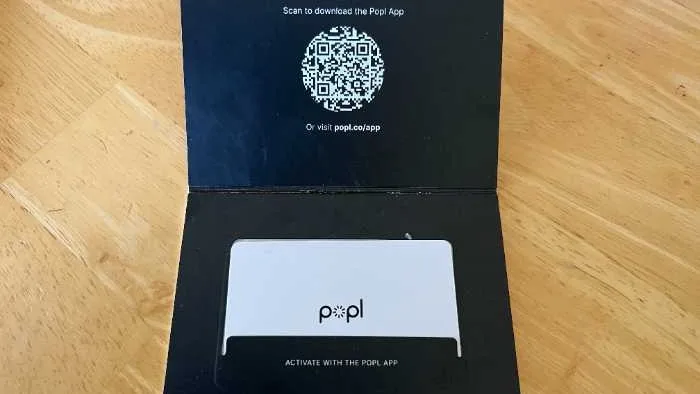
Keep cancellation and account deletion separate. For example, Popl's account deletion instructions say deletion does not itself cancel a subscription and that deleting the account deactivates associated QR codes and removes digital cards and leads. That is an exit-risk example, not evidence about another provider's cancellation behavior. For the broader Popl decision, read Do You Need a Subscription for a Popl Card?.
This article does not report a completed cancellation or tag-rewrite test. Do not assume that rewriting a tag has been tested or that a rewritten tag will keep working after a hosted-profile service is cancelled.
Can you control the URL behind the tap?
Usually, the most flexible NFC business-card design stores a normal HTTPS URL on the tag and lets the web page behind that URL carry the contact information. Android's NFC documentation describes NDEF records and URI handling, and its NDEF reference says Android NFC devices support NDEF operations on NFC Forum tag types 1 through 4.
If you control the destination URL, you can update the web page without repeatedly changing the physical card. That is different from claiming that every vendor card is writable. A vendor may ship a locked tag, a managed redirect, or a profile URL that remains under the vendor's control.
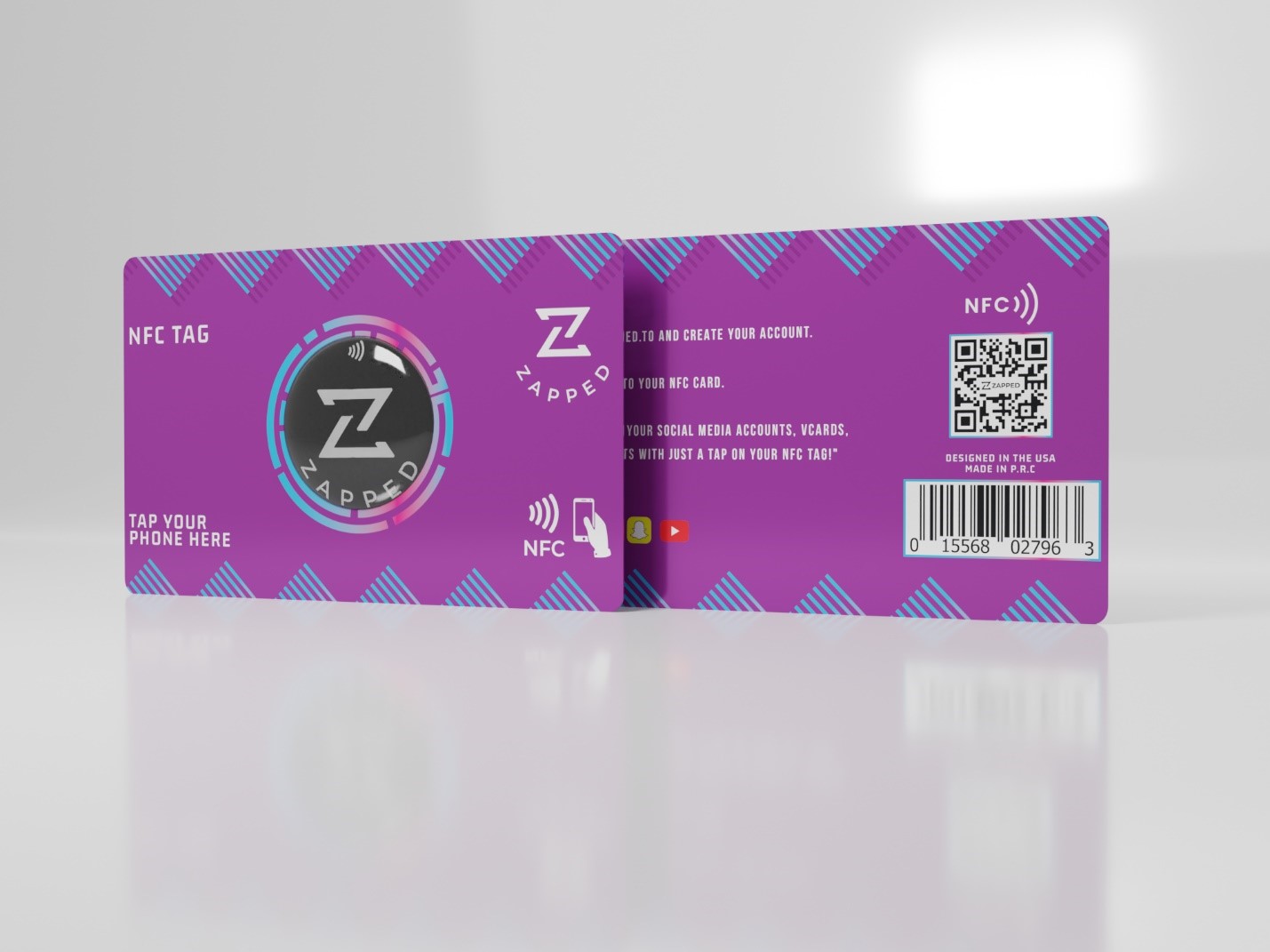
If Zapped is your chosen profile destination, apply the same test: confirm the current account terms and the exact URL before programming cards. You can then follow our guides to rewrite-aware NFC card choices, program an NFC tag with iPhone, or program an NFC tag with Android.
Why every NFC card needs a QR fallback
NFC is convenient when a recipient's phone reads the tag in the moment. It is not a universal substitute for a visible link. Apple documents background NFC tag reading on iPhone XS and later, subject to device-state limits. Phone settings, device model, cases, positioning, and the recipient's comfort with tapping can all affect the handoff.
A QR code gives the recipient another way to open the same destination with a camera. It also makes the card useful when the NFC tap is missed or the recipient prefers to scan. Create the QR code from the same stable URL, then test both paths before printing. Our vCard QR code guide can help with that setup.
When a paid plan is worth it
A paid plan can be worthwhile when it buys a capability you will actively use, such as:
- Central profile control for a team
- Contact scanning, enrichment, export, or follow-up workflows
- Brand controls that matter across many cards
- CRM integrations and governed lead routing
- Analytics needed to improve an event or sales process
In those cases, compare the plan as software, not as a hidden add-on to a physical card. Ask whether the feature replaces a real manual task, whether it is needed by one person or a team, and whether the provider's account, data, and exit terms fit your process.
Small businesses often need that same split between a simple card and a managed rollout. Our guide to NFC business cards for small businesses shows how to start small without losing the QR fallback or a clear exit plan.
No-subscription NFC business card checklist
Before you order, confirm each item in writing or with a one-card test:
- The physical card price, shipping, and any replacement cost
- The profile or destination that opens after a tap
- Whether the basic profile has a recurring charge
- The free-tier feature limits that affect your workflow
- Whether the tag is writable, unlocked, and appropriate for a standard NDEF URL
- Who controls the destination URL, domain, and profile data
- What happens on downgrade, cancellation, and account deletion
- Whether you can export the information you need
- A QR code that opens the same destination
- Successful scans on the iPhone and Android devices you expect to meet
Frequently asked questions
Can NFC business cards work without a monthly fee?
Yes. A provider may offer a free hosted profile, no platform fee below an order threshold, or a one-time writable tag that opens a URL you control. Check the physical card, hosted destination, and paid feature gates separately.
Is a free NFC business card really free forever?
Only the provider's current terms can answer that. For example, Tap Tag states that its free profile is free forever, while other providers may have limits, optional upgrades, or fees that begin at a threshold. Confirm the current terms and run an exit test before you rely on a provider for a large order.
Can I rewrite any NFC business card?
No. A tag must be writable and unlocked. A vendor-supplied card may be locked or managed. See Can NFC Cards Be Rewritten? before treating a card as editable.
Do recipients need an app to use an NFC business card?
For a standard URL-based NFC handoff, the goal is for the recipient's phone to open the web destination directly. Actual experience varies by phone and settings, so include a QR fallback and test the devices that matter to you.
What is the safest setup for avoiding vendor lock-in?
Use a compatible writable tag that opens an HTTPS URL you control, keep a QR code for the same URL, and confirm your destination host's current account and data-export terms. Test the physical tag before locking it or placing a larger order.
Sources
Prices, plan terms, and product features are current as checked in July 2026 and can change.
- Tap Tag pricing
- Blinq pricing
- Blinq individual onboarding guide
- Tapt pricing
- V1CE pricing
- Popl account deletion instructions
- Apple background NFC tag reading
- Android NFC basics
- Android NDEF reference
This is a document-led guide. It does not claim hands-on NFC tap, tag-rewrite, cancellation, or post-cancellation profile-survival testing.