Use NFC tag business cards at corporate events with the right setup, QR backup, team profiles, and follow up workflow.
Quick answer
At corporate events, NFC business cards work best when every tap opens a clear profile with save contact, company links, meeting booking, and follow up actions. Add a QR backup so attendees can still open the profile if they do not tap.
Key takeaways
- Make the recipient journey clear before choosing the card format.
- Use QR or NFC as entry points, not as the whole strategy.
- Point scans and taps to an editable destination whenever details may change.
- Test the complete flow before printing or rolling it out.
What this means in practice
Events create short conversations and long follow up lists. NFC is helpful only if the profile makes the next step obvious while the person still remembers the interaction.
A refreshed business card should answer three questions quickly: who is this person, why should I care, and what should I do next? When the card points to a live profile, those answers can change as the business changes.
Practical checklist
| Check | Why it matters |
|---|---|
| Clear primary action | The recipient knows whether to save, book, call, review, or buy |
| QR code backup | Works even when NFC is unfamiliar or disabled |
| Editable profile | Keeps old cards and links useful |
| Mobile speed | Most scans and taps happen on phones |
| Useful links | Supports the next step instead of creating clutter |
| Team ownership | Prevents stale employee profiles and off-brand cards |
How to use this well
Start with the outcome. If the goal is a saved contact, make the save action obvious. If the goal is booking, put the booking link near the top. If the goal is local trust, include reviews, service area, and a clear way to call or request a quote.
Do not send every person to a generic homepage. A business card scan or tap should open a page made for that handoff. The page can still link to the full website, but it should not make the recipient hunt for the basic next step.
Event workflows that benefit from NFC
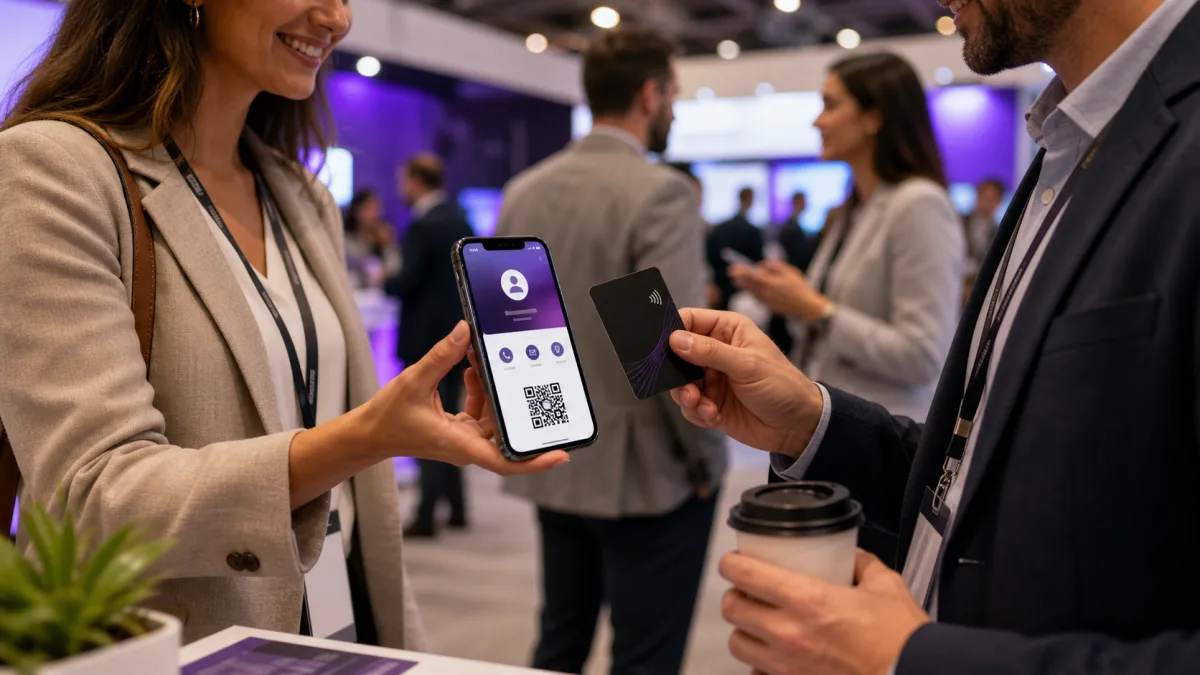
Corporate events move quickly, so NFC business cards should shorten the path from the conversation to the next step. A tap can open a speaker profile, sales rep contact page, recruiting page, demo booking link, sponsor offer, or team directory. The profile should match the event context instead of showing a generic company homepage.
For booths, pair NFC with QR signage so people can choose the interaction they prefer. Staff cards can point to individual profiles while booth signs point to campaigns or lead forms.
What to prepare before the event
Create profiles early, test every card, assign ownership, and decide what happens after a tap. If leads need to be followed up, connect the profile to a booking link, form, or simple note-taking workflow. After the event, update the profile so the same card keeps working for the next campaign. If a tap reads but the destination page fails, use the NFC business card link recovery guide.
Use Zapped as the live team profile
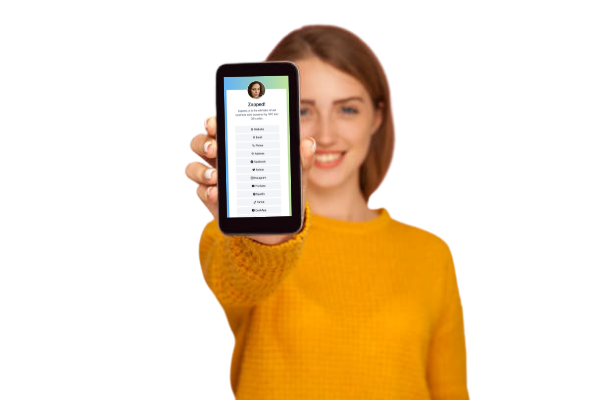
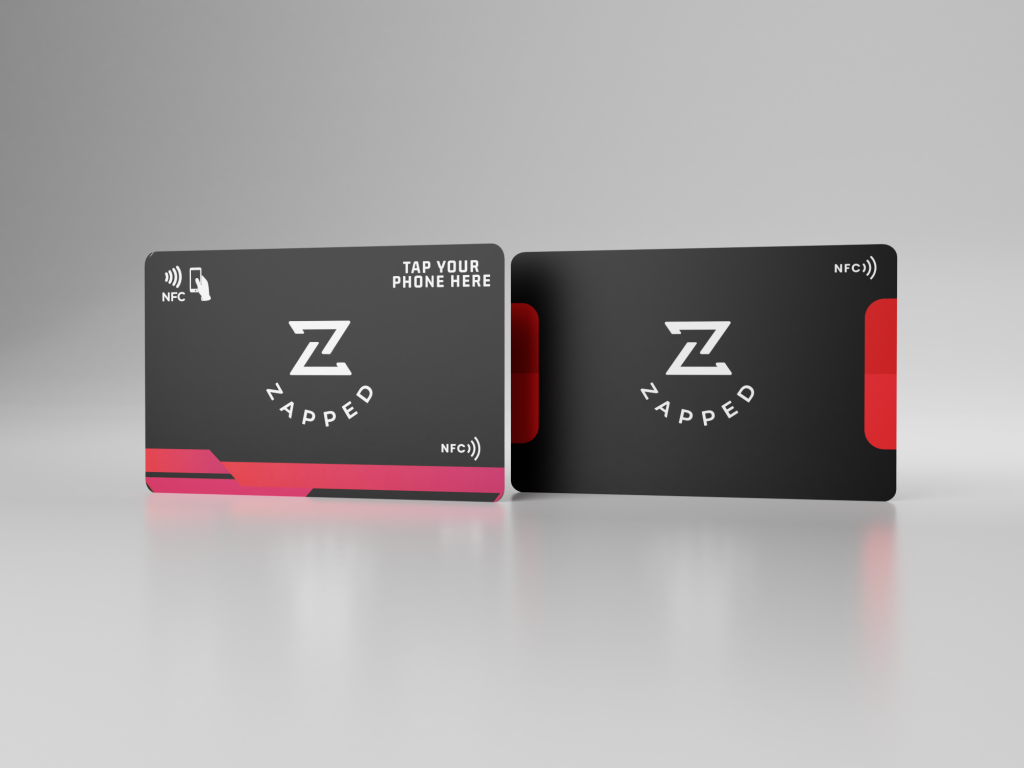
Zapped is strongest when a person or team needs one profile behind every sharing method. A card can be printed once, shared as a QR code, tapped with NFC, sent in a message, or added to an email signature while the profile stays editable.
That matters for teams because titles, links, territories, phone numbers, and booking pages change. The physical card starts the handoff, and the Zapped profile keeps the follow up accurate.
Examples by use case
For a conference card, the profile might show a headshot, role, company, calendar link, LinkedIn, and one event-specific offer. For a local service card, it might show phone, service area, quote request, reviews, and a photo gallery. For a sales team, it might show product links, meeting booking, company page, and a save-contact button.
The format changes, but the principle stays the same: the card should continue the conversation that started in person. If the recipient only needs your phone number, keep it simple. If they need context before they act, give them the proof and next step in the profile instead of trying to squeeze everything onto the printed card.
Before you publish or print
Use this final pass before the card goes live:
- Open the profile from the exact QR code or NFC chip that will be used.
- Confirm the profile headline, photo, company name, and primary action match the real handoff.
- Test the save-contact action and every high-priority link on iPhone and Android.
- Check that the printed card still works if the recipient ignores NFC and scans the QR code instead.
- Ask one person outside the project to scan it and explain what they think the next step is.
That last test is valuable because most card problems are clarity problems. If the person hesitates, the profile or printed card needs simplifying before it reaches customers.
FAQs
Do people need an app to open the card?
No. A strong recipient experience opens in a normal browser from a QR code, NFC tap, direct link, or message.
Should I use QR or NFC?
Use QR when visibility matters and NFC when fast close-range sharing matters. Many business cards should use both.
What should the profile include?
Include contact details, a save contact action, website or company link, and the most important next step for that audience.
How should I test the card?
Test the QR code, NFC tap, page speed, save contact action, and important links on both iPhone and Android before printing or sharing widely.
Sources
- NFC Forum technical overview for NFC tap behavior and common NFC use cases.
- IETF RFC 6350 for the vCard contact data format.
- Google Business Profile review guidance for review link and QR code workflows.