Compare greener alternatives to paper business cards, including QR cards, NFC cards, digital profiles, recycled paper, and email signatures.
Quick answer
The best green alternatives to paper business cards are digital profiles, QR codes, NFC cards, recycled paper cards, and email signature cards. The lowest waste option is usually a live digital profile that can be shared by link, QR, or NFC, with small print runs only when a physical handoff is useful.
Key takeaways
- Make the recipient journey clear before choosing the card format.
- Use QR or NFC as entry points, not as the whole strategy.
- Point scans and taps to an editable destination whenever details may change.
- Test the complete flow before printing or rolling it out.
What this means in practice
A greener card strategy is not only about the material. It is also about reducing reprints when names, titles, numbers, links, and offers change.
A refreshed business card should answer three questions quickly: who is this person, why should I care, and what should I do next? When the card points to a live profile, those answers can change as the business changes.
Greener card options
| Option | Sustainability benefit | Best use |
|---|---|---|
| Digital profile | Reduces print dependence | Remote sharing and ongoing updates |
| QR code on card | Uses less print space and supports updates | Events, packaging, and paper cards |
| NFC card | Reusable physical object | Sales, teams, and repeat networking |
| Recycled paper | Better material choice | Local handoffs and traditional settings |
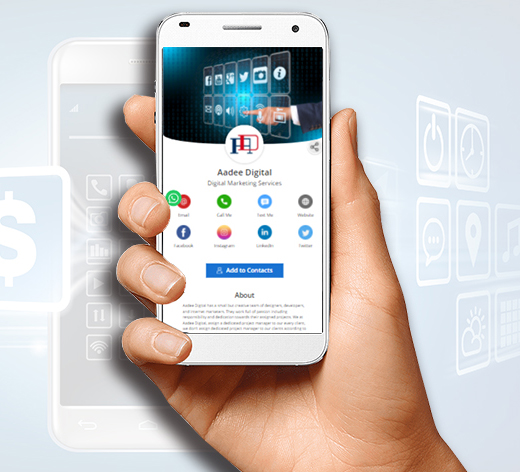
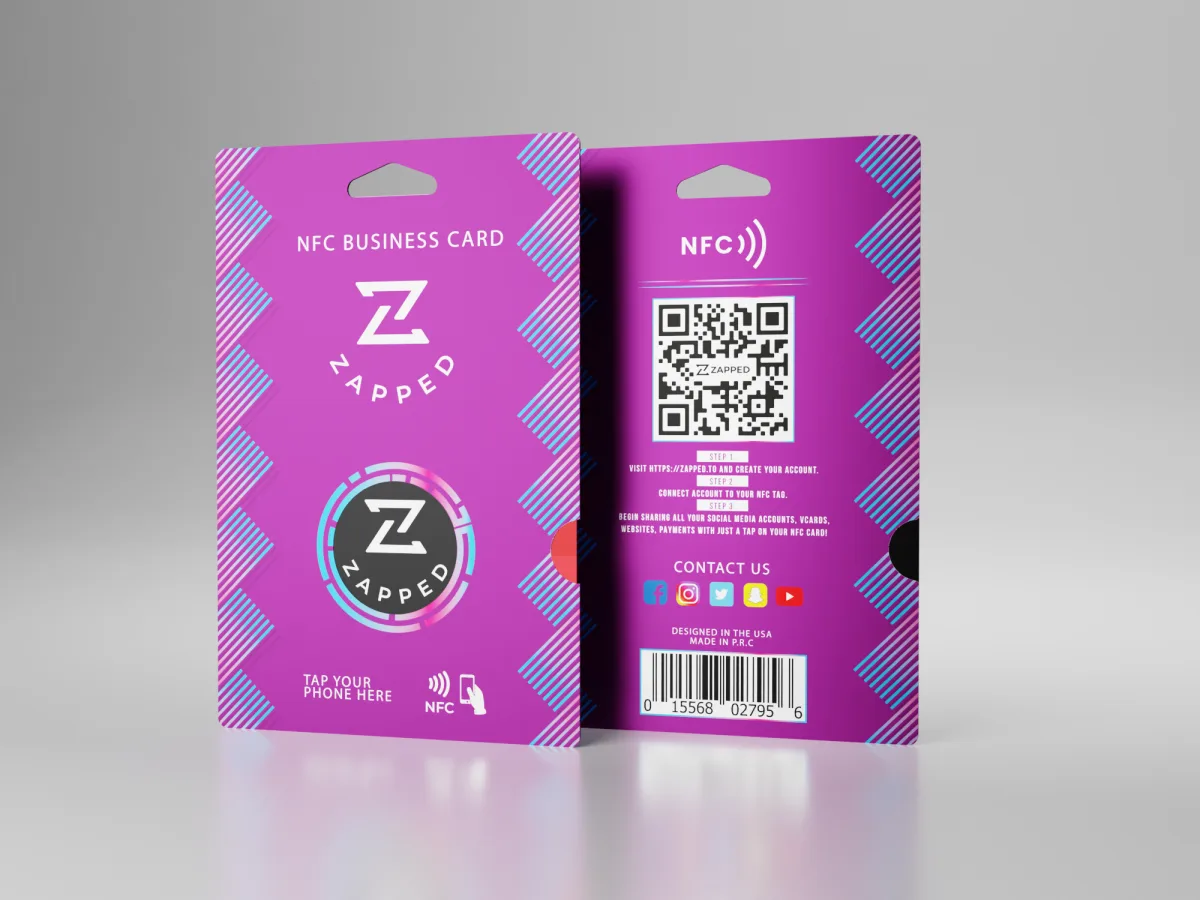
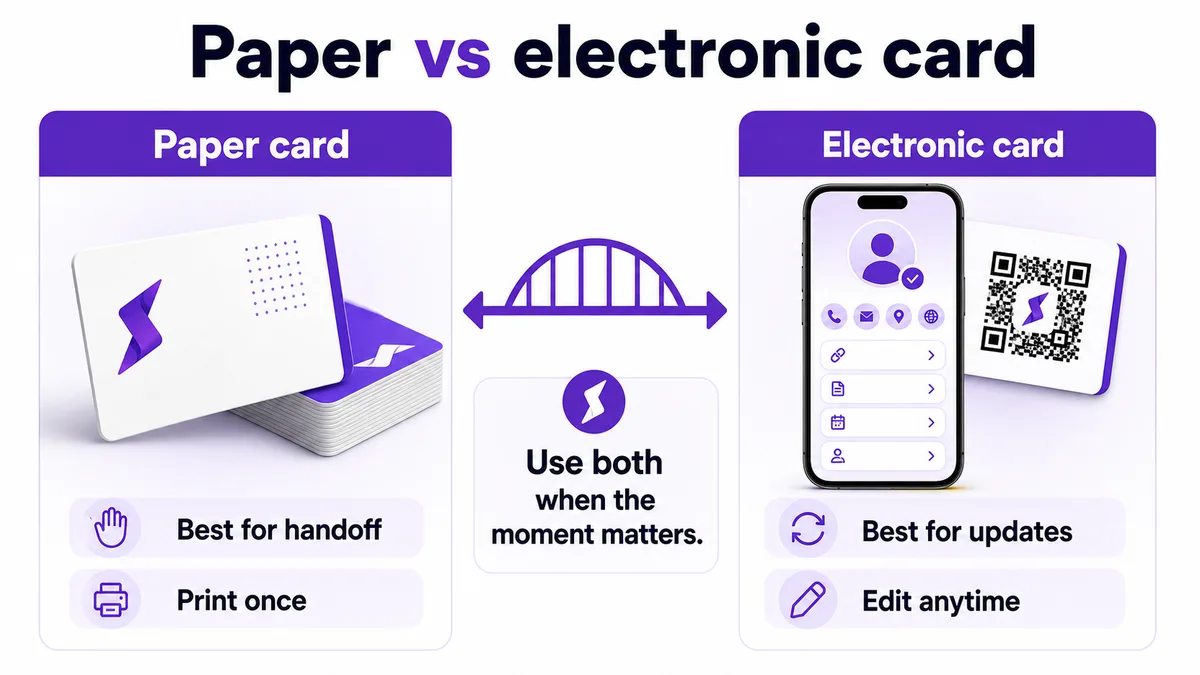
This visual shows how the card design, scan path, and profile destination work together.
How to use this well
Start with the outcome. If the goal is a saved contact, make the save action obvious. If the goal is booking, put the booking link near the top. If the goal is local trust, include reviews, service area, and a clear way to call or request a quote.
Do not send every person to a generic homepage. A business card scan or tap should open a page made for that handoff. The page can still link to the full website, but it should not make the recipient hunt for the basic next step.
What makes an alternative genuinely greener
A greener business card alternative should reduce waste without making the contact exchange harder. A reusable NFC card, QR code, digital profile, email signature, or downloadable contact link can lower repeat printing when details change. The biggest improvement usually comes from avoiding reprints, not from switching to a slightly different paper stock.
That does not mean paper has no place. Recycled or responsibly sourced cards can still work for premium handoffs. The key is to print less often and make each printed piece point to a live profile.
How to choose the right option
Choose based on how often your details change and where you meet people. For events, a QR badge or NFC card can move quickly. For local services, a durable printed card with a QR code may be better. For teams, a shared digital platform helps standardize profiles and reduce one-off print runs.
Where Zapped fits
Zapped is useful when the card, QR code, NFC tap, and direct link should all point to one live business profile. That profile can hold contact details, booking links, social links, review links, company pages, and save contact actions without forcing the recipient to install an app.
The practical advantage is maintenance. Instead of reprinting or rewriting every card when details change, you update the Zapped profile and keep the sharing path intact.
Examples by use case
A consultant who changes offers often can use one durable NFC card and update the profile behind it. A local shop can print a small batch of cards with a QR code that points to current hours, location, reviews, and seasonal offers. A team can standardize digital profiles so new staff do not need a full reprint every time details change.
The greener option should still match the moment. A premium recycled paper card can be right for a high-touch client meeting. A QR code on signage can be better for a busy counter. A reusable NFC card can be better for repeated networking.
How to make the greener option practical
A sustainable card strategy works only if people still use it. Keep the physical piece simple, durable, and easy to scan. Put changing information on the live profile, then reserve print for brand impression, QR access, and a short reminder of what the person does.
For teams, create a review rhythm. Check staff profiles, old campaign links, retired offers, and inactive phone numbers before ordering more printed material. That keeps the environmental promise tied to real operational behavior. The goal is not just to buy greener materials. The goal is to reduce waste while making the contact exchange more useful.
FAQs
Do people need an app to open the card?
No. A strong recipient experience opens in a normal browser from a QR code, NFC tap, direct link, or message.
Should I use QR or NFC?
Use QR when visibility matters and NFC when fast close-range sharing matters. Many business cards should use both.
What should the profile include?
Include contact details, a save contact action, website or company link, and the most important next step for that audience.
How should I test the card?
Test the QR code, NFC tap, page speed, save contact action, and important links on both iPhone and Android before printing or sharing widely.
Sources
- NFC Forum technical overview for NFC tap behavior and common NFC use cases.
- IETF RFC 6350 for the vCard contact data format.
- Google Business Profile review guidance for review link and QR code workflows.