A digital business card can be free, but the real cost depends on what you expect the card to do. A simple personal profile costs very little. A company rollout with branded templates, NFC cards, analytics, custom domains, and user management needs a real budget.
Quick answer
A basic digital business card can start free. Paid digital card tools usually charge for branding, analytics, team controls, custom domains, integrations, or advanced sharing features. Physical NFC cards add a separate hardware cost, and custom card materials or bulk team orders can change the total.
Key takeaways
- The cheapest setup is a shareable profile link and QR code.
- NFC cards cost more because there is physical hardware involved.
- Teams should budget for admin controls, brand consistency, onboarding, and offboarding.
- Price should be judged against follow up quality, not only the monthly fee.
- Zapped is useful when one editable profile needs to work through link, QR, NFC, and team sharing.

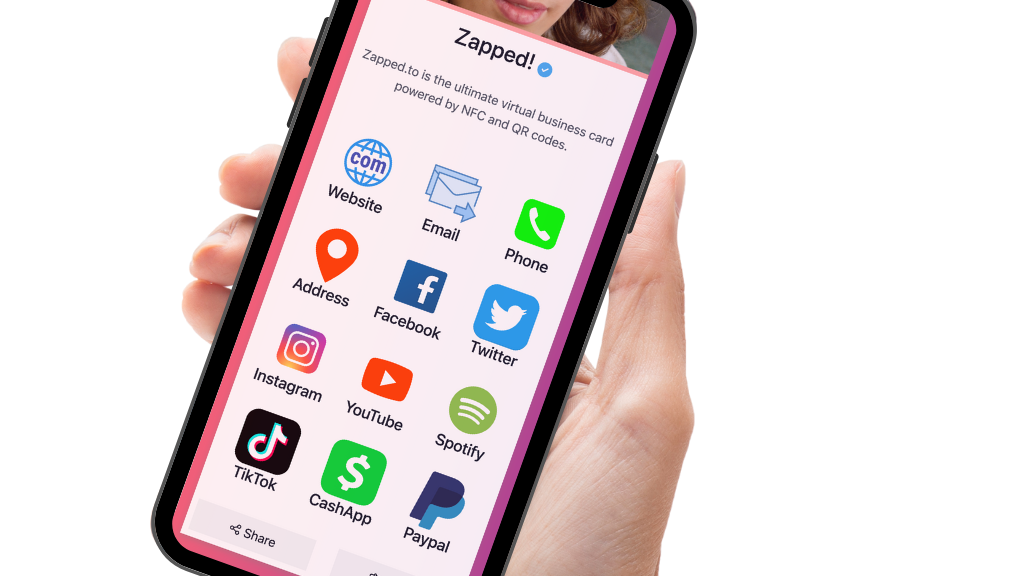
Use this image as a reference point while you compare the options below. The important idea is that the card, code, or NFC tap should lead to a profile that is easy to save and act on.
What affects the price?
| Cost item | Why it changes the price | When it matters |
|---|---|---|
| Profile software | Free plans usually limit branding, analytics, or team controls | Any serious business use |
| NFC card or tag | Physical cards, metal cards, and custom printing add cost | In person networking |
| QR code design | Static QR codes are cheap, but branded profile management adds value | Print cards, signs, flyers |
| Custom domain | A branded link can increase trust | Sales teams and public profiles |
| Analytics and lead capture | Tracking and forms help measure follow up | Events, sales, recruiting |
| Team management | Admins need ownership, templates, and employee control | Companies and agencies |
Free vs paid digital business card
A free digital card is fine for testing the idea, sharing a simple profile, or replacing a personal link page. Paid plans become more attractive when the card represents a business, needs a polished domain, or has to be managed for several people.
The practical question is not only, how much does it cost? It is, what happens after someone opens it? If the profile helps them save your contact details, book a meeting, message you, view your work, or share the card internally, the card has a job.
NFC card costs vs digital profile costs
NFC and digital profiles are separate pieces. The NFC card is the physical trigger. The profile is the destination. Buying a premium card does not automatically create a better follow up experience.
| Setup | Typical use | Budget note |
|---|---|---|
| Profile link only | Online sharing, email signature, social bios | Lowest cost and easiest to test |
| QR code profile | Printed cards, flyers, event badges | Good universal option |
| NFC card plus QR | Face to face networking | Best in person experience |
| Team platform | Employee cards and brand control | Most valuable when many people need consistency |
How to avoid overpaying
Start with the workflow you need, then buy the tool that supports it. A solo consultant may only need a clean profile, QR code, and calendar link. A realtor may need listings, WhatsApp, lead capture, and social proof. A company may need templates, role based permissions, and analytics.
Zapped fits the middle ground where the profile is more important than the card itself. You can share the same profile by direct link, QR code, and NFC card, then update the profile as your business changes.
Price the Zapped profile by what it replaces
When comparing digital business card prices, include the value of the live profile behind the card. Zapped can replace scattered QR pages, static contact files, NFC destinations, and simple link pages with one editable profile that works across sharing methods.
That makes the price easier to judge. If the profile reduces reprints, keeps details current, and improves follow up, it is doing more than a static card ever could.
Budget checklist
Before choosing a plan, check:
- How many cards or profiles you need.
- Whether the free plan allows the branding you want.
- Whether QR and NFC sharing are both supported.
- Whether analytics are useful for your team.
- Whether you need a custom domain.
- Whether employee cards can be transferred or removed later.
- Whether the destination profile can be edited without reprinting anything.
Why average price varies so much
Average price is hard to pin down because digital business cards can be free software profiles, paid apps, NFC cards, premium metal cards, or managed company programs. The useful question is what you need the card to do.
A solo user may only need a free or low cost profile. A small business may pay for branding and analytics. A larger company may care more about team ownership, employee templates, offboarding, and reporting.
Practical price ranges to think about
| Scenario | Budget question |
|---|---|
| Testing the idea | Can the free plan prove the workflow? |
| Solo professional | Is the paid plan worth the polish and analytics? |
| NFC card buyer | Does the physical card still point to an editable profile? |
| Company rollout | Can admins manage cards without chasing employees? |
Use the average only as a starting point. The real value comes from saved time, better follow up, and fewer stale cards.
FAQs
What is the best digital business card format?
The best format is usually a live web profile with a QR code, direct link, and optional NFC card. That gives people more than one way to open the same profile.
Do people need an app to view my digital business card?
Usually no. A web based profile should open in a normal browser. Apps can help the card owner manage the profile, but the recipient should not need to install anything just to view your details.
Should I use NFC or QR for pricing and budgets?
Use both when the card will be shared in person. NFC feels fast when someone knows where to tap, and QR gives a visible backup for any phone with a camera.
Can I update the card after sharing it?
Yes, if the QR code, NFC tag, or shared link points to an editable profile. That is one of the biggest advantages over a static printed card.
Is an NFC card required?
No. NFC is helpful for in person sharing, but a QR code and link can handle most use cases.
Should I pay for analytics?
Pay for analytics when you will actually use them to improve follow up. Sales teams, recruiters, and event teams usually get more value than casual personal users.
Sources
- NFC Forum, NFC technology and NFC Forum, NFC is in almost everything: Used for short range NFC behavior and NFC card context.
- IETF RFC 6350, vCard format specification: Used for vCard contact data context.