Send a thank you email within 24 to 48 hours. Say where you met, thank the person for their time, mention one specific thing they said or shared, and close with either a warm offer to stay in touch or one modest next step.
That’s the whole job. The note doesn’t need to make the other person owe you a reply. It needs to show that you were paying attention while the conversation is still easy to place.
Pick the purpose before you draft
Start by deciding what you want to preserve. A simple thank you acknowledges a useful conversation. A stay in touch note leaves the door open without asking anyone to walk through it today. An informational conversation asks for a little more time, so it needs a clear reason and a request that fits what you already discussed. An offer of help keeps the focus on something useful to the other person.
Those are different notes, even when they begin with the same thank you. A networking conversation might lead to an email, an online connection, an informational interview request, or an offer of useful help. Choose the outcome first, then write only enough to support it. The broader follow up workflow helps when this one note needs to become a longer conversation.
If there’s no obvious next step, remove the ask. A clean thank you is a complete message.
Picture the moment you’re trying to preserve. After a short coffee chat, you may simply want to acknowledge the time and keep the connection warm. After a panel, you may want the person to remember the question you discussed in the hallway. After an introduction, a brief informational conversation could make sense, but only if it follows naturally from what you talked about. If the person offered to send a resource or mentioned a problem you can help with, an offer to help gives the note somewhere useful to go without pretending the first meeting created a commitment.
The same opening can’t carry all four purposes. “Thanks for meeting me” can begin any of them, but the second and third sentences have to tell the truth about what you want now.
Give the recipient a way to remember you
Use a subject that names the shared context, topic, or event. “Great meeting you” is pleasant but thin. “Great meeting you at the community panel” or “Your point about customer interviews” gives the recipient a place to put you.
That small choice matters because the recipient may have met several people that day. A subject tied to the shared moment or event helps them recognize why you’re writing. Keep the shared ground and any ask clear, too. The subject should orient the reader, not perform enthusiasm.
Build the body around one detail
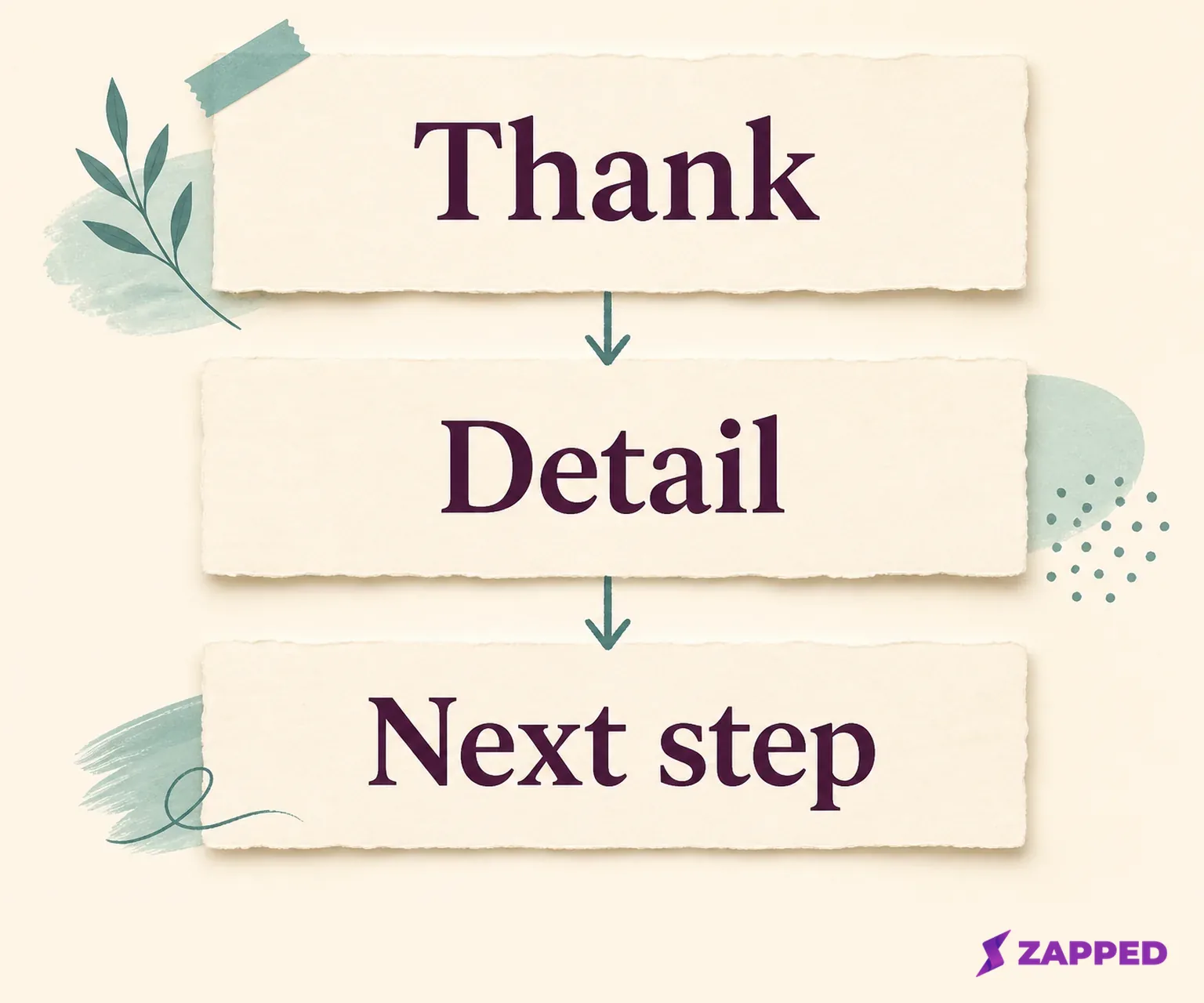
The strongest note has a simple shape: gratitude, an overall impression, one specific discussion detail, and a warm close. The detail is the hinge. It tells the recipient which part of the conversation stayed with you, and it gives them a reason to remember the actual meeting instead of filing your note under polite email.
For example:
Subject: Great meeting you at the community panel
Thanks for taking the time to speak with me after the panel. I enjoyed hearing how you use customer interviews to decide which problems are worth solving first. That distinction has stayed with me, and I’m going to use it in my next planning conversation. I’d be glad to stay in touch.
The language feels warm because the detail is doing the work. A specific topic or piece of advice is more recognizable than a paragraph about how inspiring the meeting was. Customize the note with something you genuinely appreciated, then proofread it before you send.
Don’t turn the detail into a performance review of the person. One accurate sentence is enough. If you remember only one useful idea, use that idea. If you remember nothing specific, keep the note short and honest rather than inventing a compliment.
The detail can also help you later. Naming the idea in plain language creates a small record of why the conversation mattered, which is more useful than saving a contact with no context. You don’t need a recap of the whole meeting. The recipient needs recognition, not minutes.
Let the close match the meeting
The last line is where otherwise good notes get greedy. Pick the close that fits what actually happened.
With no ask, thank the person again and say you enjoyed the conversation. This fits a brief introduction, a quick exchange at an event, or any meeting where the point was simply to acknowledge the time.
With a stay in touch line, leave the relationship open without assigning homework. “I hope we cross paths again” or “I’d be glad to keep in touch” is enough when you want to preserve the connection but have no useful request.
With one clear next step, ask for something proportionate. If the conversation was informational, request insight rather than treating the note like a job request. You can also offer relevant context or help instead of turning the thank you into a sales pitch. The purpose of the conversation should determine the size of the ask.
Here’s the test: could the recipient answer the request without guessing what you want or rearranging their week? If not, the note is carrying too much.
Scale the request to the amount of trust in the room. A person who answered one question at an event doesn’t need a long proposal. Someone who spent real time explaining their work may be open to one focused question later, especially when you make the reason for asking plain. Let the note show that distinction instead of treating every new contact like a lead in a sequence.
Send the email, then use the right fallback
Use email when you have the address. It gives the note room for the shared context, the detail, and the close without making the message feel cramped.
If email isn’t available, send a concise LinkedIn note. Name the shared topic or event, keep the same thank you and specific detail, then end with a stay in touch line. Don’t compensate for the shorter channel by writing a longer message. The channel changes, but the point doesn’t.
Either way, send within 24 to 48 hours. A thank you that arrives while both people can still place the conversation has a better chance of doing its modest job. A later update can show that you acted on advice, but that’s a separate message with a separate purpose.
Don’t wait for a perfect paragraph. The useful standard is recognizable and considerate. If the email address is correct, the shared context is clear, and the detail is real, a brief note is ready to go. More polishing can easily sand away the part that sounds like you were actually there.
Proofread the goodwill
Before sending, check the person’s name, organization, topic, and any resource you promised to share. A note that remembers the conversation but misspells the person’s name sends two signals at once, and the wrong one will win.
Read the subject and first sentence together. Can the recipient tell where you met? Read the specific detail once more. Is it accurate, or did you quietly turn a half-remembered point into a claim? Then look at the final line. It should contain either no ask, a stay in touch line, or one clear next step.
If you exchanged a Zapped digital card, use the live card as a contact reference while you compose. Zapped cards can be shared by link, QR code, or NFC tap and opened in a normal browser, so the other person can save your details without installing an app. The homepage also describes reviewable activity signals such as views, saves, clicks, scans, sources, and follow up paths. The card keeps the contact handoff easy. Your personal note still carries the thank you.
The final version should feel smaller than the anxiety that produced it. Thank them, show that you remember the conversation, and make the next step easy to understand. Then send it.