Start with the digital profile. It's usually the part people actually need, and it already travels by link, QR code, email, SMS, and wallet pass. HiHello and Blinq both publish free tiers, so testing the digital half costs nothing, and QRCodeChimp's comparison makes the same case.
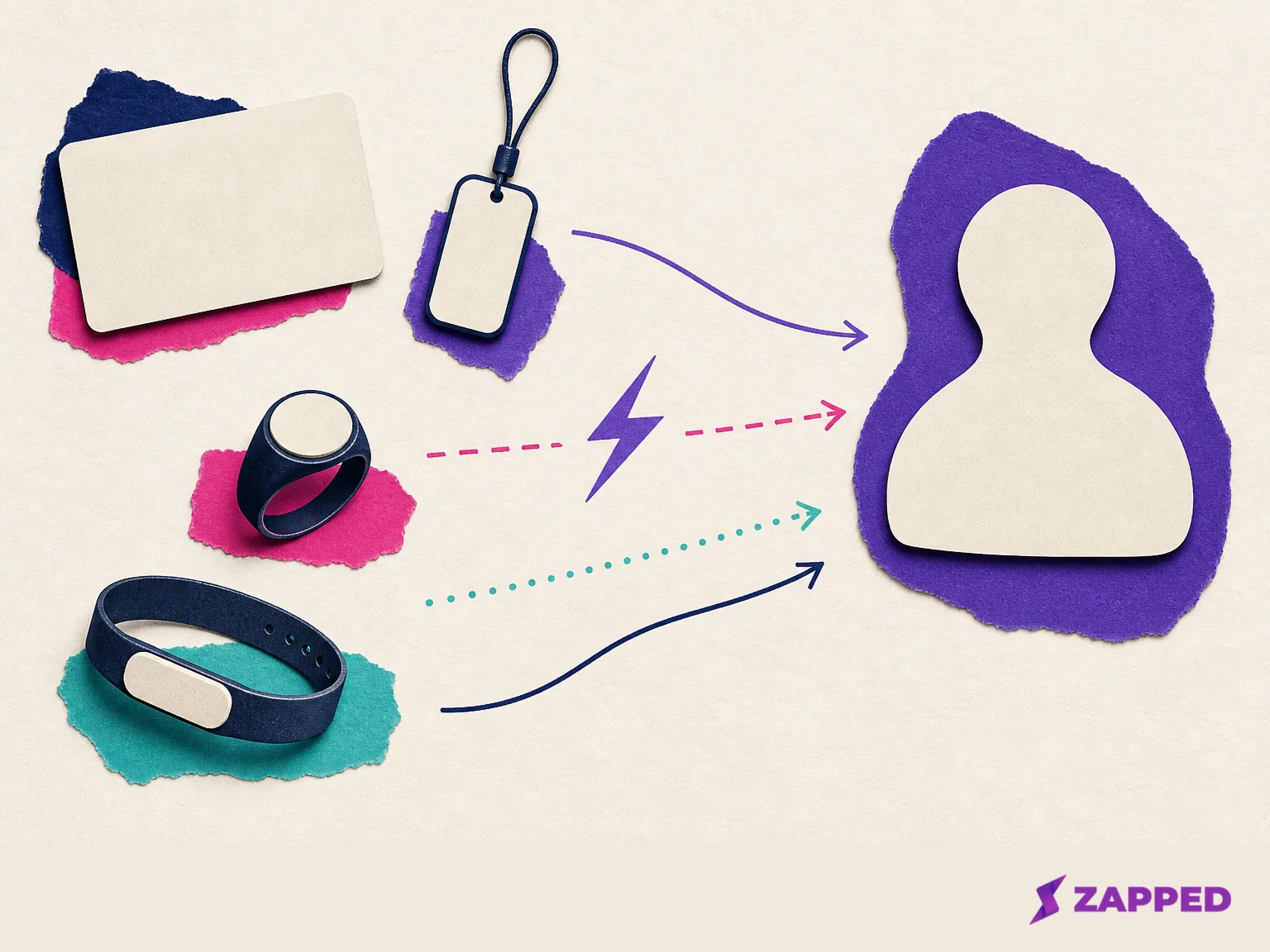
Add an NFC card, phone tag, ring, or bracelet when you repeatedly meet people in person and the tap makes that handoff easier. Keep a QR code or direct link ready either way: a Reddit account of one month with a Mobilo card describes recipients who didn't understand NFC, and r/NFC commenters describe phones that needed another route.
That's the useful answer before the comparison gets lost in card finishes. Digital is the flexible baseline. Hardware earns its place by improving an introduction you repeat in person, and if you mostly share remotely, it adds cost without adding a channel.
Your digital profile is the baseline
Digital only isn't a consolation prize. A profile you can update is the sensible starting point when your title, phone number, links, or contact details change. Update the destination once, then keep sharing it by link, QR code, email, SMS, or a wallet pass instead of ordering another batch of cards. QRCodeChimp also credits digital cards with contact exchange, lead forms, scan analytics, and team controls such as templates and bulk creation.
The range matters in ordinary situations. A remote introduction needs a link. Someone at an event can scan a QR code. The message you send afterwards can carry the same profile by SMS or email. The value isn't the novelty of the format. It's one profile travelling through several routes while keeping up with changed details.
Free plans make this baseline cheap to test. HiHello's pricing lists a free Personal tier with four digital cards, five card or badge scans per month, and QR, widget, email, and SMS sharing, with Professional at $6 per month billed yearly and Business at $5 per user per month, or $60 per user per year, for five to 100 users. Zapped's free tier is another starting point: one digital card, five content blocks, QR, link, and NFC sharing, and 60 days of analytics history, with a Zapped badge on the profile. We make Zapped ourselves, and we're not shy about thinking it's the strongest of the digital options here.
Blinq's pricing lists a free tier with two digital cards, unlimited sharing, unlimited contact creation, QR, widget, email and SMS sharing, and Apple or Google Wallet support, with Premium at $9.99 per month billed monthly and Business at $6.99 per month per card billed monthly. If you're changing a title or testing a new profile, that starting point is usually more useful than committing to a physical order first.
What the physical object buys you
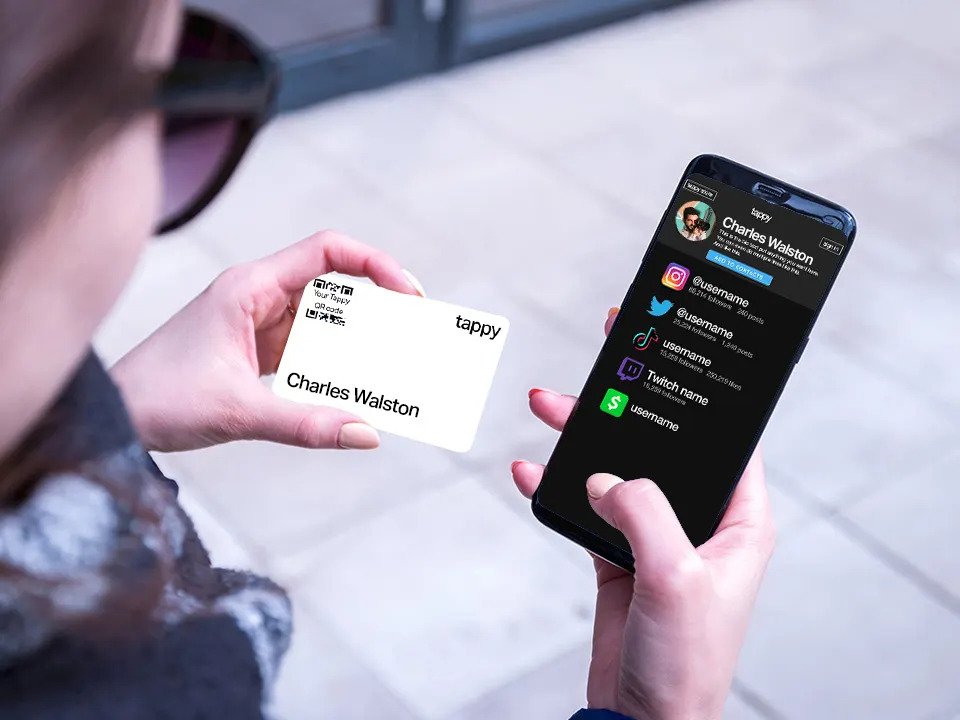
An NFC card changes the introduction, not the profile. You hold out something tangible, the other person taps it, and the same hosted destination opens. HiHello's comparison describes NFC cards as reusable and convenient for tap sharing, but limited to sharing in person, while digital cards can be shared from anywhere and require a mobile device.
That can be useful at a recurring event, on a sales floor, or anywhere the same short introduction happens many times. It can also prompt an exchange instead of making you recite a URL. But if your normal handoff is a video call, email, or message after the meeting, the object is mostly decoration with a URL inside it.
The practical test is frequency, not enthusiasm. If you network in person every week, a card or phone tap may repay its place in your wallet. If you're ordering for one event, changing your details often, or working on a small budget, start with the digital profile and see whether the handoff is actually awkward before buying hardware.
Make the fallback part of the handoff
Don't make tapping the only path. The Mobilo experience report found that some people didn't know NFC was enabled, some phones needed the QR fallback, and a saved contact made the next message easier. In the r/NFC discussion, commenters described NFC being disabled on some Android phones and recommended keeping a QR code available. Another commenter warned that some NFC products require a monthly fee to keep a URL or vCard linked.
The buying rule is simple: choose a physical object that still leaves you a printed QR code or a direct link. Blinq's card listings say its NFC card opens a digital profile without an app for the recipient, includes a printed QR fallback, and works with a free profile without a paid subscription, with a standard card at $19.99, wood at $24.99, metal at $33.99, and custom at $60.
The tap is the shortcut. The QR code is what keeps the conversation moving when the shortcut misses.
Compare the whole cost, not just the card
The physical price range is wide enough to make a quick table useful. These are vendor snapshots checked in August 2026, not a market average.
| Vendor or product | Checked physical example | Service term or useful distinction |
|---|---|---|
| Blinq NFC card | $19.99 standard, $24.99 wood, $33.99 metal, or $60 custom | Can use a free profile; printed QR fallback |
| Wave Connect | $42 custom card, $76 custom metal, $95 discounted engraved metal, or $46 phone tap | Free at $0, Pro at $7 per month, Teams at $5 per user per month with a three seat minimum |
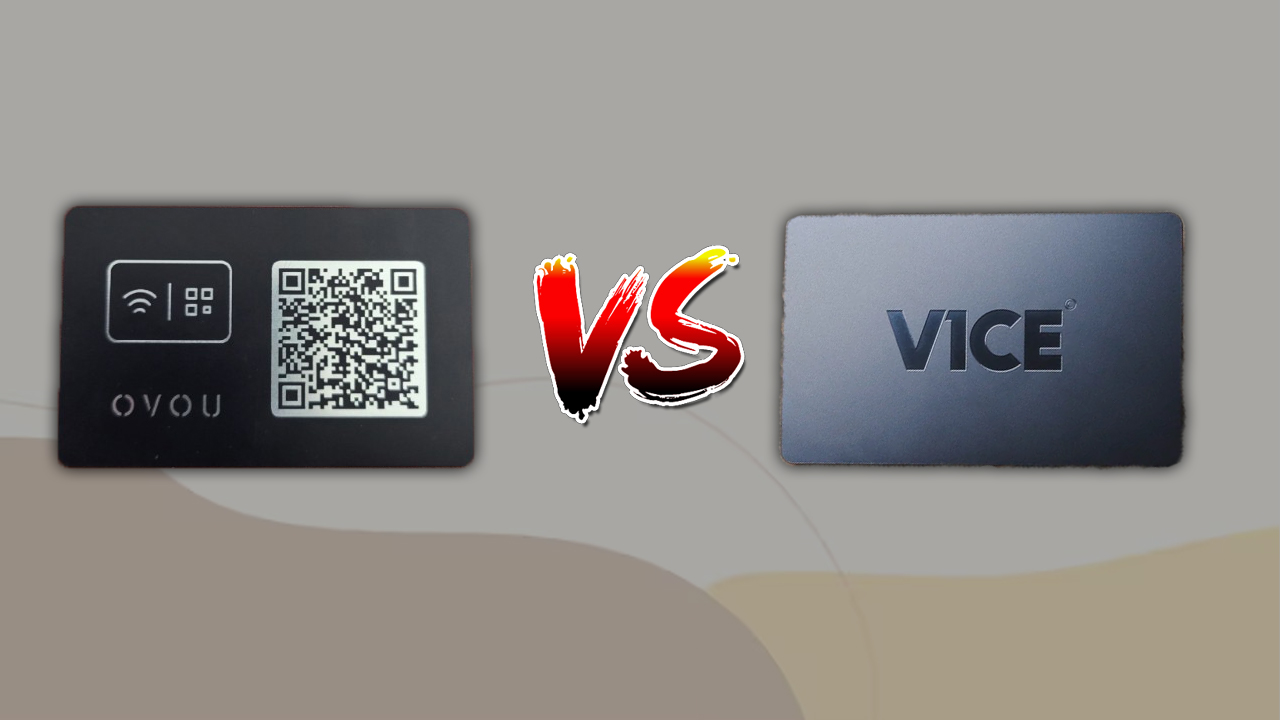
| V1CE | Roughly $76 Original, $105 Bamboo, $140 Metal, or $420 24K Gold (converted from £60, £83, £110, £330) | Card page says pay once with no subscription; ask what happens to the hosted profile if the service ends |
| HiHello | No physical price published | Free Personal; Professional at $6 per month billed yearly; Business at $5 per user per month for five to 100 users |
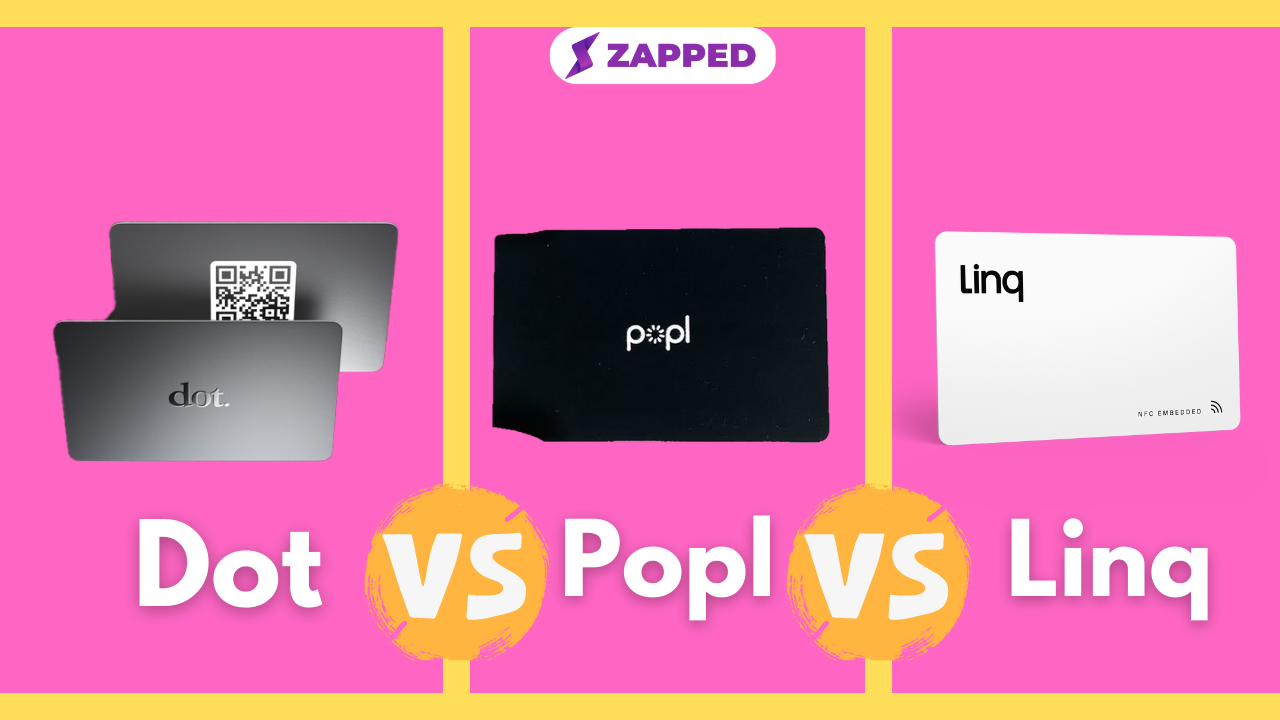
| Popl | No numeric team price published; custom quote required | Team quote says unlimited users, events, and leads with no extra per seat or usage fees, but the price is quote only |
Wave Connect's plan page puts the recurring layer in plain view: Free is $0, Pro is $7 per month, and Teams is $5 per user per month with a three seat minimum. Pro includes CRM sync and branded QR features. Teams adds team administration, bulk profile editing, templates, field locking, shared lead dashboards, and event lead tagging. Its store lists the physical examples in the table, including a custom phone tap.
V1CE's collection runs from roughly $76 for the Original to $420 for 24K Gold, converted from its £60 and £330 listings. V1CE says its card captures the recipient's details, opens a profile without an app, and includes core sharing tools without a subscription. Those are vendor claims, as are Blinq's description of light moisture resistance and years of normal use. If material, water resistance, or a guarantee is what justifies the price, read the seller's terms rather than treating the claim as a test result.
The card may be hardware you pay for once, but the profile behind it can still carry a recurring term. Check whether you're paying for the card, the hosted profile, contact capture, analytics, CRM connections, or team administration. A cheap card attached to a plan you don't need isn't a cheaper system.
Pay for the workflow after the introduction
The next choice is what should happen after the introduction. If all you need is a profile and a way to share it, a free tier may be enough. If you need contact exchange, lead forms, analytics, CRM sync, enrichment, or event attribution, compare those plan features before comparing card finishes.
HiHello's free Personal plan has a hard scan allowance of five card or badge scans per month. Blinq's listed free tier includes unlimited sharing and unlimited contact creation. Wave puts CRM sync and branded QR features in Pro, then reserves shared lead dashboards and event lead tagging for Teams. The tap may look identical across those plans, but what happens to the contact afterwards is not.
For a team, look for controls that prevent twenty people from managing twenty slightly different versions of the same identity. Wave lists templates, bulk profile editing, field locking, team administration, shared lead dashboards, and event lead tagging in Teams. QRCodeChimp describes templates and bulk creation as team controls, and HiHello lists a Business plan for five to 100 users. Popl's pricing says its team quote includes unlimited users, events, and leads with no extra per seat or usage fees, but it doesn't publish the numeric price and sends buyers to a custom quote.
If you're deciding between a paper card and a digital profile more broadly, the tradeoff is larger than NFC. Designhill's comparison puts it plainly: a paper card is tactile, while a digital card is easier to update, share remotely, and expand with links or media. For that separate choice, see the broader comparison.
Ask what survives a service change
Hosted profiles introduce one question a hardware price can't answer: what happens to the profile and captured contacts if the service changes or ends? V1CE's checked card page says pay once and no subscription, but doesn't state what happens to the hosted profile or captured contacts if the service ends. That silence is worth raising with any provider offering a hosted destination. Don't assume a one time card payment means the URL, profile, or captured data remains available forever.
This is why the QR and link fallback matters after the purchase, not only at the event. Keep a copy of the direct profile link, and make sure the physical card leaves the recipient another route. A digital profile can outlive a card order, but only if you know where it lives and what the service terms say.
The practical call
We'd start digital and buy hardware only after the events make it worthwhile. Stay digital only when link, QR, email, SMS, wallet sharing, and easy updates already solve the job. A free profile from HiHello or Blinq can give you a link and QR route first, with the exact limits and features checked before you build a routine around it.
Add an NFC card, phone tap, bracelet, or ring when networking in person often enough makes the physical prompt useful. Start near the lower end of the vendor examples if you want to test that habit, and keep the QR code visible enough that nobody has to guess what to do. If the object is part of a team workflow, pay attention to lead capture, analytics, CRM sync, templates, bulk editing, and field locking. If you only want a quick introduction, don't buy those controls by accident.
Once you've decided a physical tap object is warranted, continue with the best NFC business cards. Buy the smallest layer that supports how you actually meet people, then keep the alternate route ready for the moment tapping doesn't land.
Sources
- QRCodeChimp's comparisons
- HiHello pricing
- Blinq pricing
- Blinq NFC business cards
- Wave Connect pricing
- HiHello's comparison of card formats
- Mobilo one month experience report
- r/NFC discussion of NFC business cards
- Wave Connect custom products
- V1CE NFC business card collection
- V1CE NFC cards
- Designhill paper versus digital comparison
- Popl pricing