To import a vCard into Outlook, save one received card directly in classic Outlook or Outlook for Mac; for a batch on Windows, use Windows Contacts to turn the VCF into CSV. New Outlook and Outlook on the web have documented CSV import routes, so choose your Outlook version and count the contacts before choosing an import button.
Microsoft's vCard instructions for classic Outlook and its separate CSV routes for New Outlook describe different jobs. Its Windows Contacts conversion route supplies the bridge for a batch. Those pages don't document a direct VCF import procedure for New Outlook or the web. For Mac, Microsoft documents saving vCards individually, while stating that bulk import of multiple individual VCF files and CSV files is not currently supported.
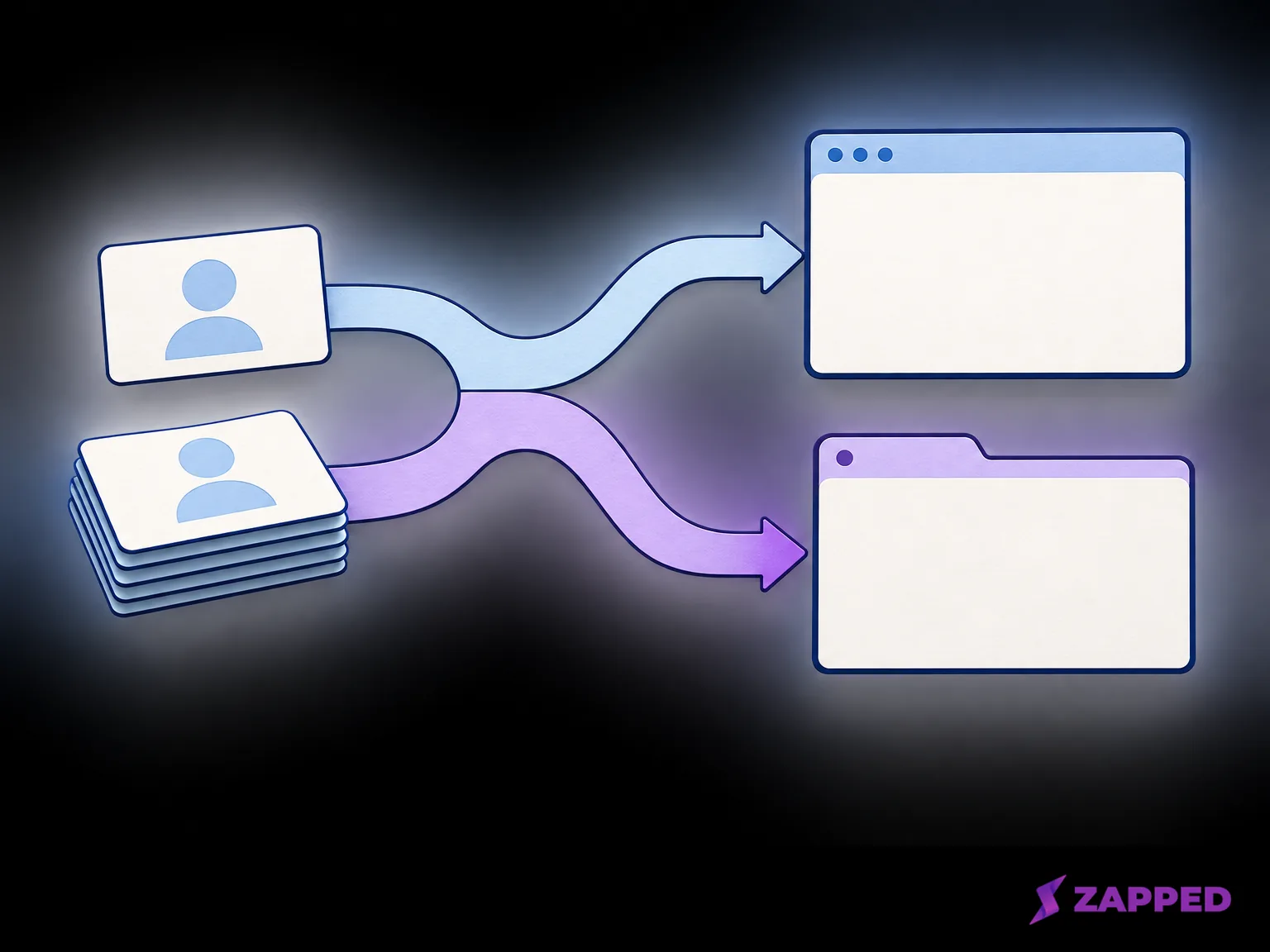
One attachment isn't necessarily one person. Find out what you're moving before you touch the import button.
Find out what the file contains
A colleague's contact attachment and an address book export can both end in .vcf. Apple says that when you export multiple contacts from iCloud, they arrive in one vCard containing all the selected contacts. iCloud Contacts on the web can export one, selected, or all contacts, and requires a tablet or computer. A single filename tells you little about the size of the job.
If you're still sorting out the format itself, the guide to vCard and VCF files explains the file you're holding. For Outlook, the question is whether you're saving one contact or moving a group.
Here is a complete fictional record illustrating vCard 4.0's required fields from RFC 6350:
BEGIN:VCARD
VERSION:4.0
FN:Casey Example
TEL;VALUE=uri;TYPE=cell:tel:+1-202-555-0147
EMAIL;TYPE=work:[email protected]
END:VCARD
BEGIN:VCARD and END:VCARD enclose the record. VERSION:4.0 declares the format and belongs immediately after BEGIN:VCARD. FN supplies the display name, Casey Example. TEL;VALUE=uri;TYPE=cell carries the mobile telephone URI, tel:+1-202-555-0147. EMAIL;TYPE=work supplies the work email, [email protected]. RFC 6350 requires VERSION and FN and defines TEL and EMAIL for those communication details.
Casey Example and the email address are fictional. If you save this illustration as a file, use CRLF line endings. It isn't a tested Outlook import or a reason to change the version in an existing file.
One attachment in classic Outlook
Microsoft's classic Outlook vCard flow applies to Outlook for Microsoft 365, Outlook 2024, Outlook 2021, Outlook 2019, and Outlook 2016. If that's the Outlook you're using and someone has sent you one card, you can save it directly.
- Open the email containing the vCard.
- Right click the vCard attachment and choose Add to Outlook Contacts.
- Choose Save & Close.
- Repeat for each vCard you want to save.
For a card received through another mail program, Microsoft documents opening the attached vCard and saving it in Outlook. If Outlook is installed, the .vcf file association can open the attachment in an Outlook window.
Saving a colleague's card takes just a few clicks. An address book needs the Windows conversion process below; don't treat it as an ordinary single-contact attachment.
A Windows batch starts in Contacts
Microsoft's VCF to CSV bridge uses Windows Contacts first, then Outlook. Use it when your iCloud export or other VCF holds several people, or the vCard action you expected isn't available.
On a Windows PC:
- Open the Windows Contacts folder.
- Choose Import, select VCard (VCF file), then choose Import.
- Select your VCF and confirm the intended contacts, then choose Close when the import is complete.
- Choose Export, select CSV file, then choose Export.
- Choose where to save the CSV, select the fields to export, and choose Finish.
Pay attention to the field selection. Leaving behind the phone numbers defeats the move. You now have a CSV to take to the import route for classic Outlook, New Outlook, or Outlook on the web.
If the contacts are still in Google Contacts, there's a shorter starting point: Google documents exporting selected contacts as Google CSV. You can export one contact, several, or all selected contacts directly, then check that CSV against the destination's import requirements. There's no need to create a VCF just to turn it back into CSV.
Classic Outlook lets you choose what duplicates mean
A CSV gives classic Outlook two decisions the attachment flow doesn't present in the same way: what to do about existing contacts and where each column belongs. Microsoft's classic CSV import instructions walk through both.
Start with File > Open & Export > Import/Export. Choose Import from another program or file, then Comma Separated Values, and select your CSV.
At the duplicate step, choose deliberately:
- Replace duplicates if you intend the import to replace matching existing contacts.
- Create duplicate contacts if you want imported copies kept alongside existing contacts.
- Do not import duplicates if existing contacts should remain and duplicates should be skipped.
If your destination Contacts folder already contains people, the duplicate policy affects who arrives. Don't assume the imported count will equal the number of rows, or treat a later reimport as a guaranteed update process.
Select the Contacts destination for the account you intend to use. Before Finish, use Map Custom Fields to check where the CSV columns will land. Here's a fictional generic CSV for illustrating that mapping:
First Name,Last Name,Email Address,Cell Ph
Casey,Example,[email protected],+1-202-555-0147
Casey belongs to First Name, Example to Last Name, [email protected] is the email value under Email Address, and +1-202-555-0147 is the phone under Cell Ph. In Map Custom Fields, map Cell Ph to Mobile Phone and verify the other source columns against their destination fields before choosing Finish. For address columns, choose the appropriate Home Street or Business Street destination rather than leaving the address's purpose to chance.
The CSV above illustrates classic Outlook's mapping step. It isn't Microsoft's downloadable template, and it isn't a ready upload template for New Outlook or the web. Don't carry a header that needs manual mapping here straight into a web import.
New Outlook and the web use People
Microsoft documents separate People import routes for New Outlook for Windows and Outlook on the web or Outlook.com. Start in the intended account, with the CSV you've exported or prepared.
In New Outlook for Windows:
- Open People.
- Choose Import contacts.
- Choose Browse, select the CSV, then choose Open.
- Check the sample text, then choose Import if it is readable.
In Outlook on the web or Outlook.com:
- Open People.
- Choose Manage contacts > Import contacts.
- Choose Browse, select the CSV, then choose Open.
- Check the sample text, then choose Import if it is readable.
Microsoft recommends UTF-8 CSV encoding for these surfaces. If the sample names look garbled, cancel. Correct the CSV encoding before trying again; the preview is a chance to catch damaged text before it reaches your contact list.
Both People routes take CSV. The current Microsoft vCard page addresses classic Outlook versions and doesn't supply a direct VCF procedure for New Outlook or the web. When you're starting with a VCF, use the Windows Contacts bridge if you have a Windows PC available.
On Mac, save the cards individually
Microsoft's Outlook for Mac vCard instructions apply to Microsoft 365 for Mac, Outlook 2024 for Mac, Outlook 2021 for Mac, Office 2024 for Mac, Office 2021 for Mac, and Office 365 Small Business. The file needs a .vcf extension.
Double click the attached or saved VCF to open it in Outlook. If needed, use Open With > Microsoft Outlook, then choose Save & Close.
A combined vCard can make this look confusing: Microsoft says only the first contact appears in the window, while each contact is saved individually. One person in the window doesn't tell you how many arrived. Check Contacts after saving.
Microsoft also states that bulk importing multiple individual vCard files and CSV files is not currently supported in Outlook for Mac. Saving a combined vCard and bulk importing separate files are different jobs. The documented saving flow doesn't turn the Mac app into a CSV importer.
For a bulk CSV job, use Outlook on the web or a Windows Outlook surface only if that surface is available to your account. Follow its own procedure. Don't assume that completing an import there proves that every record has synchronized to the Mac app; inspect the destination you actually used.
Check who arrived, then fix what's missing
An accepted file isn't the finish line. Check the account and Contacts folder you chose, compare the expected count with that account's People or Contacts list, and open at least one record to inspect its name, email, and phone.

For an empty or malformed Outlook.com import, Microsoft's CSV troubleshooting instructions recommend keeping the first row's headings, retaining CSV format, and trying a few contacts before a larger import. The page links a downloadable Microsoft sample CSV. These four exact headings from that sample illustrate where fictional contact values go:
First Name,Last Name,E-mail Address,Mobile Phone
Casey,Example,[email protected],+1-202-555-0147
Casey goes under First Name and Example under Last Name. The email, [email protected], goes under E-mail Address; the phone, +1-202-555-0147, goes under Mobile Phone. Notice that these headings differ from the generic Email Address and Cell Ph mapping illustration above.
This is a four column excerpt, not the complete 92 column Microsoft sample or a tested upload. For a format error, download the full sample linked from Microsoft's troubleshooting page, preserve its original first row headings, enter values under the appropriate columns, and save as CSV. Test a few contacts. When the result is right, delete the test import before adding more contacts and importing again, as Microsoft advises.
If a classic Outlook import has fewer contacts than expected, revisit the duplicate policy and field mapping before repeating it. Skipping duplicates and creating duplicates have different consequences; pressing Import again doesn't make that decision for you. For New Outlook and the web, return to Microsoft's UTF-8 preview guidance when names are unreadable.
Once the transfer is checked, consider how you'll share future changes. Zapped's live browser card opens through a QR code, NFC tap, or link and can be edited after sharing, making it a useful companion when you want people to keep reaching your current details. The saved Outlook records still need the completion check above.