A referral partner is a trusted person or business that serves the same kind of customer as you, without competing with you, and can make a useful introduction when that customer's need appears. The relationship only works when both sides agree on fit, the handoff, what happens next, and any compensation before volume becomes the goal.
That sounds simple until a promising contact gives you a name and everyone quietly assumes somebody else owns the next move. A warm introduction borrows the introducer's trust. Treat it like borrowed property, and return it in better condition.
A contact is not automatically a partner
Start with the boundary. A lead is the person or opportunity being introduced. A general business contact is someone you know. Neither one is automatically a referral partner.
A referral partner makes the introduction while the vendor handles qualification, demonstration, proposal, and close. That is the distinction the referral model draws between an introduction and commercial ownership. A reseller or deal registration partner owns more of the commercial process. An affiliate arrangement is different again when commissions, tracking, or other formal terms define how the business is won and paid.
The useful test isn't whether this person knows many people. Can they recognize a customer problem you solve, explain your fit in a sentence, and send that person to a next step they understand? If they're simply passing names around, keep calling them a contact. Accurate naming keeps expectations from growing in the dark.
Find the overlap before you ask for an introduction
Look for three things at once: the same target customer, a recurring problem the other person can recognize, and an offer that complements yours instead of competing with it. A web designer and a bookkeeping firm may see the same small business at different moments. Two firms selling the same service to the same buyer have a different problem to solve before they start swapping leads.
Make the overlap concrete enough to finish this sentence: “Send me someone who is dealing with , has already tried , and needs ___ next.” If neither side can finish it without reaching for “anyone who needs help,” the fit is still theoretical.
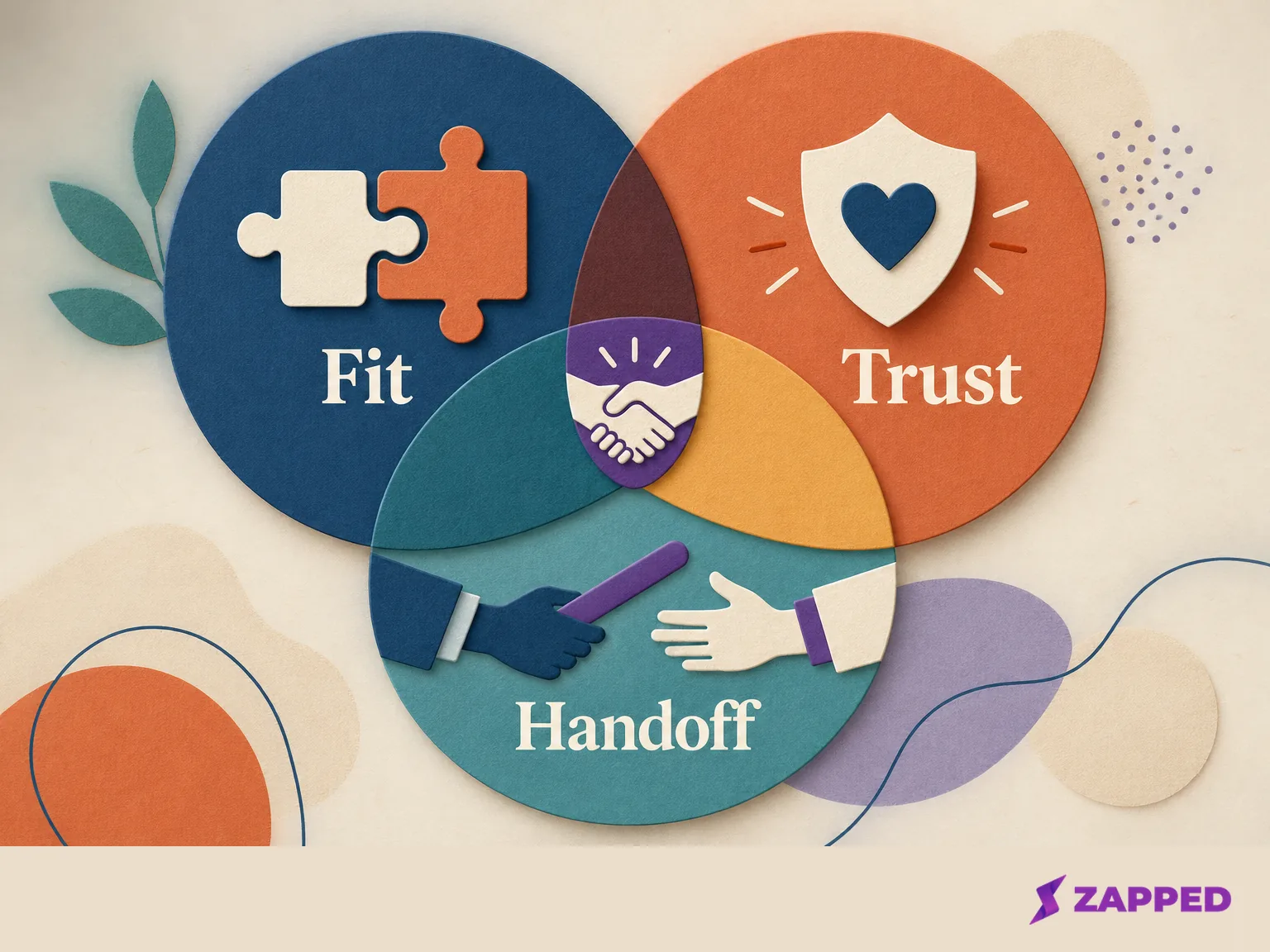
The complementary offer matters because poor qualification, delivery, or onboarding can damage both the customer's relationship with you and the relationship with the person who made the introduction. A strong partner serves the same market with an offer that does not compete, then uses that overlap to recognize a useful referral rather than manufacture one.
Don't force reciprocity here. A partner doesn't have to receive the same number of referrals back for the relationship to be valuable. Supporting that person's sales effort or improving a shared customer's outcome can be enough. The referral partner still needs confidence in the business, because their reputation travels with the handoff.
Trust is something you can test
Before you send a customer anywhere, ask whether you'd trust this person with your own customer's sales and service experience. That's a sharper test than liking them, sharing a trade association, or having one lively conversation at an event.
Listen to how clearly they describe your fit. Can they say who should talk to you, why now, and what you do next? Then reverse the test. Can you explain their offer without overselling it? Have you seen enough of their customer experience to put your name beside it?
You don't need a long partner program to learn the answer. Start with useful context or one limited introduction when the overlap is promising but delivery is unproven. Watch the customer experience. If the first handoff is handled carefully, trust has evidence. If it creates confusion, silence, or a poor experience, don't turn that warning into a promise of future volume.
Make the handoff unambiguous
Define “qualified referral” in plain language before either side sends one. That might include the customer type, the problem, the timing, and consent to be contacted. Then decide who follows up, how quickly, and what information may be shared.
Settle the introducer's role too. Do they only connect both sides? Stay in the conversation? Help sell? Or does the receiving business take over after the introduction? A referral program usually keeps qualification, demonstration, proposal, and close with the vendor. If your arrangement expects more, say so instead of quietly turning a referral into a sales assignment.
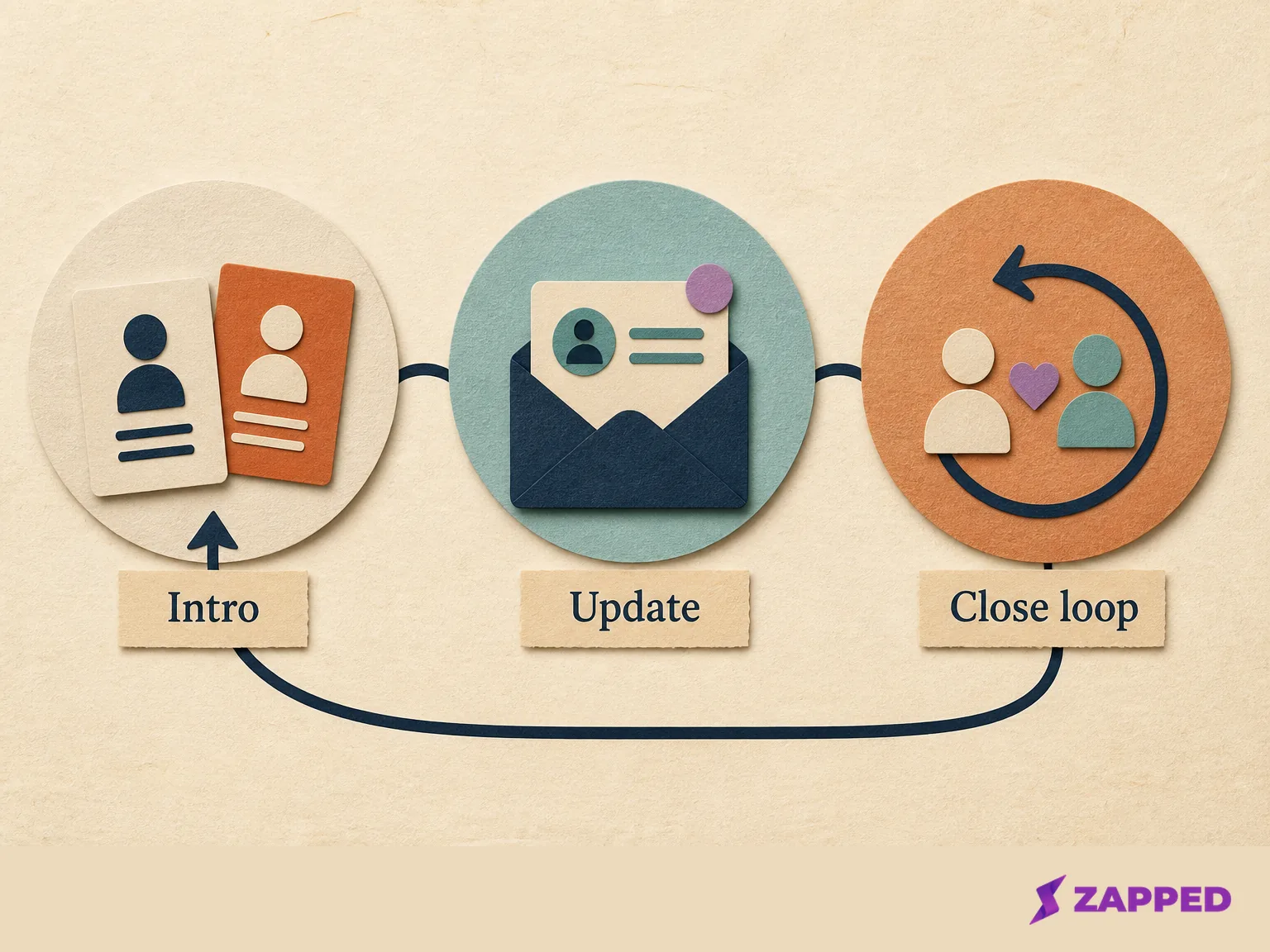
The handoff needs a return path too. Tell the introducer that contact happened, whether the person was a fit, and what useful next step occurred. You don't need to disclose private customer details to prove that you handled the introduction. You do need to avoid leaving the person who lent you trust wondering whether their message disappeared.
Know when a handshake needs a page
An informal path is fine for a simple customer recommendation when nobody is exchanging money or sensitive information. Agree on the fit, the introduction method, who follows up, and how you'll thank the person. Keep the arrangement small enough that both sides can remember it.
Use written terms when payment, recurring conversions, confidentiality, branded materials, training, or shared responsibilities enter the picture. A referral agreement should define the qualified referral and payment terms, along with responsibilities and any recurring or confidential matters. The document doesn't have to sound like a channel partner manual. It does have to answer the question that causes the awkward conversation later: “What did we agree counted?”
For anything paid, keep a lightweight attribution record. Capture the partner, prospect, date, evidence of the introduction, sales owner, any fixed attribution window, the payment trigger, exclusions, and the rule for disputes. That isn't bureaucracy for its own sake. Fast attribution and deal status help a formal referral process stay trustworthy, especially once several people remember the same conversation differently.
Close the loop before you ask again
The first outcome update should be short. Say whether contact happened, whether the prospect was a fit, and what the next useful step is. If the opportunity isn't a fit, say that too. A clear no protects the partner's judgment better than a vague promise that you'll “circle back.”
Then maintain the relationship in more than one mode. Share useful context. Clarify a change that affects their customers. Thank them for a thoughtful introduction. Offer something helpful before making another request. A relationship focused follow up system groups those touches around context, clarity, and gratitude, with give first help as the habit underneath them.
The right rhythm depends on the relationship. A core partner may merit monthly contact, an active partner every 60 to 90 days, and a light touch ally two or three touches a year. Those are useful starting points, not a quota. A message with a real reason beats a check-in that only pretends to have one.
For the next practical step, use this guide on how to follow up after networking when the introduction is still warm but the conversation has gone quiet.
Give the introduction somewhere clear to land
The handoff gets easier when the recipient can open one clear profile instead of reconstructing your offer from a text thread. Zapped lets you share a digital card by QR code, NFC tap, or link. The recipient opens it in a normal browser without an app or account, then can save your contact details.
That makes Zapped useful as the profile layer of a referral workflow. The card can stay live after you edit it, so a shared link or printed QR can keep working while you clarify the offer. Use the card to explain who you help, what problem you handle, and what the referred person should do next. Don't ask it to become your entire relationship system.
If you want to see which networking moments create engagement, Zapped provides per card analytics. The Free plan is listed at $0 per month, with no credit card, one card, five blocks, and QR, link, and NFC sharing. That's enough for a lightweight profile. It also means you should keep the page focused, and remember that Free analytics history is 60 days.
We build Zapped, so weigh that recommendation accordingly. The reason it belongs here is narrow: a clear, editable profile can remove friction from the handoff, and a small amount of engagement data can help you notice which networking moments deserve better follow through.
The partner decision
Call the person a referral partner when the customer overlap is real, the offers complement each other, the person can describe your fit, and you trust the next customer experience. Make the handoff explicit, write down anything that could become a money dispute, and send the outcome update before memory starts filling in the gaps.
Keep it informal when it's still a simple recommendation. If fit is weak or delivery is unproven, offer context or one limited introduction and let the customer experience decide what happens next. Skip the referral arrangement when the person can't recognize a qualified customer or when you'd hesitate to put your reputation beside their service.
The best partner isn't the person with the biggest address book. It's the person who recognizes the same problem, explains your fit clearly, and makes the next experience safer for everyone involved.