Mobilo may fit a person or team that wants one physical card to hand off a browser profile through NFC or QR, with lead capture and administration available for broader rollouts.
The catch is commercial, and it affects whether the fit holds overall. Mobilo’s public pricing pages do not agree with one another, and several team and CRM details still need to be checked at the buying path that applies to you. Treat the product as a plausible fit, not a purchase decision, until you confirm the total, billing cadence, plan scope, and card delivery terms.
What Mobilo is
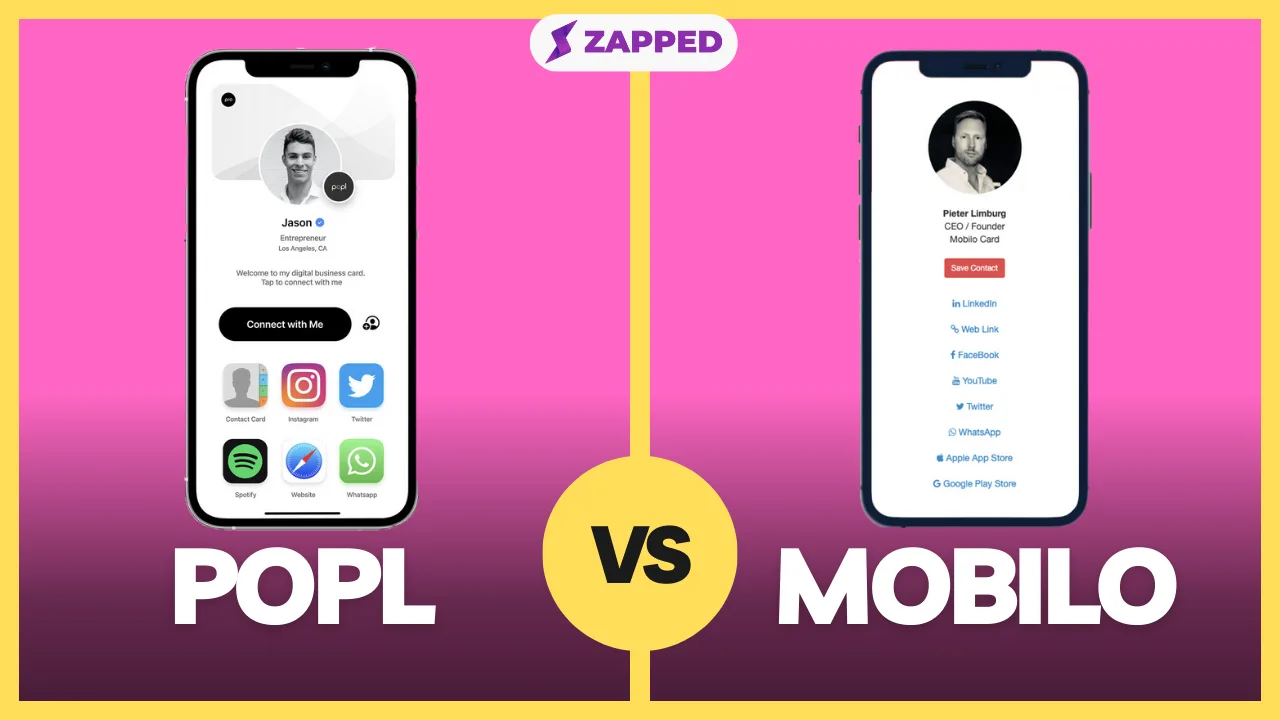
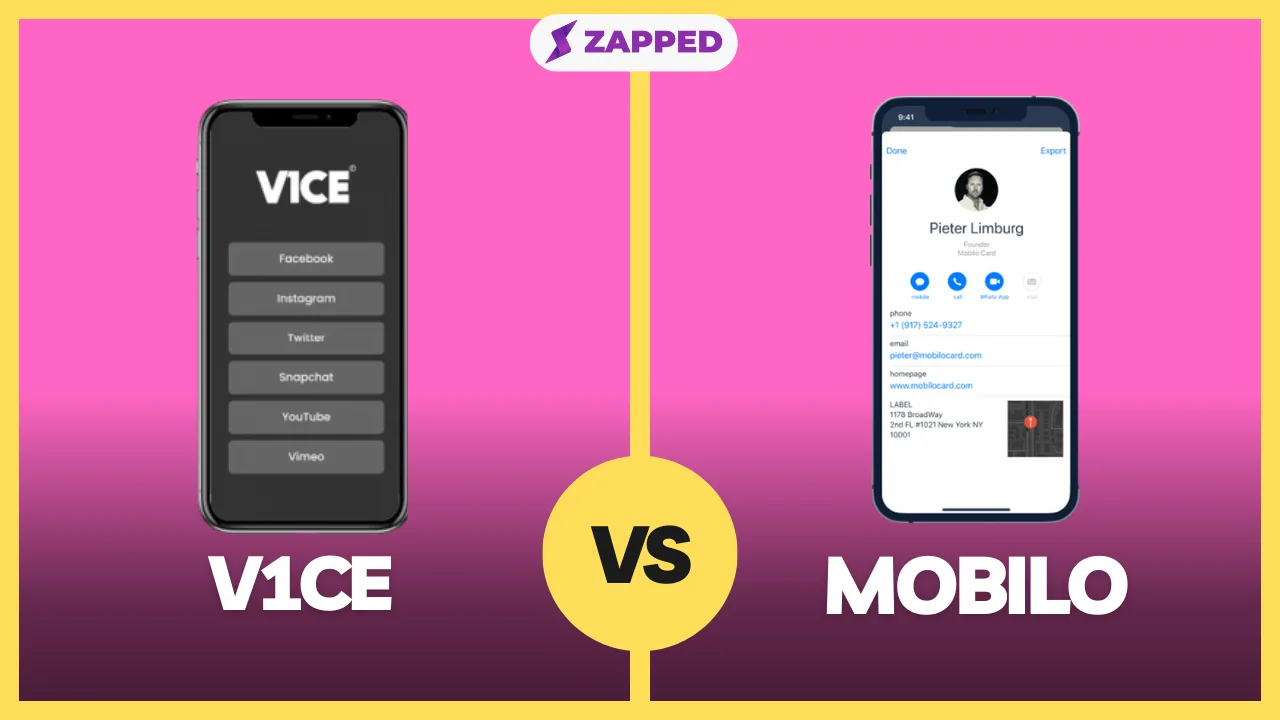
Mobilo combines a physical business card with a hosted digital profile. Its Getting Started documentation describes four card modes: Business Card, Personal Landing Page, Lead Generation, and Link URL.
One mode is selected per tap, so the same hardware can be directed toward different contact or campaign goals depending on the profile configuration.
That gives Mobilo a wider operating model than a simple contact page. A solo professional can present a profile, a salesperson can use a lead form, and a team can point the card toward a link. The useful distinction is that these are documented modes, not proof that every mode is included at every price or works equally well for every audience.
The physical card is the handoff object. The recipient does not need a Mobilo app for NFC access, according to Mobilo’s recipient FAQ, because the profile opens in a phone browser.
Mobilo documents this browser path, but phones and browsers can still behave differently, so treat no app access as the documented route rather than a universal result.
How sharing works in practice
The basic path is tap, open, and save.
Mobilo says the card’s NFC handoff opens the profile in a browser, while the printed QR code provides a fallback when tapping is unavailable or inconvenient. Its compatible device guidance also says the team NFC card works with iOS and Android phones from 2018 and newer.
That is a compatibility claim, not a promise that every model, browser, disabled NFC setting, or older device will behave the same way.
The fallback matters at busy events. A recipient may prefer to scan rather than align a phone with the card, or may use a device where NFC behavior is unclear.
The browser path also means the recipient can encounter the profile without installing an app or creating an account. The practical test for a rollout is therefore not only whether a tap works, but whether the QR print is readable, the profile loads quickly, and the save action is clear when the interaction happens in a noisy setting.
Mobilo’s four modes give the owner choices after the handoff. Business Card is the straightforward contact presentation. Personal Landing Page is better suited to a personal profile.
Lead Generation is intended for collecting prospect information, and Link URL can direct the recipient to another destination. Because one mode is selected per tap, a buyer should map the desired recipient journey before ordering cards rather than assume every tap can present all modes at once.
Phone number sharing belongs in that profile decision.
Mobilo’s documentation supports profile and mode behavior, but it does not establish that every phone number use case has a dedicated field, template, or capture rule. If your requirement is a simple phone action, confirm how the chosen profile displays it. If the requirement is structured lead intake, confirm the form fields, export behavior, and plan before treating the hardware as the solution.
Metal cards need special attention. Mobilo’s FAQ says NFC communications cannot pass through its metal card and documents a QR facing or colored front workaround.
That is a product constraint, not a reported failure rate. If a metal finish is part of the purchase, ask which side should face the phone and make QR scanning part of the normal handoff script.
Setup, app, and login path
Mobilo’s documented setup path runs through its iOS app, Android app, or web portal. The Getting Started guide lists the app stores and the web portal, then directs the owner to complete the profile and choose a card mode.
That lays out the setup route, but it does not promise a smooth onboarding experience across every account and device path.
The US Apple App Store listing identifies Mobilo Card as a free app from Lulu Systems, Inc. and lists iOS 15 or later as the requirement.
The app listing answers the minimum iOS question, but it does not establish feature parity with the web portal or Android. Mobilo documents the Android route, yet feature parity for editing, lead capture, analytics, and administration remains a point to verify across the two mobile platforms.
For an individual, the likely setup sequence is straightforward: obtain access, complete the profile, choose the desired mode, and connect the physical card. For a team, add a pilot step before ordering at scale.
Test profile editing, card assignment, lead capture, export, and the exact recipient view on the devices your staff use. That pilot is especially important when the buying decision depends on login recovery, mobile editing, or a workflow that must continue while staff are away from a desk.
The recipient path is simpler than the owner path. Recipients are documented as browser users who do not need the Mobilo app.
Owners still depend on the app or web portal for setup and management, and Mobilo's public pages do not establish a current recovery experience or a parity matrix. A buyer who wants a card that recipients can use without an app may be comfortable with that split. A buyer who wants every owner task to work equally on mobile should verify it directly.
Buying and fulfillment
Mobilo’s purchase path starts with the card choice and design. The Mobilo FAQ states that design proofs take 24 to 48 hours, worldwide shipping is available, and custom accessories require orders of 50 cards. Those are vendor process statements. They do not settle shipping fees, customs, taxes, a single delivery date, or the landed cost for your location.
For one person, the card decision is mostly about finish, durability, and how often the physical object will be used. For a team, the more important questions are assignment, reordering, proof approval, and what happens when someone leaves. Ask for those terms before treating a displayed card price as the whole cost. A discount on the card does not answer the renewal or shipping question.
The checkout path also needs a renewal check. Mobilo’s public pages expose a trial and multiple pricing models, but they do not establish a universal renewal rule across personal and team purchases. Read the order summary, billing interval, shipping line, taxes, trial conversion, and cancellation terms together. Save the final display before submitting payment if the commercial terms are material to the decision.
The same caution applies to acquisition questions about delivery. Worldwide shipping is not the same as a guaranteed delivery window, and a design proof turnaround is not a shipping promise. If the card is needed for an event, build time for proof approval and local delivery uncertainty rather than planning around the shortest stated step.
Features for individuals and teams
Mobilo’s team page advertises team branding, lead capture, analytics, CRM workflows, employee directory sync, widgets, scanning, and AI lead scoring. The team feature page presents these as product capabilities, but it does not fully map availability by plan or prove a business outcome.
The sensible reading is that Mobilo can support a broader team workflow, while the exact feature and seat requirements still belong in the quote or checkout review.
The lead path is one of the stronger reasons to consider Mobilo beyond a digital profile.
Mobilo says a team can start capturing leads the same day cards arrive and that typical setup and training takes under one hour, as described in its lead capture FAQ. That is Mobilo’s estimate for provisioning, template mapping, and training.
It is not a service guarantee, so a team with a fixed event deadline should request the actual onboarding scope before relying on that estimate.
Offline use is another potentially valuable capability. Mobilo’s FAQ says it can capture contact data offline and sync when a connection returns.
The FAQ does not specify queue limits, encryption details while data is queued, or conflict handling. For a busy venue, ask what the owner and recipient see when connectivity drops and how duplicate or incomplete records are handled later.
Mobilo also says it offers 21 direct integrations, more than 6,000 Zapier connections, field mapping, and lead export in its CRM FAQ.
The FAQ lists selected examples, not the full current list or plan mapping. That makes the integration count a useful starting point for a sales conversation, not permission to assume that your CRM, fields, and automation are included.
Treat the CRM feature list as plan dependent until Mobilo confirms the route you would buy.
Mobilo pages market CRM and Zapier workflows, but they do not settle which route or plan applies to your case. If CRM handoff is the reason you are buying, ask which route is used, which plan unlocks it, whether field mapping is included, and what happens when a lead arrives without a connection.
Pricing and checkout verification
Mobilo pricing is the main reason to slow down. The public pages display different models, and the dollar displays do not provide an explicit currency code.
On Mobilo’s pricing 1 page, the solopreneur block displays Pro at $0 per month. That page specific display does not establish a universal, landed price.
The same pricing 1 page shows Teams at $4 per month billed annually and Business at $5 per month billed annually. Those displays have no stated currency code, seat minimum, tax treatment, or regional inclusion statement.
The other public pricing surface, pricing 3, uses one time cost language and shows different card and license displays. That directly conflicts with the monthly and annual rows on pricing 1. The conflict is enough to block a single current price answer, even before shipping, taxes, currency conversion, or renewal are considered.
The team checkout adds another moving part. The team plan checkout displays a sale price of 52.26 against 107.79, billed per employee annually, with a 30 day free trial.
Those values differ from the public pricing pages, the dollar display has no explicit ISO currency code, and the checkout display is dynamic. Confirm the amount in your own region and seat configuration before treating it as the price you will pay.
Before buying, confirm these points in one pass:
- Which page governs your plan?
- Is it monthly, annual, one time, or trial pricing?
- What currency, taxes, shipping, and customs apply?
- Is it per person, card, employee, or account?
- What renews, and how do you cancel?
- Which features and controls are included?
If Mobilo answers those questions clearly at checkout, the pricing concern becomes manageable. If the answer changes between the marketing page and the order summary, pause and request written clarification. For a broader comparison of digital card options, use the best digital business card guide, which covers the cross vendor selection question rather than this product specific review.
CRM, security, privacy, and support boundaries
The CRM story is promising but conditional.
Mobilo advertises integrations and Zapier connections, but it does not map the full set of plans or workflows on the pages reviewed here. A technical buyer should ask for the exact integration route, supported fields, export format, authentication model, and whether the connection is available on the plan being quoted. Our NFC business card CRM integration guide is the more useful next read for that implementation question.
Mobilo’s security page claims SOC 2 Type 2, GDPR, AES 256 storage encryption, SSL in transit, testing, audits, and Google Cloud hosting. These are direct vendor security assertions. Mobilo does not publish an independent report, certificate scope, audit period, penetration test, or uptime SLA, so the claims should be sent to your security review rather than treated as independent verification.
The privacy disclosure deserves a date check. Mobilo’s privacy policy, last updated June 13, 2023, describes collection of identity, contact, payment, internet activity, geolocation, and professional information. It is the primary written disclosure, but it is stale relative to this review and does not provide a current product data map, data processing agreement, or subprocessor list.
The US Google Play listing says Mobilo may collect personal information and photos or videos, encrypts data in transit, and supports deletion requests. These are developer provided store disclosures. They should not be simplified into an independent privacy or security verdict, especially when the card may be used to collect prospect information.
For support, the practical boundary is the absence of a verified response or uptime commitment. Published help channels can be useful, but they do not prove an SLA. Ask what support covers during a rollout, how urgent card assignment problems are handled, and whether a team can export its data if a workflow needs to move.
What independent reviewers and customers report
The public signals are positive overall, but they should be read as separate snapshots rather than averaged into a product score. The US Apple App Store reviews showed Mobilo Card at 4.6 out of 5 from 741 ratings in the dated snapshot.
The US Google Play listing showed 4.5 out of 5 from 241 reviews and 10,000 plus downloads in that same snapshot. Store ratings are useful directional signals, not controlled reliability samples.
A search for Mobilo digital business card brings together vendor product pages and app listings with pricing, ratings, named reviews, and community results. That mix is useful for discovery, but it does not tell you which commercial terms are current or which review is representative.
Trustpilot showed 4.0 out of 5 from 296 reviews, with 25 reviews in the last 12 months, 83 percent five star, and 12 percent one star in the dated capture. That spread is more informative than a single average because it signals a mixed reputation. It still reflects self selected user reports rather than a controlled sample.
The named Trustpilot reports are mixed as well. Some describe CRM, team administration, and support positively. Others dispute setup, transfer accuracy, redirects, privacy, cancellation, and refunds. Those reports support the existence of conflicting customer accounts and company responses, not a universal cause or outcome. They are a reason to test the workflow and clarify commercial terms, not proof that every buyer will have the same experience.
Outside the company, Webvator’s review describes one month of use with NFC and QR sharing, four modes, lead forms, and a slight learning curve. The page is dated March 12, 2026, but it does not expose a device matrix, failure count, or CRM test steps. Its observations are useful context, not reproducible performance evidence.
Mike Stuzzi’s review, updated February 1, 2026, describes creating a card in the app and browser, sharing by QR and NFC, updating a profile, and recipients who do not need the Mobilo app.
It corroborates the recipient access description, but the page does not provide a controlled test protocol. Its pricing and ease of use interpretations are route specific, useful as context, and subject to change as Mobilo updates its pages.
Mighty Gadget’s review has a 2020 origin and a 2026 update, and it discloses a direct company or public relations relationship. It can contribute historical observations about the product, but its older prices and product state should not be used to answer today’s cost question.
Taken together, these reports support a balanced conclusion: Mobilo is not short of positive user signals or documented capabilities, yet there is no controlled cross device study, representative implementation sample, or independent security artifact. Do not turn a handful of reports into a reliability guarantee, a refund finding, or a return on investment claim.
Who should use Mobilo and who should hesitate
Mobilo is a reasonable candidate for an individual who values a physical card, wants recipients to open a browser without installing an app, and can confirm the current price before ordering. The four documented modes may also appeal to someone who wants to switch between a contact profile, landing page, lead collection, or link destination. The metal card caveat matters if appearance is a priority.
It may also fit a small team that wants branded cards, lead capture, analytics, and a path toward CRM or Zapier workflows.
The team feature set is advertised broadly, and the vendor estimates that typical setup and training can take under one hour. That fit depends on confirming the plan, integration route, field mapping, and rollout support. A short pilot is more valuable than a feature list when the cards will be used at a high stakes event.
Mobilo is a weaker fit for a buyer who needs a single transparent price across every page, a guaranteed delivery date, a verified support SLA, or a documented cross device success rate. It is also a poor fit if the decision depends on a specific CRM connection being included in the quoted package. Those are the areas to resolve before buying, not details to discover after rollout.
If browser access without a recipient app is your main requirement, Zapped offers the same broad browser first decision path through QR code, NFC tap, or link, with a card that recipients can save without installing an app.
That is a conditional alternative for recipient simplicity, not a claim that Zapped wins the wider comparison. Compare the editing, lead, analytics, team, and pricing requirements separately before switching platforms.
Bottom line
Mobilo has a coherent physical to digital handoff, four documented card modes, a browser based recipient path, and an advertised team feature set that reaches into lead capture, analytics, and CRM workflows. Those are meaningful reasons to keep it on a shortlist.
The purchase should remain conditional. Public pricing 1, pricing 3, and the team checkout show conflicting amounts and billing models. Compatibility guidance is not a reliability test. Security and privacy statements are primarily vendor or developer disclosures, and the privacy policy is dated. Customer and reviewer reports are mixed, useful, and not representative enough to settle every risk.
Before you buy, verify the exact plan, currency, cadence, seat basis, trial conversion, shipping, taxes, renewal, cancellation, card finish, metal card behavior, mobile feature parity, offline capture, CRM route, data terms, and support expectations. If those details line up with your workflow, Mobilo may be a sensible physical card and profile system. If transparent cost or tested reliability is essential, keep comparing until those gaps are closed.
Sources
Sources and storefront figures were checked or captured in August 2026.
- Mobilo Getting Started
- Mobilo recipient FAQ
- Mobilo compatible devices
- Mobilo metal card FAQ
- Mobilo FAQ
- Mobilo team page
- Mobilo lead capture FAQ
- Mobilo offline capture FAQ
- Mobilo CRM FAQ
- Mobilo pricing 1
- Mobilo pricing 3
- Mobilo team checkout
- Mobilo Apple App Store listing
- Mobilo Apple App Store reviews
- Mobilo Google Play listing
- Mobilo security
- Mobilo privacy policy
- Trustpilot Mobilo reviews
- Webvator Mobilo review
- Mike Stuzzi Mobilo review
- Mighty Gadget Mobilo review