Compare what a virtual business card service should include before using it to promote your business or team.
Quick answer
The best virtual business card service is the one that makes contact exchange easier for the recipient and easier to maintain for the owner. Look for a live profile, QR code, optional NFC support, save contact action, useful links, team controls, and a clean page that loads quickly on mobile.
Key takeaways
- Make the recipient journey clear before choosing the card format.
- Use QR or NFC as entry points, not as the whole strategy.
- Point scans and taps to an editable destination whenever details may change.
- Test the complete flow before printing or rolling it out.
What this means in practice
A good service should help you promote the business after the first scan, not merely show a prettier version of a paper card.
A refreshed business card should answer three questions quickly: who is this person, why should I care, and what should I do next? When the card points to a live profile, those answers can change as the business changes.
Practical checklist
| Check | Why it matters |
|---|---|
| Clear primary action | The recipient knows whether to save, book, call, review, or buy |
| QR code backup | Works even when NFC is unfamiliar or disabled |
| Editable profile | Keeps old cards and links useful |
| Mobile speed | Most scans and taps happen on phones |
| Useful links | Supports the next step instead of creating clutter |
| Team ownership | Prevents stale employee profiles and off-brand cards |
How to use this well
Start with the outcome. If the goal is a saved contact, make the save action obvious. If the goal is booking, put the booking link near the top. If the goal is local trust, include reviews, service area, and a clear way to call or request a quote.
Do not send every person to a generic homepage. A business card scan or tap should open a page made for that handoff. The page can still link to the full website, but it should not make the recipient hunt for the basic next step.
What promotion means for a virtual card
A virtual business card promotes your business when it gives the recipient a clear next step. That could be saving your contact, booking a call, viewing services, joining a list, reading reviews, opening a menu, seeing a portfolio, or requesting a quote. A profile that only repeats your phone number is leaving value on the table.
Think of the card as a small landing page for real-world introductions. The headline, links, and order of actions should match what the person is likely to need after meeting you.
Service features worth checking
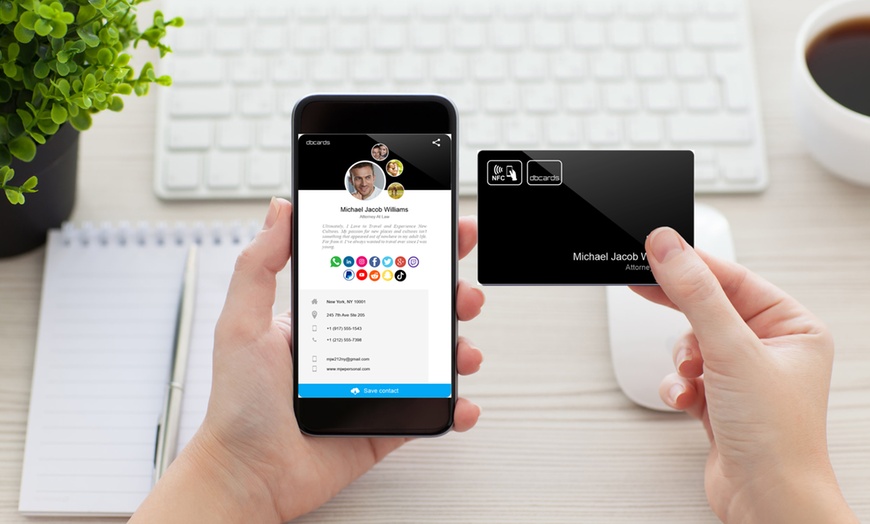
Look for editable profiles, QR codes, NFC support, custom branding, team controls, analytics, fast mobile loading, and easy save-contact actions. Also check whether the recipient experience works without forcing an app install. Promotion works best when the path feels effortless for the person who just scanned or tapped.
Where Zapped fits
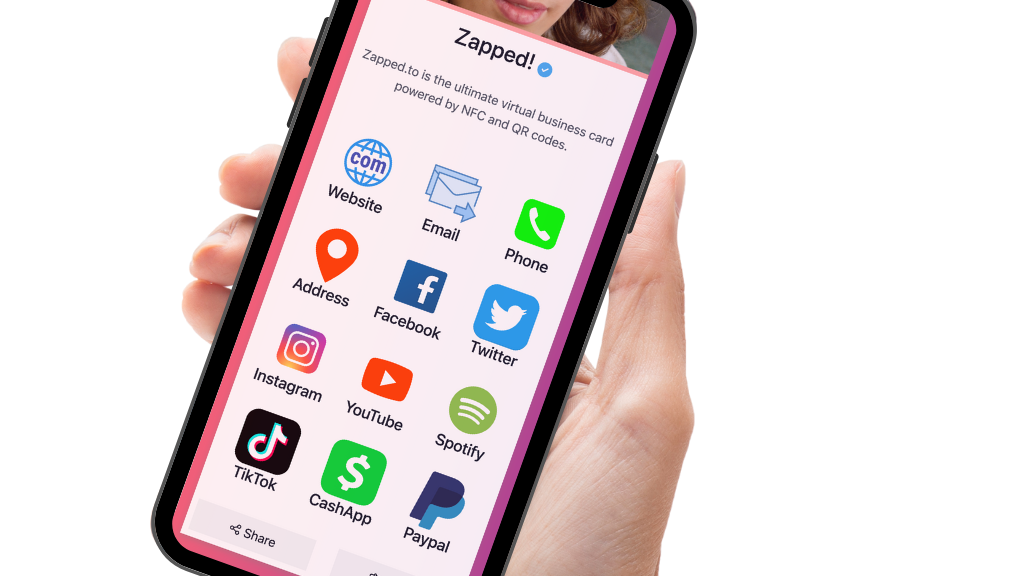
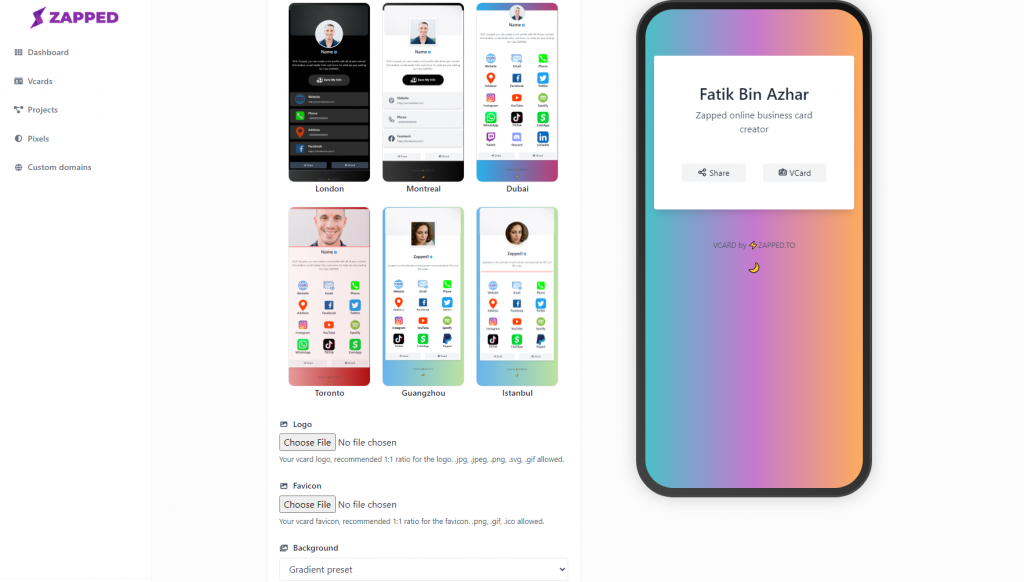
Zapped is useful when the card, QR code, NFC tap, and direct link should all point to one live business profile. That profile can hold contact details, booking links, social links, review links, company pages, and save contact actions without forcing the recipient to install an app.
The practical advantage is maintenance. Instead of reprinting or rewriting every card when details change, you update the Zapped profile and keep the sharing path intact.
Examples by use case
A solo consultant may need a polished profile, calendar link, LinkedIn, and a simple save-contact button. A sales team may need branded profiles, admin controls, analytics, and consistent QR or NFC destinations. A recruiter may need fast sharing at events plus a profile that routes candidates to open roles, forms, or booking links.
That is why platform choice should follow the job the card needs to do. If the card is mostly a personal networking tool, speed and presentation matter most. If the card represents a company, ownership, consistency, permissions, and reporting become more important than a long list of decorative options.
Before choosing a platform
Run a small real-world test before moving every card into a new tool:
- Build one complete profile with real links, branding, and contact details.
- Share it by QR code, direct link, email signature, and phone-to-phone message.
- Check whether the recipient can save the contact without installing an app.
- Update one important detail and confirm the old QR code or NFC card still opens the new version.
- Review whether team permissions, analytics, and profile ownership match how the business actually works.
A platform can look good in a demo and still feel awkward in daily use. The best test is the actual sharing workflow your team will repeat.
FAQs
Do people need an app to open the card?
No. A strong recipient experience opens in a normal browser from a QR code, NFC tap, direct link, or message.
Should I use QR or NFC?
Use QR when visibility matters and NFC when fast close-range sharing matters. Many business cards should use both.
What should the profile include?
Include contact details, a save contact action, website or company link, and the most important next step for that audience.
How should I test the card?
Test the QR code, NFC tap, page speed, save contact action, and important links on both iPhone and Android before printing or sharing widely.
Sources
- NFC Forum technical overview for NFC tap behavior and common NFC use cases.
- IETF RFC 6350 for the vCard contact data format.
- Google Business Profile review guidance for review link and QR code workflows.