A clickable digital business card turns a profile into an action page. Instead of making someone copy details manually, it gives them buttons for the next step.
Quick answer
A clickable digital business card should include direct actions such as call, email, text, book a meeting, save contact, open WhatsApp, view portfolio, pay, review, or follow on social channels.
Key takeaways
- Use a live profile as the source of truth.
- Add QR sharing because it works across more devices.
- Add NFC when in person sharing is part of your workflow.
- Keep the main action clear so people know what to do next.
- Use Zapped where an editable profile, QR, NFC, and team controls belong in one place.
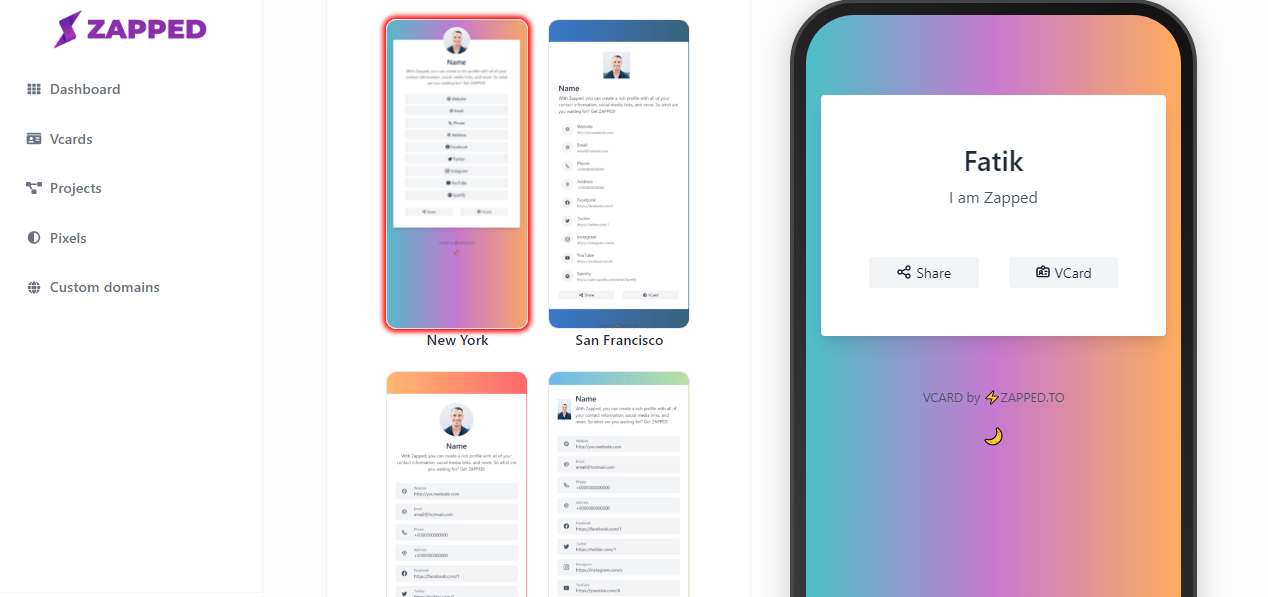
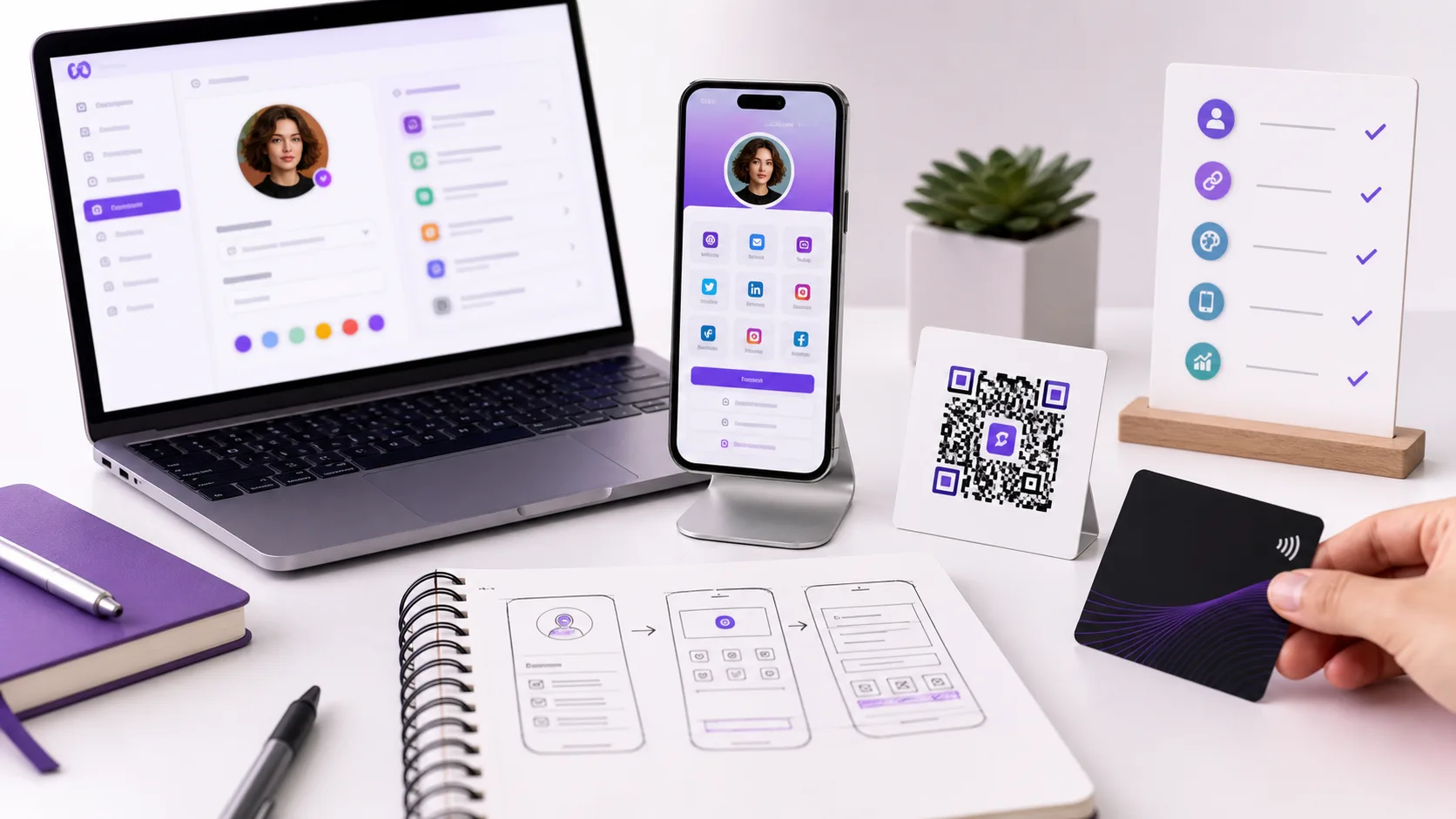
Use this image as a reference point while you compare the options below. The important idea is that the card, code, or NFC tap should lead to a profile that is easy to save and act on.
Best options by use case
| Action | Best link type | Use when |
|---|---|---|
| Call | tel link | Phone conversations matter |
| mailto or form | Longer messages matter | |
| Book | Calendar link | Meetings are the goal |
| Chat link | Fast messaging matters | |
| Portfolio | Website or gallery | Proof matters |
| Pay | Payment link | Service checkout matters |
Make every link earn its place
A clickable card is not better because it has more buttons. It is better because the buttons match what the recipient wants to do next.
Group links by intent: contact, book, proof, social, payment, and company.
What to include
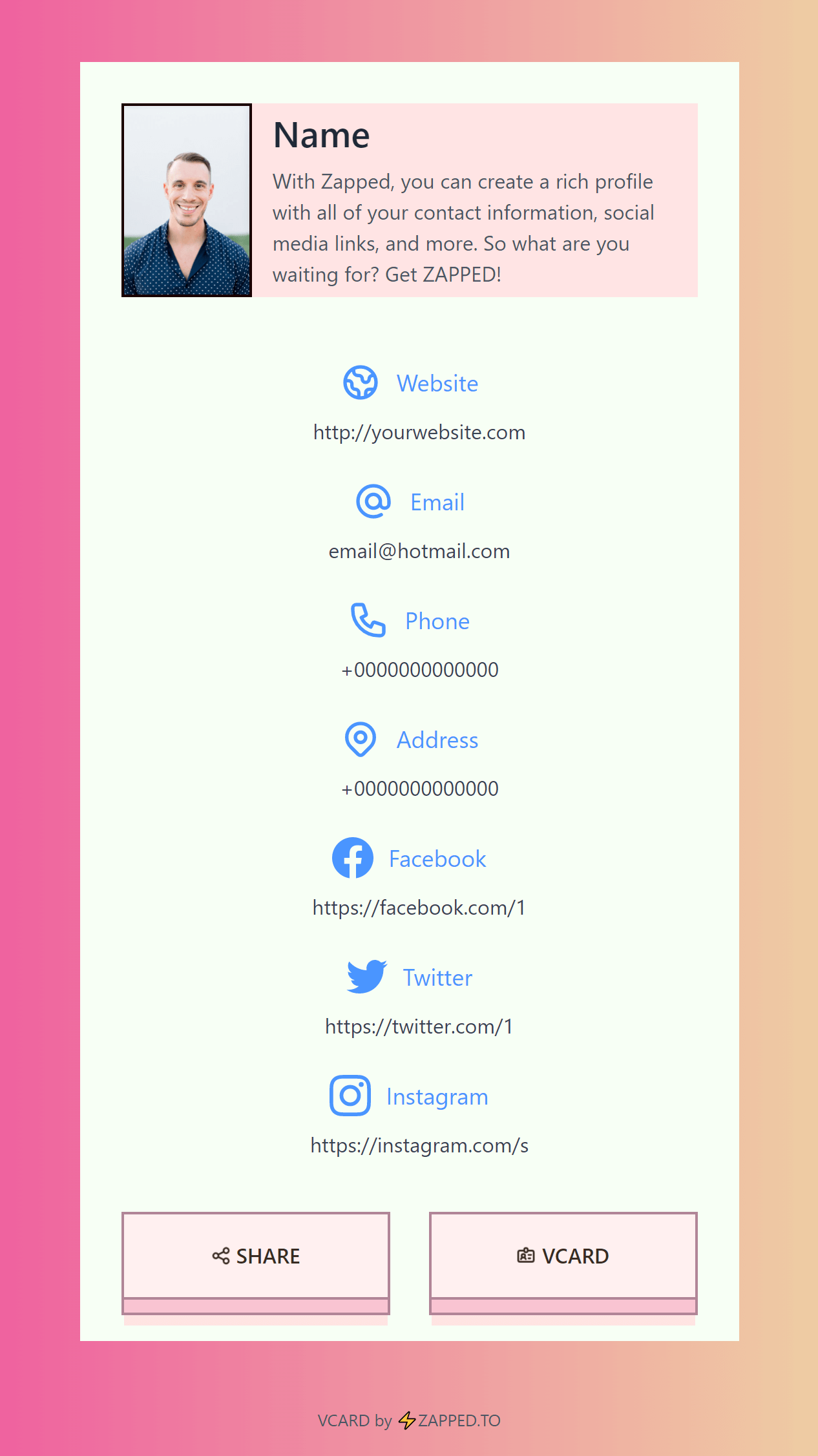
A strong digital business card usually includes:
- Name, role, and company.
- Phone, email, and website.
- A save contact action.
- One primary call to action.
- QR code or direct sharing link.
- NFC support when useful.
- Social, portfolio, booking, payment, or review links when they help.
Simple setup checklist
- Create the live profile.
- Add your essential contact fields.
- Choose one primary action.
- Generate and test the QR code.
- Add NFC or Wallet sharing if the use case needs it.
- Test the experience on iPhone and Android.
- Update the profile whenever your details change.
Link grouping framework
Group links by what the recipient wants to do. Contact links help them reach you. Proof links help them trust you. Booking links help them take action. Social links help them keep up with you. Payment or store links help them buy.
This keeps the card clear even when it has several buttons.
What not to make clickable
Do not add links just because you have them. Old social profiles, rarely used channels, duplicate websites, and vague buttons can distract from the main action. A clickable card should feel focused, not noisy.
Click intent hierarchy
Clickable cards work best when links are ordered by intent. The most valuable action should appear first, while secondary links support the decision.
A practical order is:
- Save contact or call.
- Book a meeting or send a message.
- Visit website or portfolio.
- View social proof, listings, or case studies.
- Follow social profiles.
Too many equal buttons make the card feel noisy. If every link is highlighted, no link feels important.
Clickable does not mean crowded
The point of a clickable card is to reduce friction, not to list every possible destination. Keep the main action obvious and group secondary links by intent.
For example, a realtor could group links into contact, listings, reviews, and booking. A consultant could group links into contact, case studies, calendar, and LinkedIn. A creator could group links into portfolio, store, newsletter, and social.
When the groups are clear, the card feels useful instead of noisy.
Design the card around the Zapped destination
The best digital card design makes the next action obvious. Zapped gives the design a live destination, so the visual card can stay focused while the profile carries contact details, links, booking, social profiles, and updates.
That keeps the card from becoming cluttered and lets you improve the profile after launch without redesigning every QR code, NFC card, or shared link.
FAQs
What is the best digital business card format?
The best format is usually a live web profile with a QR code, direct link, and optional NFC card. That gives people more than one way to open the same profile.
Do people need an app to view my digital business card?
Usually no. A web based profile should open in a normal browser. Apps can help the card owner manage the profile, but the recipient should not need to install anything just to view your details.
Should I use NFC or QR for how to make a clickable digital business card?
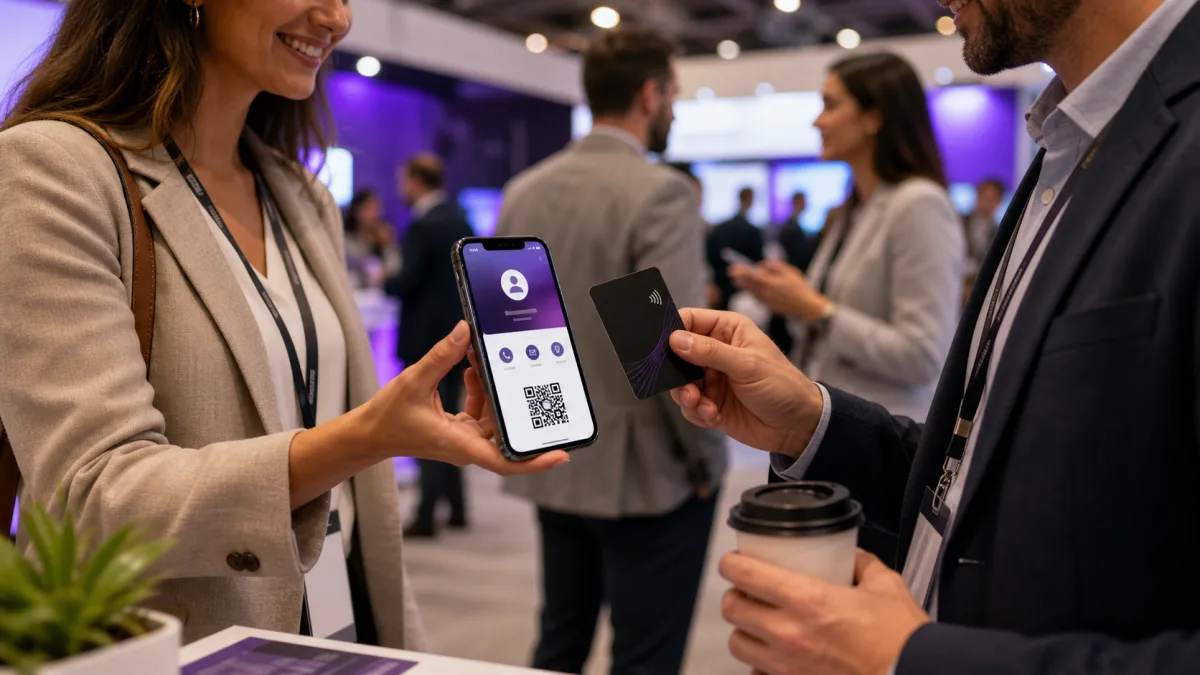
Use both when the card will be shared in person. NFC feels fast when someone knows where to tap, and QR gives a visible backup for any phone with a camera.
Can I update the card after sharing it?
Yes, if the QR code, NFC tag, or shared link points to an editable profile. That is one of the biggest advantages over a static printed card.
Where does Zapped fit?
Zapped is a good fit when you want one editable digital card profile that can be shared by link, QR code, NFC card, and team workflows without rebuilding the card every time details change.
Sources
- IETF RFC 6350, vCard format specification: Used for vCard contact data context.
- WhatsApp Help Center, business QR code and Meta Business Help, WhatsApp Platform QR code: Used for WhatsApp Business QR context.